Trade professionals frequently spot Category N vehicles listed at significant discounts compared to clean market values. The digital imagery often displays straight panels and mentions minor cosmetic issues, presenting what appears to be a highly lucrative acquisition. However, the commercial reality of sourcing recorded inventory demands rigorous assessment rather than blind optimism.
Many auction participants acquire these vehicles assuming they have secured a straightforward project, only to discover bent subframes, severe electrical faults, or mechanical rectifications that completely eclipse the final retail value. The non-structural salvage classification sits within a grey zone that requires strict financial discipline. Stripping away the initial visual appeal reveals what this official marker actually dictates for a commercial workshop budget.
What Category N Actually Tells You
The Category N classification replaced the legacy Category D designation in 2017. The official definition dictates that these vehicles suffered non-structural damage deemed uneconomical to repair by the underwriter. However, this broad classification encompasses vastly different damage profiles.
The parameter covers minor vandalism, stolen infotainment systems, flooded interiors, and severe suspension trauma. The only guarantee provided by the marker is that the primary structural chassis components and core crumple zones remain uncompromised. An underwriter might write off a three-year-old premium saloon because replacing four alloy wheels and repainting two scraped panels exceeds the financial threshold. Conversely, they might total a commercial van because the entire electrical loom requires replacement following a severe dashboard fire.
Both assets receive the identical marker and appear in digital vehicle auctions with the exact same classification. However, one represents a rapid commercial turnaround while the other acts as a severe drain on working capital and workshop hours.
The Economics Behind the Write-Off
Insurance providers execute write-offs based entirely on strict mathematical thresholds rather than subjective safety assessments. A vehicle receives a salvage marker when the projected repair estimate, combined with the asset's diminished post-repair value, exceeds 50 to 60 percent of its pre-accident market worth.
For a vehicle valued at £15,000, that threshold sits between £7,500 and £9,000. This financial ceiling is breached rapidly when sourcing modern manufacturer components. Consider a minor frontal impact that deploys the cabin airbags and cracks the dashboard without causing structural deformation. Commercial workshop estimates quickly accumulate: dual airbags require £1,200, a dashboard replacement demands £2,500, seatbelt pre-tensioners cost £500, and diagnostic sensor recalibrations add £800.
Executing category N repairs using main dealer components rapidly triggers this threshold. The estimate easily exceeds £5,000 before any exterior panel work commences, forcing the underwriter to liquidate the asset mathematically.
The Genuine Easy Fixes
Specific damage profiles do represent highly profitable acquisitions for the motor trade. A commercial operator recently acquired a hatchback written off due to low-speed rear impact damage. The main dealer estimate cited £3,200 for a bumper and tailgate replacement against a £4,800 vehicle value, triggering the total loss. By sourcing patterned parts and utilizing internal workshop labour, the operator completed the category N repairs for just £850, securing a substantial profit margin upon retail sale.
These are the optimal assets to target. Commercial buyers prioritize vehicles where the damage is entirely visible, quantifiable, and strictly cosmetic. Optimal targets include exterior panel scrapes, smashed glass requiring simple replacement, interior vandalism, or minor theft recoveries involving easily replaced catalytic converters. The required rectifications perfectly match the visual evidence, eliminating commercial mystery and protecting the projected margin.
The Hidden Nightmares
The sector also contains assets where Cat N hidden damage lurks beneath a pristine exterior, ready to consume workshop budgets. Flood-damaged write-offs represent the most severe hazard within this category. A vehicle might sit in shallow water briefly, leaving the chassis perfectly sound but soaking the lower electrical modules.
Water ingress creates aggressive corrosion within complex wiring harnesses, causing catastrophic control module failures months after the initial event. A trade buyer might invest £500 replacing damp carpets, only to face a £2,000 ABS module failure shortly before the retail sale. Electrical damage stemming from botched theft attempts presents identical risks. Spliced ignition wires hidden behind the steering column generate intermittent faults that are practically impossible to diagnose efficiently.
Suspension trauma also conceals itself effectively within digital imagery. A vehicle exhibiting scuffed alloy wheels from a lateral kerb impact might possess a bent steering rack or cracked subframe mounting points. If a vehicle requires extensive mechanical replacement that outweighs its market value, utilizing a dedicated scrap my car service provides an immediate avenue to liquidate the problematic chassis and recover baseline capital.
What the Inspection Actually Reveals
Professional operators rely on rigorous digital assessments to mitigate risk before bidding, utilizing the high-resolution imagery provided on the auction gateway. Cat N hidden damage rarely announces itself without careful digital scrutiny. The assessment must begin with a thorough visual examination of panel gaps and shut lines within the provided photographs. While the classification guarantees non-structural damage, misaligned doors or askew bonnets heavily suggest underlying geometry issues that contradict the official marker.
Technicians specifically hunt for visual evidence of overspray in the listing imagery, which indicates historical repairs that were excluded from the primary damage description. Because advanced diagnostic scanning is impossible prior to acquisition, buyers must calculate a financial contingency for electrical faults. Vehicles suffering from water ingress or wiring trauma frequently harbour hidden error codes that only emerge once the asset is delivered to the commercial workshop.
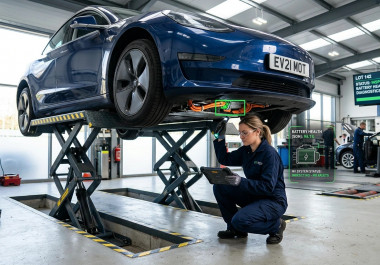
Finally, inspecting the undercarriage utilizing a ramp to reveal bent suspension wishbones or fresh components is a mandatory procedure executed immediately upon the vehicle's arrival at the buyer's facility. Successful operators do not wait to discover these issues; they proactively factor the mathematical risk of these hidden repairs directly into their maximum bid before the digital hammer falls.
The Market Reality
The commercial reality dictates that recorded vehicles carry a permanent financial penalty. Regardless of the repair quality, a recorded asset consistently sells for 20 to 40 percent less than a clean-title equivalent.
This market discount works heavily in the buyer's favour during the initial acquisition, provided they possess the internal capabilities to execute cost-effective category N repairs. However, this permanent V5C marker heavily suppresses the final retail valuation. Trade professionals accept that they are marketing to a restricted demographic, which naturally extends forecourt holding times.
Operators tracking inventory across regional hubs like vehicle auctions in the North West strictly factor this depressed resale ceiling into their maximum bid calculations long before the digital hammer falls.
The Insurance Complication
Securing retail insurance creates substantial market friction. While mainstream underwriters generally cover non-structural write-offs, they frequently apply premium loadings ranging from 10 to 30 percent above clean equivalents.
The underwriter will demand comprehensive documentation detailing the original damage and the subsequent repair methodology. For younger retail demographics or drivers possessing penalty points, these elevated premiums often render the vehicle entirely unviable financially. Trade professionals must recognize that this insurance friction directly shrinks the available end-consumer buyer pool, placing downward pressure on maximum forecourt prices.
When the Classification Makes Sense
Despite the inherent risks, non-structural salvage represents highly lucrative inventory for specific commercial profiles. Independent bodyshops possessing internal repair infrastructure maximize the acquisition discount by avoiding external labour rates entirely.
Project enthusiasts frequently target these vehicles because the mechanical base is acquired at a massive discount, and the salvage category is largely irrelevant to a heavily modified track vehicle.
Furthermore, commercial fleet operators who intend to deploy high-mileage vehicles until the end of their mechanical lifespan benefit massively from the suppressed acquisition cost. Because the vehicle will eventually be scrapped rather than resold, long-term retail depreciation metrics are entirely irrelevant to their operational model.
The Vehicles to Avoid
Specific asset classes carry risk profiles that far outweigh any potential acquisition discount. Flood-damaged inventory and modern luxury vehicles saturated with complex electrical architecture are notoriously difficult to rectify economically. The initial purchase discount rarely covers the eventual cost of replacing premium electronic modules.
High-performance vehicles written off for lateral suspension impacts warrant extreme caution. These assets operate at limits where minute geometry faults or weakened components severely compromise high-speed stability.
Furthermore, any listing lacking high-resolution imagery or featuring excessively vague damage descriptions highly suggests the presence of Cat N hidden damage. Trade buyers monitoring specialized stock, such as analyzing active motorcycle salvage auctions, rely heavily on transparent documentation to avoid acquiring fundamentally compromised performance assets.
The Documentation You Need
Commercial due diligence requires compiling comprehensive paperwork before committing funds. Professional buyers demand access to the original insurance assessment, detailed repair invoices, and verifiable alignment data.
Running independent HPI checks confirms the exact salvage classification and identifies any outstanding finance agreements or previous write-off history. If an asset was previously recorded as Category S prior to the current Category N designation, its commercial viability collapses entirely.
Conducting these digital history checks is critical for buyers evaluating distant stock, such as vehicle auctions in Scotland, before committing to expensive transport logistics or recovery fees.
Making the Decision
Non-structural salvage vehicles represent highly profitable acquisitions when the damage is entirely cosmetic, easily quantified, and properly documented. Securing a 30 percent market discount for superficial damage that costs a fraction of the vehicle's value to repair is the foundation of a successful salvage operation.
However, the classification also shelters severely compromised vehicles requiring mechanical investments that instantly destroy projected profit margins. The official marker provides a starting point for investigation rather than a guarantee of profitability.
The most successful commercial operators maintain strict financial discipline, relying on verifiable data to execute acquisitions while immediately walking away from any lot that lacks total transparency.
If trade professionals require assistance with account verification or have questions regarding tier-based buyer fees, please speak with us for immediate guidance.
To apply this professional due diligence to live inventory and build a highly profitable acquisition strategy, secure auction bidding access today.
Once registered, professionals can immediately evaluate the extensive catalog of trade inventory available across the RAW2K digital gateway.