It is a common assumption that a specific categorised vehicle will achieve an identical hammer price regardless of its physical location in the United Kingdom. However, professional automotive industry analysis demonstrates that this is rarely the case. UK salvage price variation is a well-documented reality, with final valuations frequently swinging by 20% to 30% depending entirely on where the asset is situated.
This pricing fluctuation is not driven by random chance; it is dictated by local demand, regional transport logistics, regional economic conditions, and specific salvage vehicle demographics. Understanding why these postcode price differences occur allows professional buyers and savvy private investors to navigate the market strategically and secure significant financial advantages.
Local Demand and Regional Market Pressure
Different regions across the UK exhibit highly distinct automotive requirements. In rural Scotland and Wales, four-wheel-drive models, utility trucks, and agricultural vehicles command premium valuations. Rural businesses and estate managers actively seek these units, meaning a categorised utility vehicle that might struggle to meet its reserve price in central London could easily spark intense competitive bidding in Inverness.
Conversely, compact city cars achieve much stronger valuations in urban centres. Buyers in London, Birmingham, and Manchester actively compete for smaller vehicles suited to congested streets and restricted parking zones. That identical compact vehicle situated in a rural compound will likely achieve a significantly lower hammer price simply due to an absence of immediate local demand. Commercial vehicles follow identical patterns, with panel vans achieving heightened prices near major logistics hubs and arterial motorway corridors where tradespeople constantly refresh their commercial fleets.
The Impact of Regional Transport Logistics
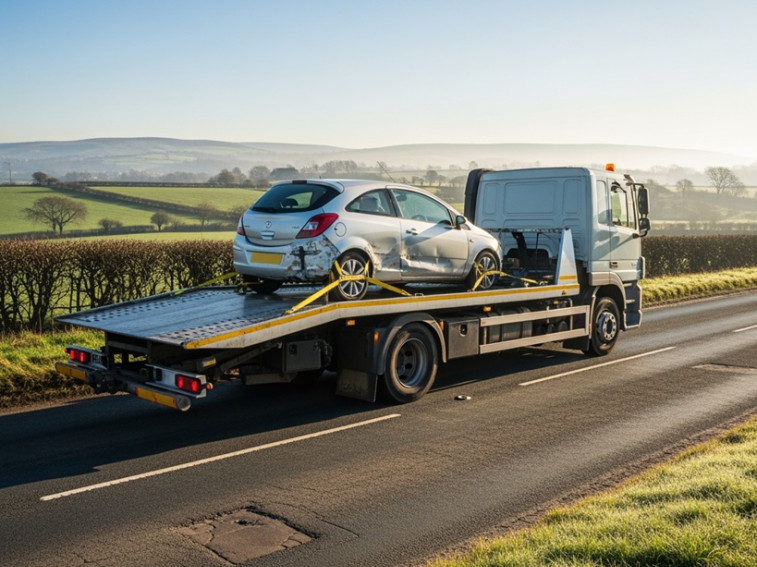
One of the most critical factors driving UK salvage price variation is the cost of professional vehicle recovery. Regional transport logistics fundamentally dictate the ultimate profitability of any acquisition. Relocating a non-running vehicle from Aberdeen to Brighton incurs substantial haulage fees. Buyers consistently deduct these logistical expenses from their absolute bidding limits, which directly suppresses the final auction price in remote areas.
Vehicles located in central distribution hubs, relatively equidistant from major UK population centres, consistently achieve higher valuations because the associated transport costs remain manageable for a broader pool of buyers. Astute professional buyers frequently target remote locations where postcode price differences are most pronounced, happily absorbing the transport premium to secure assets at a heavily discounted baseline cost.
Economic Conditions and Purchasing Power
Local economic conditions substantially shape the purchasing power within specific regions. Areas demonstrating higher average incomes and robust automotive repair sectors consistently generate stronger bidding activity. The South East of England typically records higher average hammer prices due to a denser concentration of buyers operating with available capital.
This reflects simple market economics; regions sustaining a high volume of independent garages and automotive restoration businesses create intense local competition, inherently pushing valuations upward. Industrial regions possessing strong manufacturing heritages also maintain robust appetites for commercial salvage. Buyers monitoring damaged cars for sale across these prosperous regions must account for this heightened economic competition when establishing their strict bidding ceilings.
Structural Repair Infrastructure and Parts Networks
The density of structural repair infrastructure heavily influences regional salvage valuations. Regions possessing numerous certified body shops, mechanical repair specialists, and extensive parts supplier networks create highly resilient, competitive salvage markets. The Midlands, with its extensive automotive manufacturing heritage, offers deep repair expertise and immediate parts availability. Consequently, buyers operate with confidence, knowing they can source components quickly and move vehicles through the repair process efficiently.
In contrast, rural areas lacking dense structural repair infrastructure often witness far weaker bidding. A repairer operating in a remote location bids more conservatively, precisely factoring in the extended time and elevated costs associated with sourcing specific components. Utilizing online vehicle auctions allows prospective buyers to observe how these infrastructure disparities directly and predictably influence regional pricing trends.
Demographics and Seasonal Weather Patterns
Specific UK weather patterns and regional lifestyles dictate highly distinct salvage vehicle demographics. Coastal regions frequently process a higher volume of corrosion-related write-offs. Because saline environments accelerate rust progression, salvage assets originating from coastal areas sometimes carry a market discount, as buyers anticipate hidden corrosion damage beneath the superficial exterior.
In addition, northern regions experiencing harsher winters predictably process more weather-related and flood-damaged stock during specific seasons. Conversely, four-wheel-drive units achieve premium prices in these exact regions ahead of the winter months. Recognising these demographic and seasonal cycles is crucial. When attempting to buy salvage cars online, strategic buyers actively time their acquisitions to avoid these predictable seasonal demand spikes, deliberately securing vehicles when local interest temporarily wanes.
Strategic Bidding and Market Exploitation
Understanding UK salvage price variation serves as a highly practical tool for maximising acquisition budgets. The most effective strategy involves deliberately expanding search radiuses beyond immediate local areas. A vehicle located 100 miles away in a low-demand region may cost significantly less than an identical local example, yielding a net positive return even after factoring in regional transport logistics.
Buyers should systematically compare identical models across multiple regions to identify recurring postcode price differences. Transparent digital platforms expose these variations clearly, enabling buyers to target locations where their desired salvage vehicle demographics naturally sell for less. By actively monitoring salvage car auctions UK, professional buyers consistently identify low-price regions and focus their procurement efforts accordingly, successfully bypassing the saturated competition of their immediate local markets.
Should buyers require assistance navigating these regional filtering tools or clarifying specific bidding protocols, dedicated customer support teams are readily available to provide reliable platform guidance.
The Bottom Line
The UK salvage market is not a single, unified entity; it is a complex network of regional micro-markets, each possessing unique economic drivers, vehicle preferences, and structural repair infrastructure densities. Recognising that regional pricing variation is a predictable structural reality rather than a random anomaly empowers buyers to execute highly strategic acquisitions.
To assess current regional pricing patterns and explore available models, buyers can browse the RAW2K platform to conduct independent market analysis.
Once prepared to execute a regional acquisition strategy, simply register for salvage auctions to begin securing vehicles across the national market today.