Salvage cars sit in a unique spot in the motor trade. They aren't quite write-offs, but they certainly aren't showroom fresh, either. Over decades in the industry, many buyers have scored brilliant bargains. However, just as many have learned expensive lessons by skipping basic checks.
Maintenance documentation matters differently when dealing with salvage vehicles. A car's paperwork reveals hidden patterns and flags potential problems. Sometimes, it explains exactly why a decent motor ended up with a salvage marker. Ultimately, understanding service history is essential during any salvage vehicle evaluation.
Most salvage cars arrive with patchy records at best. This doesn't automatically make them bad buys, but it absolutely changes how you evaluate them. Learning what to expect, and knowing what to do when a maintenance records gap exists, separates smart purchases from costly mistakes.
Why Maintenance Documentation Gets Lost With Salvage Vehicles
Salvage cars usually enter the auction system through insurance claims. When damage costs more to repair than the car is worth, insurers step in. They categorise the vehicle and sell it on. Unfortunately, this process rarely prioritises paperwork.
The previous owner might have kept meticulous records. Yet, when an insurance company takes over, those documents don't always follow the car. Sometimes, they get lost in the claims process. Other times, they simply aren't requested or provided.
Category S (structural damage) and Category N (non-structural) vehicles were usually well-maintained right up until their incident. You are often looking at roadworthy, cherished cars before a crash changed their status. The service history might exist; it simply hasn't made the journey to the auction block.
Older stock presents a different challenge entirely. Cars passed through multiple owners easily lose their paper trails. Service books go missing over time. Electronic records vanish when garages close or update systems. As a result, locating older documents gets increasingly difficult.
What Complete Records Actually Tell You
Finding a salvage car with a complete paper trail is like striking gold. That paperwork answers your questions before you even ask them.
Here is exactly what a complete record shows you:
-
Maintenance intervals: Were services done on time? Regular yearly or 12,000-mile services point to a responsible owner.
-
Work performed: Oil changes are just the baseline. Look for brake servicing, fresh coolant, and timing belt changes.
-
Parts quality: Did they use genuine parts or budget alternatives? Both are fine, but this reveals the previous owner's priorities.
-
Problem patterns: Repeated repairs to the same part flag ongoing issues. If the clutch needed replacing twice in 30,000 miles, investigate why.
-
Garage consistency: Using one trusted garage for years suggests steady care. Hopping between garages might mean the owner sought cheap, quick fixes.
As an example, I once bought a Category S BMW at auction with a full service history right up to the crash. Every service was stamped, and every part was genuine. Since the damage was purely cosmetic, that car ran flawlessly for five years. I could easily verify its mechanical health before buying.
The Reality of Partial Documentation
Most salvage cars land somewhere in the middle. You might get the last three years of stamps but nothing older. Alternatively, you might find a pile of receipts with gaps you just can't explain.
A maintenance records gap isn't worthless. It simply requires a bit more detective work. Recent documents matter most because they show the car's condition right before the salvage incident. A car serviced two months prior to a crash was likely mechanically sound.
When looking through partial records, focus on these specific items:
-
Online MOT records
-
Recent major repairs
-
Timing belt replacements
-
Completed warranty work or recalls
-
Tyre replacement dates and mileage
An MOT history check fills in gaps brilliantly. Every test logs the mileage, failures, and advisories. Stringing these records together helps you spot long-term neglect. Browsing online listings carefully helps you see how an MOT history check compensates for missing books during a salvage vehicle evaluation.
When Paperwork is Completely Absent
Having no documentation doesn't mean a car had no maintenance. It simply means you are buying blind on paper. Some of the best auction purchases lack paperwork, as long as you adjust your bids accordingly.
Without documents, you must evaluate the vehicle purely on its present condition. Thorough physical inspections become critical. Look for these visual clues:
-
Oil condition: Clean oil suggests a recent service.
-
Coolant colour: Rusty coolant means long-term neglect.
-
Brake fluid: Dark, murky fluid is old and needs replacing.
-
Tyre wear: Uneven wear strongly suggests suspension issues.
-
Maintenance stickers: Check the windscreen or door jambs for service dates.
-
Cambelt condition: Visible cracking means an overdue replacement.
When viewing photos online, you are frequently taking calculated risks. Always factor a complete maintenance records gap into your maximum bid, expecting to pay less than you would for a fully documented car.
Clever buyers request more information before bidding. You can always reach out to the seller or auction platform to ask about known mechanical issues. Sometimes, the seller knows much more than the listing shows.
How to Verify Document Claims
Sellers sometimes claim to have complete paperwork when they only hold a few random receipts. Always verify everything you can before handing over any money.
Manufacturer main dealer records are the easiest to verify. Ring the dealer network with the VIN, and they will confirm the work. Most manufacturers keep comprehensive digital service records going back for years.
Independent garage paperwork requires checking the actual physical receipts. Look closely at these details:
-
Is there a legitimate business name, address, and phone number?
-
Does the recorded mileage match the car's current dashboard?
-
Are the service dates sensible, not three services in one month?
-
Do receipts list actual work or just vaguely say "service performed"?
Forged service books do occasionally surface. Brand new books filled with stamps from non-existent garages are major red flags. If something feels off, trust your gut.
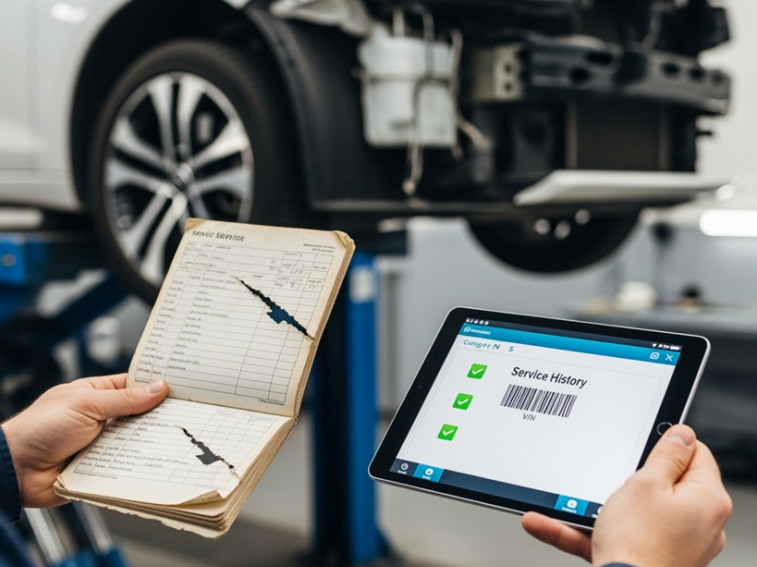
Thankfully, technology is improving verification. Many modern cars store maintenance data directly in their onboard computers. Diagnostic tools can pull this information, making digital service records incredibly helpful when assessing vehicles with incomplete physical paperwork.
The Impact of Missing Documentation on Value
Documentation directly affects a vehicle's value, though less dramatically for salvage cars. The salvage category itself already knocks a significant chunk off the original price. Missing paperwork simply drops it a bit further.
This calculation changes based on the car's age and type. A three-year-old salvage car with a complete maintenance records gap raises major red flags. Neglecting a nearly new car is highly unusual. Conversely, a 12-year-old car with patchy records is perfectly normal.
Performance and prestige vehicles suffer the most from missing paperwork. Buyers of luxury brands expect meticulous documentation. On these cars, missing records suggest either neglect or a complicated past. Budget brands are less affected, as buyers have lower expectations.
If you ever plan to sell your vehicle later, remember that providing whatever service history you have increases the final bid. Even partial records reassure buyers that the car was loved.
Creating a Maintenance File For Salvage Purchases
If you purchase a vehicle without paperwork, start building a fresh file immediately. Document everything you do from day one. Future buyers will highly value this information.
Your new maintenance file should include:
-
Purchase documents and auction records
-
Any pre-purchase inspection reports
-
Invoices for all salvage damage repairs
-
Receipts for the first full fluid change
-
Ongoing maintenance and parts receipts
-
Future MOT certificates
Make sure to date everything and record the mileage. Take photos of the repair work as it happens. Keep all these documents safely in a dedicated folder.
Consider this example: A Category N Volkswagen with zero paperwork was purchased and maintained properly for two years. Because the owner kept every receipt, it eventually sold for significantly more than comparable cars. The next owner gladly paid extra for documented evidence.
What Professional Inspections Reveal
Pre-purchase inspections become absolutely essential when paperwork is absent. A qualified mechanic can easily spot deferred maintenance and predict upcoming problems.
A thorough inspection will check:
-
Engine oil condition and overall consumption
-
Coolant system integrity and leaks
-
Brake pad and brake disc wear
-
Suspension component wear
-
Exhaust system condition
-
Transmission fluid health
-
Electrical system functionality
These inspections prevent incredibly expensive mistakes. Mechanics estimate how long components will last, letting you budget accurately for upcoming repairs. If you are considering a vehicle, checking the available local salvage auction yards can help you determine if an in-person viewing is feasible before bidding.
Red Flags That Paperwork Would Have Revealed
Missing documents often hide underlying problems. A solid paper trail exposes recurring issues, but a purely physical inspection might miss them entirely.
Recurring faults are your biggest concern. Before you commit to the current damaged vehicle auctions listings, remember that without records, you won't know if the turbo was rebuilt twice in the last year.
Missed critical maintenance creates ticking time bombs. Timing belts not changed at the manufacturer's specified interval can snap and destroy entire engines. Without the right records, you simply don't know if this crucial job was skipped.
Furthermore, substandard repairs usually show up in service notes when the next garage spots them. Without those records, you only discover the shoddy work when the part fails on the road. For instance, ignoring low oil pressure warnings can destroy an engine within miles. Records highlight these warnings early.
How Different Salvage Categories Affect Expectations
Category S cars (structural damage) often boast better documentation than Category N cars. Category S damage is usually sudden and severe. Since the crash totals the car immediately, the owner was likely maintaining it normally right up until that day.
Category N vehicles (non-structural damage) present a mixed bag. Fire, flood, or theft can happen to both well-maintained and heavily neglected cars. The salvage category itself tells you absolutely nothing about the pre-incident maintenance.
Older salvage categories sometimes carry better documentation. If a car was salvaged five years ago, rebuilt, and used since, it likely accumulated new paperwork post-rebuild.
When browsing the salvage car inventory across platforms, assessing the specific category alongside the paperwork is a vital part of a thorough salvage vehicle evaluation. Always remember that commercial vans work much harder than standard cars; a van without history has likely been thrashed.
Building Confidence Without Full Records
Buying salvage vehicles without comprehensive paperwork isn't reckless if you approach it smartly. You are simply shifting your focus from paper verification to physical assessment.
Start by setting realistic expectations. You are buying a vehicle with incomplete information, so you must budget for immediate servicing and potential repairs.
Always factor in immediate costs. Plan to replace all fluids as soon as you own the vehicle. Fresh oil, filters, coolant, and brake fluid give you a clean, known baseline.
Use online resources to your advantage. Owner forums for specific models reveal common failure points, compensating for missing documentation. When participating in salvage vehicle auctions, reviewing the platform's specific grading scales also provides valuable insights for interpreting listings accurately.
When to Walk Away Despite a Great Price
Some cars simply aren't worth buying without documentation, regardless of the price tag. High-mileage performance cars without records are absolute disasters waiting to happen. These specialized engines require incredibly precise maintenance.
Similarly, diesel vehicles without proof of regular oil changes risk catastrophic turbo or injector failure. The money you save on the purchase price will quickly vanish during repairs.
Cars featuring obvious modifications and no paperwork are massive red flags. Modified cars require documentation to prove the work was handled safely and professionally.
Finally, flood-damaged vehicles without records are extremely risky. It is nearly impossible to verify which electrical systems were affected. Passing on a beautiful but undocumented flood-damaged car will save you from years of electrical headaches, and those vehicles are better suited for professional end-of-life vehicle disposal.
Making Documentation Part of Your Strategy
Smart buyers actively factor the presence of records into their bidding calculations. Identical vehicles with different documentation levels should always receive different maximum bids.
If you find yourself browsing current salvage cars for sale, remember that documentation levels should directly influence your financial limits.
Creating a sliding bidding scale based on history is a very wise move:
-
Full main dealer records: Bid up to the fair market value for that salvage category.
-
Partial independent records: Reduce your maximum bid by about 10%.
-
Recent records only: Reduce your maximum bid by roughly 15%.
-
No records at all: Reduce your maximum bid by 20-25%.
Always consider the total cost of ownership rather than just the initial purchase price. A £3,000 car with no records might urgently need £1,500 in maintenance, making it much more expensive in the long run.
The Future of Vehicle Documentation
Maintenance tracking is evolving rapidly. Manufacturers increasingly utilize connected services that log every dealer interaction. This smart technology is slowly eliminating the lost paper book problem entirely.
Comprehensive digital service records cannot get lost in a glove box. They are securely tied to the VIN and stored on cloud servers. Even if a car goes through insurance salvage, these records persist. Buyers can perform an MOT history check online while seamlessly reviewing manufacturer logs.
For now, we remain in a transition period. Older stock relies on easily lost paper records, while newer models feature digital systems. Understanding how to navigate both gives you a massive advantage.
Conclusion
The ideal scenario of finding a salvaged vehicle with complete documentation happens rarely. The everyday reality involves missing stamps, lost books, and incomplete records that force buyers to act on partial information.
That does not make them bad buys. You are simply pricing in the uncertainty and accepting that some questions won't be answered until you start working on the car.
Adjusting your approach to match the available information is the key to success. A complete service history lets you bid with total confidence. Partial information requires closer inspection, while zero paperwork demands thorough mechanical checks and a lower bid.
Ultimately, a well-maintained car with no paperwork beats a neglected car with forged documents. Learn to read the physical evidence, trust your inspections, and price in the unknowns. Those seeking genuine value through RAW2K can navigate these purchases successfully when the paperwork doesn't tell the whole story. To access these daily opportunities safely, remember to register for salvage auctions, keeping your expectations realistic and your standards high.