Acquiring a categorised vehicle from a coastal region may appear straightforward initially, but the long-term implications often reveal a different reality. Upon inspection months later, the engine bay may exhibit severe environmental deterioration, including corroded terminals, rusty brackets, and a distinct white-green crust accumulating across metal surfaces. Salt does not merely damage vehicles; it accelerates structural degradation from the inside out.
Industry analysis demonstrates that otherwise sound vehicles are frequently reduced to irreparable conditions simply because buyers misunderstand the impact of marine environments on automotive metals. Coastal salvage cars carry specific risks that inland vehicles do not face. For those evaluating assets through digital auction platforms, understanding these precise environmental hazards is absolutely essential to preventing catastrophic financial losses.
The Chemical Mechanics of Accelerated Deterioration
Salt acts as a powerful catalyst for oxidation, the chemical process responsible for rust. When seawater or salt-laden air settles on metal surfaces, it creates a highly conductive electrolyte solution that accelerates corrosion by roughly five times compared to fresh water exposure. This electrochemical reaction strips electrons from the metal, converting solid steel into iron oxide.
Coastal vehicles face three distinct scenarios that trigger severe salt corrosion damage. Direct seawater contact during flooding or storm surges causes immediate, severe degradation. Salt spray from ocean winds settles on surfaces gradually but persistently. Even the ambient salt-laden air in coastal humidity creates a corrosive atmosphere that penetrates microscopic gaps and crevices. Professional inspections frequently reveal vehicles that appear pristine cosmetically - boasting immaculate paintwork and interiors - yet possess severely compromised subframes due to prolonged coastal exposure.
Identifying Hidden Damage Zones
Underbody components consistently suffer the most severe abuse. Exhaust systems, suspension arms, brake lines, and subframes directly absorb salt spray. Because the vehicle's underside is rarely washed with sufficient pressure, salt accumulates in crevices and accelerates deterioration year after year.
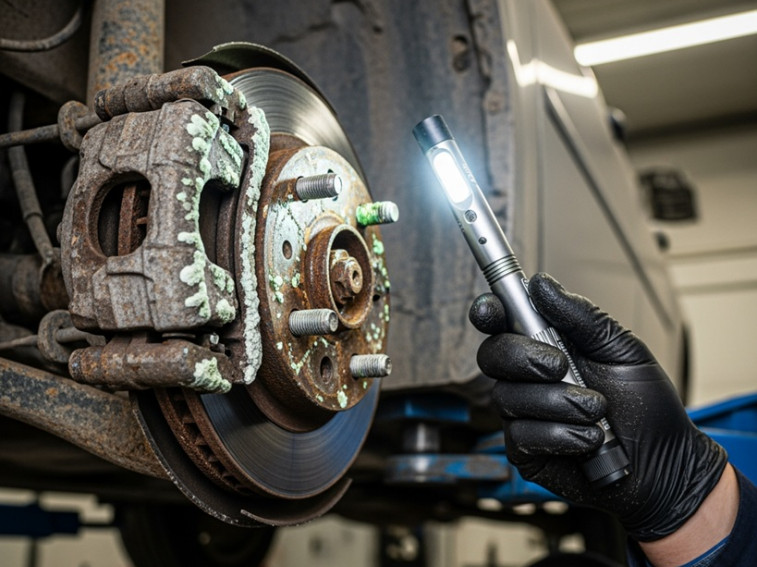
Brake systems require highly specific attention. Salt corrosion damage frequently causes brake calliper pistons to seize and attacks metal brake lines, creating weak points that can fail catastrophically under pressure. The electrical system presents another critical vulnerability. Modern vehicles rely on hundreds of connectors, terminals, and grounding points. Salt ingress creates electrical resistance and intermittent faults that are notoriously difficult to diagnose. Door sills and wheel arches trap moisture and debris, causing rust to develop internally. By the time bubbling paint appears on the exterior panels, the underlying structural metal has typically degraded beyond simple repair.
Comprehensive Inspection Protocols
Identifying active deterioration requires a methodical approach during any physical inspection. Obvious visual indicators include white or green crusty deposits surrounding battery terminals and suspension components. Fresh oxidation appears bright orange, whereas older degradation looks dark and actively flakes off the metal.
Assessors must check every drainage hole in the doors, sills, and boot floors. These channels must remain clear and free of rust staining; blocked drains lead to saline water infiltration, creating ideal conditions for hidden corrosion to flourish. Examining brake components is equally critical. Callipers must move freely without signs of seizure, and brake lines must consist of solid metal without crusty pitting. In addition, testing every electrical function - including windows, mirrors, locks, and lighting - is essential, as intermittent electrical faults in coastal salvage cars frequently stem from heavily corroded internal connections.
Salvage Categories and Progressive Degradation
When evaluating damaged inventory, understanding the insurance classifications becomes critical. Category S (structural) and Category N (non-structural) designations do not explicitly account for corrosion, yet severe environmental deterioration frequently pushes older vehicles into these classifications. A Category N coastal car might have sustained flood damage from a storm surge; while the mechanical components may operate initially, saline water infiltration into the interior and electrical systems progresses over time.
Category S vehicles with coastal exposure present compounded risks. The structural impact that triggered the categorisation might be repairable, but underlying salt deterioration in the surrounding repair zone complicates the restoration. Welding fresh metal to an oxidised framework rarely yields safe or lasting results. Many of these assets appear on salvage auto auctions simply because the projected repair costs exceeded the vehicle's retail value. These units can still offer excellent value, provided buyers accurately assess the extent of the deterioration.
Regional Risk Profiles and Sourcing Strategies
Not all coastal geographies generate identical risk profiles. The west coasts of Scotland and Wales face prevailing Atlantic winds that carry salt spray several miles inland. Vehicles operating in these regions often exhibit environmental deterioration even when garaged away from the immediate shoreline. The south-east of England experiences milder general conditions, yet coastal towns along the English Channel still present elevated risks during winter storms. Scotland's east coast faces harsh North Sea weather, where the combination of salt and freezing temperatures accelerates corrosion through repeated freeze-thaw cycles.
Distance from the shoreline is a crucial metric. Airborne salt typically affects vehicles within a three to five-mile radius most severely. In addition, verifying the vehicle's primary operating postcode provides valuable insight into its lifetime environmental exposure when browsing damaged cars for sale.
Calculating True Rectification Expenditures
Superficial rust remediation can cost between £200 and £500 per panel if addressed early, covering removal, treatment, primer, and paint. However, structural degradation escalates the financial burden rapidly. Replacing corroded sills can cost upwards of £1,000 per side including specialist labour, while subframe replacements demand similar investments and frequently reveal additional hidden faults once dismantling begins.
Electrical repairs often become severe financial liabilities. Tracing corroded connections incurs high hourly diagnostic rates, and replacing an entirely compromised wiring harness requires substantial capital for components alone. Brake system overhauls due to environmental degradation require full replacements of callipers, discs, and lines. For buyers examining damaged vehicles for sale across the national market, factoring in these extensive rectification costs is non-negotiable. Environmental deterioration is notoriously difficult to arrest completely; treating one area often precedes the discovery of degradation in another.
Immediate Protection and Bidding Discipline
Before executing any bids, buyers must establish a strict maximum acceptable corrosion threshold. Light surface oxidation is generally manageable, whereas structural degradation should be avoided unless the vehicle is being procured strictly for parts dismantling. Researching a specific model's vulnerabilities is also highly recommended, as certain manufacturers employ superior factory rust-proofing techniques compared to others. Professional buyers calculate realistic repair estimates and subsequently add a 30% to 50% contingency margin for unexpected discoveries.
When engaging in online car bidding platforms, assessing the intended use is vital. A vehicle intended for occasional weekend use carries a different risk profile than a daily commuter requiring absolute reliability. Reviewing the DVLA MOT history service reveals historical patterns of deterioration; multiple previous advisories for underside corrosion indicate progressive, systemic problems.
If a buyer decides to proceed with an acquisition, immediate protective measures can significantly slow further deterioration. Professional underbody treatments, which involve high-pressure washing, rust conversion, and the application of durable sealants, provide crucial defense. Cavity wax injection reaches hidden internal areas within sills, doors, and box sections, displacing moisture and creating an effective protective barrier. When browsing repairable vehicles for sale, buyers who actively budget for these immediate post-purchase protection strategies significantly extend the operational lifespan of their assets.
Alternative Sourcing and Final Verdict
Despite the inherent risks, specific scenarios justify these acquisitions. Parts donors for restoration projects are excellent candidates; if the vehicle is destined for dismantling, localised corrosion is irrelevant provided the required components remain sound. Additionally, modern vehicles featuring extensive aluminium construction resist marine degradation far better than traditional steel-bodied cars.
Alternatively, buyers can bypass these risks entirely by focusing on inland alternatives. By actively monitoring salvage car auctions UK and filtering for vehicles originating from central regions, purchasers can consistently source inventory that exhibits significantly less environmental deterioration.
Salt corrosion represents a hidden liability that many buyers discover only after the transaction is complete. While the initial acquisition price may appear highly attractive, the subsequent repair bills and reliability issues quickly erode any projected margins. Professional buyers possessing mechanical expertise and appropriate workshop facilities can extract value from these units, accurately assessing the damage and applying effective remediation techniques. However, those without specialist knowledge should approach these assets with extreme caution. Geography heavily influences salvage condition, and understanding these environmental risks transforms how buyers evaluate potential investments.
To assess the current market and explore diverse inventory from both coastal and inland regions, buyers can browse the RAW2K platform to conduct independent market analysis.
Should buyers require assistance with account navigation or specific bidding procedures, dedicated customer support teams are available to assist with general platform inquiries.
Once prepared to execute a strategic acquisition, simply register for salvage auctions to begin securing vehicles across the national market today.