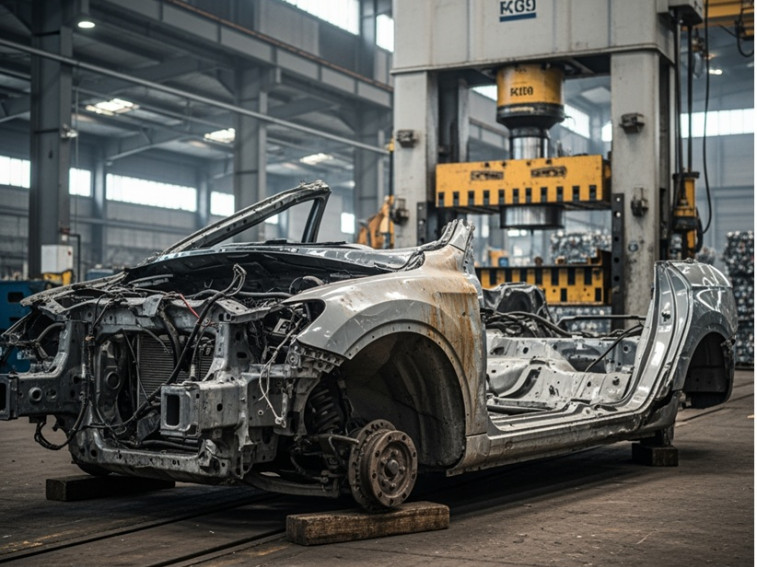
When a vehicle suffers catastrophic damage in the UK, it enters a classification system that determines its future. Category A represents the most severe designation - vehicles so thoroughly destroyed that they pose a genuine threat to public safety if any part re-enters the road network.
The salvage vehicle categorisation system exists for one purpose: protecting drivers, passengers, and pedestrians from vehicles that can no longer meet safety standards. Category A sits at the extreme end of this spectrum, reserved for cars damaged beyond any possibility of safe repair or partial reuse.
What Defines a Category A Vehicle
The Association of British Insurers (ABI) created the salvage categories to provide clear guidance on vehicle damage severity. Category A vehicles UK regulations specify that the classification applies when a vehicle has sustained damage so extensive that neither the car nor its individual parts should ever be used again on any road-going vehicle.
These aren't vehicles with repairable damage. We're talking about cars involved in high-speed collisions, severe fires, or complete structural failure. The chassis might be twisted beyond recognition, safety systems completely compromised, or the vehicle crushed to the point where metal integrity no longer exists.
Insurance assessors assign Category A status when they determine that even harvesting parts for other vehicles would create unacceptable safety risks. This differs markedly from Category B, where the vehicle itself must be crushed but certain parts can be salvaged for use in other cars.
The Legal Framework Surrounding Category A Vehicles
UK law treats Category A vehicles with absolute finality. Once classified, these vehicles must be crushed in their entirety at an Authorised Treatment Facility (ATF). The DVLA receives notification of the categorisation, and the vehicle's registration is permanently cancelled.
No negotiation exists in this process. The V5C logbook gets destroyed, and the vehicle identification number (VIN) enters a national database marking it as scrapped. Any attempt to re-register a Category A vehicle constitutes fraud and carries serious criminal penalties.
The legal requirements extend beyond simple crushing. ATFs must follow strict protocols for vehicle disposal and recycling, ensuring hazardous materials receive proper treatment and that metal gets recycled rather than finding its way back into the automotive supply chain through illicit channels.
Why the Complete Ban Exists
The prohibition on Category A vehicles stems from hard data about collision dynamics and structural integrity. When a vehicle experiences forces severe enough to warrant Category A classification, the damage extends far beyond visible deformation.
Modern cars rely on crumple zones, carefully engineered to absorb impact energy in specific ways. Once these zones have activated in a severe crash, their protective capability is permanently compromised. You cannot reshape metal that has undergone extreme stress and expect it to perform as designed in a subsequent collision.
Safety systems including airbags, seatbelt pretensioners, and electronic stability controls integrate throughout the vehicle structure. Category A damage typically affects multiple systems simultaneously, and the interconnected nature of these components means replacing one damaged element doesn't restore overall vehicle safety standards.
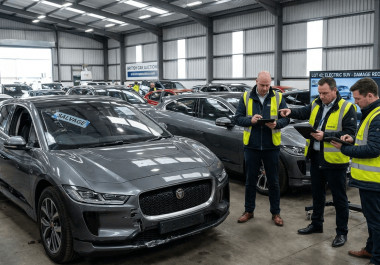
We've examined vehicles at salvage auctions where fire damage penetrated the passenger compartment. The heat doesn't just burn upholstery - it weakens structural members, damages wiring harnesses buried in the bodywork, and compromises the chemical composition of safety-critical components. No amount of cosmetic repair addresses these fundamental integrity issues.
The Real Risks of Category A Parts Entering the Market
Despite legal prohibitions, a black market exists for parts stripped from Category A vehicles before proper disposal. This creates genuine danger for unsuspecting vehicle owners who purchase what appear to be legitimate replacement components.
Consider a suspension arm from a Category A vehicle. Visual inspection might reveal no obvious damage, but the metal could have experienced stress beyond its elastic limit during the collision that destroyed the original car. Install that component on another vehicle, and it might fail catastrophically during normal driving, causing loss of control at speed.
Airbag modules present an even more insidious risk. These units contain pyrotechnic charges calibrated to deploy with split-second precision. Impact forces that trigger Category A classification can damage the internal mechanisms without leaving external evidence. An airbag from such a vehicle might fail to deploy in a subsequent crash, or worse, deploy unexpectedly whilst driving.
The UK's vehicle safety standards assume components meet specific performance criteria. Parts from Category A vehicles cannot meet these standards, yet they're virtually impossible to identify once removed from the original car and cleaned for resale.
How Category A Differs from Other Salvage Categories
The UK uses four main salvage vehicle categories, each reflecting different damage severity and determining what can legally happen to the vehicle and its components.
Category A demands complete destruction. Nothing from these vehicles should ever touch a road again. The entire car goes to the crusher, and the scrap metal enters general recycling streams where it might eventually become construction materials, appliances, or non-automotive products.
Category B vehicles also cannot return to the road, but their categorisation acknowledges that some parts remain safe for reuse. The body shell must be crushed, but components like engines, transmissions, or undamaged body panels can be salvaged for use in other vehicles after proper inspection.
Category S (formerly Category C) indicates structural damage that exceeds the vehicle's pre-accident value but remains repairable. These cars can return to the road after proper repair and inspection, though they carry the salvage marker permanently on their title history.
Category N covers vehicles with non-structural damage - perhaps electrical faults, cosmetic damage, or mechanical issues that proved uneconomical to repair relative to the car's value. These vehicles often return to service after appropriate repairs.
The progression from N to A reflects increasing severity, but the gap between Category B and Category A is particularly significant. Category A vehicles pose damage so catastrophic that even component-level salvage poses unacceptable risks.
The Economic Reality of Category A Classification
Insurance companies don't assign Category A status casually. The classification means they cannot recoup any value from component sales, reducing their financial recovery from a total loss claim. They choose Category A only when the vehicle's condition makes any other classification legally or ethically untenable.
From a pure scrap metal perspective, a Category A vehicle might contain £300-500 worth of recyclable steel and aluminium. Compare this to Category B vehicles, where salvageable parts might generate £2,000-5,000 in additional recovery value. The economic incentive pushes toward less restrictive categories whenever possible.
When an insurer classifies a vehicle as Category A despite this financial disincentive, it signals damage severity that eliminates all other options. We're talking about vehicles where fire consumed the entire structure, where collision forces compressed the passenger compartment beyond recognition, or where flooding contaminated every system with corrosive water and sediment.
What Happens During Category A Vehicle Disposal
Authorised Treatment Facilities follow a specific protocol when processing Category A vehicles. The car arrives with documentation confirming its categorisation and providing the VIN for verification against DVLA records.
Before crushing, ATFs must drain all fluids - engine oil, transmission fluid, brake fluid, coolant, and fuel. These liquids require separate disposal or recycling according to environmental regulations. Batteries get removed for separate processing, as do tyres, which cannot be crushed with the vehicle.
The crushing process itself uses hydraulic presses generating hundreds of tons of force, compressing the vehicle into a dense metal cube roughly one-tenth its original volume. This ensures complete destruction of all components, making it physically impossible to extract usable parts afterwards.
The crushed metal then enters the scrap recycling stream, typically going to steel mills where it's melted down and reformed into new raw materials. At this point, the atoms that once formed a Category A vehicle might eventually become anything from construction beams to appliances - but they'll never form part of another road vehicle.
For vehicles that have reached genuine end-of-life status, proper disposal through licensed facilities ensures environmental compliance and legal adherence to Category A requirements.
The Risks of Fraudulent Category A Sales
Despite legal prohibitions, fraudsters occasionally attempt to return Category A vehicles to the road or sell their components. These schemes typically exploit gaps in record-keeping or target buyers unfamiliar with the salvage vehicle categorisation system.
One common approach involves stripping a Category A vehicle before it reaches an ATF, selling the parts through online marketplaces or less scrupulous breakers' yards. Buyers have no way to identify these components' origin, and they install them assuming they're purchasing legitimate used parts.
More ambitious criminals occasionally attempt to "ring" Category A vehicles - transferring the identity of a legitimately registered car onto a Category A wreck. This requires forging documents and tampering with VIN plates, but it occasionally succeeds when buyers don't perform proper vehicle history checks before purchase.
The penalties for these activities reflect their seriousness. Trading in Category A vehicles or their components can result in unlimited fines and imprisonment. Beyond legal consequences, anyone involved in returning Category A vehicles or parts to service bears moral responsibility for any injuries or deaths that result.
How to Verify a Vehicle's Salvage Status
Before purchasing any used vehicle, buyers should conduct thorough background checks that reveal salvage history. Several services provide this information by searching the vehicle's VIN or registration number against insurance and DVLA databases.
The DVLA's vehicle enquiry service provides basic information about registration status, but it doesn't always detail salvage categorisation. More comprehensive checks through services like HPI, Experian AutoCheck, or MyCarCheck reveal insurance write-off history including the specific category assigned.
These checks cost £10-20 but provide essential protection against purchasing a vehicle with hidden damage history. For Category A specifically, these vehicles shouldn't appear in any legitimate sales channels because their registrations should be permanently cancelled. When browsing available vehicles, proper history checks confirm salvage status and category before any purchase.
If you're considering purchasing used parts, ask the seller for documentation proving the components' origin. Legitimate salvage yards maintain detailed records linking parts to specific donor vehicles and can demonstrate that those vehicles weren't Category A or B. Sellers who cannot or will not provide this documentation should be avoided entirely.
The Role of Authorised Treatment Facilities
ATFs serve as the gatekeepers ensuring Category A vehicles meet their required fate. These facilities operate under licence from the Environment Agency, which conducts regular inspections to verify compliance with disposal protocols.
The licensing requirements are substantial. ATFs must demonstrate proper equipment for fluid drainage, appropriate storage for hazardous materials, and crushing equipment capable of complete vehicle destruction. They must maintain detailed records of every vehicle processed, including photographs documenting the vehicle's condition upon arrival and after crushing.
These records create an audit trail that regulators can follow to ensure Category A vehicles actually get destroyed rather than diverted into illegal channels. ATFs face licence revocation and criminal prosecution if they allow Category A vehicles or components to leave their facilities intact.
The system isn't perfect - occasional enforcement actions reveal facilities that violated protocols - but it creates substantial barriers against Category A vehicles re-entering the road network. The combination of legal requirements, licensing oversight, and criminal penalties makes legitimate ATFs reliable partners in protecting public safety.
Conclusion
Category A vehicles represent the absolute limit of automotive damage - cars so thoroughly destroyed that no part should ever contribute to another road-going vehicle. The categorisation exists not as bureaucratic excess but as essential protection against vehicles and components that cannot meet basic safety standards.
The legal framework surrounding these vehicles reflects this reality. Complete destruction isn't negotiable because the risks of allowing any element to return to service are simply too high. Modern vehicles integrate safety systems throughout their structure, and catastrophic damage compromises these systems in ways that defy repair or component-level salvage.
For anyone involved in the automotive industry - whether buying vehicles, selling parts, or performing repairs - understanding Category A vehicles is essential. These vehicles must be crushed completely, their registrations cancelled permanently, and their metal recycled into non-automotive applications.
The temptation to salvage value from Category A vehicles might exist, but the legal, ethical, and safety implications make this absolutely unacceptable. When you see Category A on a vehicle's documentation, it represents a final judgment: this car has reached the end of its automotive life, and public safety demands we keep it that way. For expert guidance on salvage vehicle categories or classification questions, reach out.