The thrill of securing a valuable vehicle at auction is undeniable. Yet the legal framework governing these transactions differs significantly from buying a car directly from a dealership.
For both private bidders and professional traders, clarity on your legal standing is paramount. Understanding the specific terms and conditions that apply to auction sales is the key to managing risk and ensuring a positive outcome. We're here to demystify the rules, ensuring you know precisely when and where your rights are protected.
Successful auction participation doesn't rely on assuming full consumer protection. Instead, it depends on performing thorough due diligence before any bid is placed. The rules are designed to facilitate efficient trade, requiring bidders to take responsibility for their purchases.
Knowing the limitations of your Buyer Rights at Car Auctions allows you to bid confidently within the defined legal boundaries of the auction house.
The Legal Landscape of Vehicle Auctions
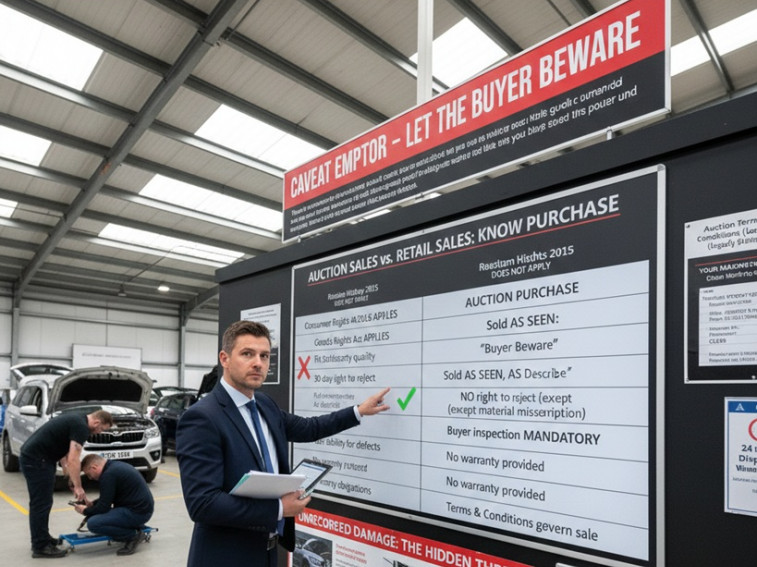
The foundation of consumer law in the UK, particularly the Consumer Rights Act 2015, primarily governs retail sales where a private individual buys from a business. Auction sales operate under different legal principles that shift the burden of risk. When you buy through a competitive environment like vehicle auctions, you are typically accepting the vehicle as seen and as described, making pre-bid inspection your most powerful tool.
This distinction is crucial, particularly when dealing with salvage, used, and seized vehicles. The legal framework is less about providing a post-sale guarantee of condition and more about ensuring the information provided in the listing is accurate at the point of sale. Transparency in the description and condition reporting is where the auction house's primary legal responsibility lies.
Auction Sales Versus Private Sales
The majority of consumer protection laws, which mandate that goods must be fit for purpose and of satisfactory quality, often do not apply to vehicles sold at a physical or online auction. This is especially true when the seller is a private individual or when the vehicle is classed as salvage (including those destined for scrap car collection). When trading with RAW2K Vehicle Auctions, you are entering into a competitive, trade-focused environment governed by specific terms.
Your legal relationship is governed by the specific Terms and Conditions of the auction house, which you agree to upon registration. These terms clearly outline the buyer's inspection obligations, the limitations of descriptions provided, and the specific recourse available in case of a serious breach of contract.
The Role of Terms and Conditions
The auction's Terms and Conditions establish the specific rules regarding misdescription, payment defaults, and the collection process. These contractual agreements represent the legal guarantee you receive regarding the vehicle. For example, the terms define what constitutes a material misdescription of a lot (the only grounds on which a vehicle can typically be returned post-sale).
These documents also detail the strict payment and collection timelines, protecting the operational flow of vehicle auctions. Failure to adhere to these deadlines can result in the forfeiture of your deposit or the cancellation of the sale, so being fully compliant strengthens your position should any future dispute arise.
Understanding the Caveat Emptor Principle
The phrase caveat emptor, meaning "let the buyer beware," is the cornerstone of vehicle auction law. This principle places the responsibility on the buyer to fully examine the goods before the purchase is finalised. In practice, this means you cannot rely solely on a generic description; you must treat the purchase as if you were physically inspecting it yourself.
This concept encourages buyers to fully utilise all pre-auction resources provided, such as high-resolution images, condition reports, and video footage. Ignoring this principle is a costly mistake that can negate any financial benefit gained from a low winning bid.
What 'Buyer Beware' Really Means
In the context of online vehicle auctions, caveat emptor dictates that you are bidding on the vehicle in its present state, with all its faults, latent or patent. If you buy a Category N car and later discover a minor mechanical fault that wasn't explicitly listed, it is generally the buyer's responsibility since the auction house is an intermediary, not a warranty provider.
However, the principle is not absolute. If the vehicle is materially misdescribed (for instance, if a four-door saloon is listed as a convertible, or if a running vehicle is confirmed to be non-operational upon collection) then you typically have grounds for appeal. The successful application of Buyer Rights at Car Auctions often rests on proving a clear, factual error was made in the official lot description.
Your Inspection Obligation
RAW2K makes every effort to provide the most accurate description possible, but verifying all information remains the buyer's duty. Your recourse hinges on identifying factual inaccuracies in the description, just like a professional dealer who successfully challenged a listing for having an incorrect engine size.
Browse all vehicle categories to familiarize yourself with typical listings and condition standards. This due diligence requires cross-referencing VINs, confirming mileage, and checking photos against the written description. For complex lots, such as commercial vehicles, you can browse detailed listings for van auctions to check known issues for that particular make and model.
Navigating Vehicle History and Documentation
Ensuring the car has the correct documentation is a non-negotiable step that protects your investment and streamlines the transfer of ownership. The absence or inaccuracy of critical documents like the V5C logbook can lead to serious headaches and delays when registering or selling the vehicle later. Never assume these essential documents are correct; always confirm their status before bidding.
The Importance of the V5C Logbook
The V5C document, or logbook, is the registration certificate that confirms the registered keeper of the vehicle, though it is not proof of ownership. You must check that the vehicle registration mark (VRM) and the Vehicle Identification Number (VIN) match the listing details and the actual vehicle. When dealing with salvage and seized vehicles, the V5C is vital for registering the vehicle in your name after purchase, especially for Category S and Category N cars.
To see the variety of smaller vehicles available, check our motorcycle auctions. They also require the same rigorous V5C checks.
HPI and Mileage Checks
Performing independent HPI checks on the vehicle's VIN is a critical step in safeguarding your financial outlay. While RAW2K Vehicle Auctions provides comprehensive information, an HPI check gives you an external, verified history of the car, including finance agreements, status (stolen or written off), and mileage discrepancies. This process acts as a crucial safety net for every buyer.
Verifying the mileage against the vehicle's service history and HPI data is an essential element of exercising due diligence regarding Buyer Rights at Car Auctions. If a serious issue like outstanding finance is discovered after purchase, it can greatly limit the vehicle's value or make it unsaleable, so always allocate a small portion of your budget for this external, impartial verification.
Specific Scenarios and Recourse
Understanding your specific avenues for recourse is essential when problems arise, as the process for dispute resolution in an auction setting is highly defined. Unlike a typical retail purchase, the window for reporting issues is usually very tight (often within 24 hours of collection), demanding immediate inspection once the vehicle is in your possession.
Errors in Listing Descriptions
The clearest scenario where the buyer has the right to reject a sale is when the vehicle has been materially and demonstrably misdescribed by the auction house. This includes errors in the vehicle's make, model, year of registration, or specific Category status. For instance, if you successfully bid on a vehicle listed in vehicle auctions in West Midlands as a 2018 model, but the V5C proves it's a 2016 model, this is usually grounds for appeal.
If you suspect a material misdescription, you must immediately halt collection and notify the auction team in writing, referencing the specific terms and conditions. The auction house will then investigate, and if the error is proven, they will likely void the sale. This strict adherence to reporting procedures is non-negotiable for protecting the integrity of the process.
Collection and Payment Compliance
Prompt payment and collection are as much a protection for the buyer as they are an obligation. Delays in payment can result in the forfeiture of the lot, while delays in collection may incur storage charges. Should you face any logistical issues or require clarification on payment deadlines, you should immediately contact the auction house to avoid any penalties.
Remember that understanding your rights doesn't grant you a full return policy, but it does ensure you receive exactly what was factually promised in the listing. Exploring vehicle auctions in various regional hubs can help you plan logistics efficiently before you bid.
Ready to start bidding? Register to access auctions to view current listings.
Your Path to Legally Sound Auction Buying
Engaging with the auction market successfully means embracing the concept of calculated risk, always backed by thorough research and strict adherence to the auction house's terms. The lack of standard consumer protection is balanced by the opportunity to secure significant value, provided you accept your duty to inspect.
With this knowledge of auction law, you can navigate the market with confidence and authority.