Fire-damaged vehicles arrive at UK salvage auctions with hidden problems that standard inspection methods miss. A car might look intact from the outside, yet harbour structural weakness, toxic residues, and electrical faults that make it dangerous or uneconomical to repair. The difference between a viable restoration project and an expensive mistake often comes down to understanding what smoke and heat damage do to vehicle components when exploring auction inventory.
How Fire Affects Vehicle Structure
Heat weakens metal through a process metallurgists call annealing. Steel loses approximately 50% of its tensile strength at 650°C, and most car fires reach 800-1000°C within minutes. This matters because chassis rails, suspension mounting points, and crumple zones depend on specific material properties to function safely.
Inspectors frequently see vehicles where surface paint looks barely touched, yet the B-pillars have lost structural integrity. The metal has not melted or visibly deformed, but it will fail in a collision. A magnet test will not reveal this; buyers must understand the fire's intensity and duration, then inspect stress points for subtle discolouration that indicates heat exposure.
Aluminium components present different challenges to structural integrity. Modern bonnets, doors, and increasingly entire body structures use aluminium alloys that lose strength at much lower temperatures than steel. At 200°C, some aluminium alloys begin permanent degradation. A fire that seems "minor" because it did not breach the cabin may have compromised every aluminium panel on the vehicle.
Reading Smoke Patterns
Smoke and heat damage tells you where the fire started, how long it burned, and what materials combusted, which are all critical for assessing hidden damage.
Heavy black soot indicates petroleum-based fires: engine oil, fuel, or interior plastics. These fires produce temperatures exceeding 1000°C and deposit acidic residues that corrode metal and electrical contacts for months after the fire. Yellow-brown staining suggests burning upholstery foam, which releases hydrogen cyanide and other compounds that embed in porous materials. You cannot fully remove these toxins; they remain in sound-deadening materials, headliners, and HVAC systems.
White or grey residue typically comes from burning wiring insulation. This matters because it indicates electrical fire origin, which often means the vehicle's entire wiring harness is compromised. Replacing visible damaged sections will not address the problem, as heat travels along copper conductors, weakening insulation metres away from visible damage.
Check the direction of smoke staining. Vertical streaks on pillars and windows show a fast, hot fire with good oxygen supply. Horizontal patterns suggest smouldering combustion, which produces more toxic smoke and allows heat to conduct deeper into materials. The latter often causes more extensive hidden damage despite looking less dramatic.
Electrical System Assessment
Modern vehicles contain 3-5 kilometres of wiring, and heat damage rarely affects just the visible portions. Insulation begins degrading at 150°C, well below the temperature that causes visible damage to surrounding materials. This creates a dangerous situation: wiring that looks intact but has lost its insulating properties.
Inspect connectors first. Heat causes plastic housings to shrink, loosening terminal contact. Even if the fire did not reach a particular connector, heat conducted through the wiring can compromise connections throughout the vehicle. Technicians have traced intermittent electrical faults in fire-damaged vehicles to connectors 2 metres from visible fire damage.
The battery location tells you about potential electrical system survival. Engine bay fires that reach the battery typically mean total electrical system loss, as the heat required to damage a lead-acid battery (around 400°C sustained exposure) has already destroyed every nearby wire, relay, and control module.
For vehicles with cabin fires that did not reach the engine bay, you might salvage the main electrical infrastructure, but the body control module, instrument cluster, and infotainment systems are likely destroyed. These components contain plastic housings that warp at 120°C, causing internal short circuits even when external appearance seems acceptable.
Engine and Mechanical Components
Heat affects engine components differently based on their materials and operating temperatures. Cast iron engine blocks handle brief fire exposure better than you would expect; they are designed to operate at 100-120°C and can survive external fires that do not exceed 800°C for extended periods. However, aluminium cylinder heads begin losing temper (heat treatment) at 200°C.
Check for these specific indicators:
-
Timing components: Rubber timing belts fail at 150°C. Even if the belt appears intact, heat exposure causes internal degradation. Metal timing chains survive better, but plastic guides and tensioners fail at similar temperatures to belts. A fire severe enough to discolour valve covers has destroyed these components.
-
Seals and gaskets: Every rubber seal in the engine degrades from heat exposure. Head gaskets, valve stem seals, and crankshaft seals may look fine but have lost their sealing properties. Budget for complete engine seal replacement on any vehicle with significant under-bonnet fire damage.
-
Turbochargers: These operate at 600-1000°C internally, but external fires can still damage them. The problem is not the turbine, but rather the bearing housing and oil seals. Heat from external fires causes uneven expansion that warps the bearing housing, creating shaft play that leads to catastrophic failure.
-
Brake systems: Brake fluid boils at 230-280°C, and fires easily exceed this. Boiled brake fluid leaves residues that corrode brake lines, callipers, and ABS components. If a fire reached the wheels, assume complete brake system replacement; the cost of missing corroded brake lines far exceeds replacement costs when evaluating salvage vehicles projects.
Interior and HVAC Systems
Cabin smoke damage creates health hazards that make many vehicles uneconomical to restore. Smoke particles measure 0.4-0.7 microns, small enough to penetrate foam, fabric, and plastic, where they cannot be removed by cleaning.
The HVAC evaporator core acts as a filter for smoke particles. Located behind the dashboard, it is nearly impossible to clean thoroughly. Smoke-contaminated evaporators continue releasing odours and potentially harmful particles for the vehicle's remaining life. Replacement requires complete dashboard removal, adding £800-1500 to restoration costs on most vehicles.
Sound-deadening materials absorb smoke compounds and cannot be effectively cleaned. These materials are bonded to floor pans, door skins, and roof panels. Removing them requires extensive disassembly and often damages the panels they are attached to.
Seat foam presents similar challenges. Even if you replace covers, smoke-contaminated foam continues off-gassing. Professional fire restoration companies typically replace all foam rather than attempt cleaning, a process that costs more than most salvage vehicles are worth when factoring in total restoration expenses.
Assessment Methodology
To properly evaluate smoke and heat damage, start with documentation. Fire service reports indicate fire origin, duration, and suppression methods. Water damage from fire suppression can equal or exceed fire damage itself. Foam suppressants are particularly problematic; they infiltrate electrical connectors and control modules, causing corrosion that appears weeks later.
Perform a systematic inspection:
-
External circuit: Walk around the vehicle noting smoke staining patterns, paint discolouration, and melted components. Take photos from consistent angles and distances; subtle heat damage shows better in photos than in person.
-
Glass inspection: Check all glass for crazing (fine cracks from heat stress). Windscreens craze at approximately 300°C, side windows at 250°C. Crazed glass must be replaced, but more importantly, it indicates temperatures that have damaged surrounding components.
-
Fluid inspection: Pull the oil dipstick. Oil exposed to high heat turns black and develops a burnt smell distinct from normal combustion byproducts. Check coolant for oil contamination (indicates head gasket failure from heat). Examine brake fluid; if it is dark brown or black, the entire brake system needs replacement.
-
Electrical testing: Do not attempt to start the vehicle. Instead, use a multimeter to check battery voltage, then inspect fuse boxes for melted fuses or discoloured terminals. Connect a diagnostic scanner; if it communicates with control modules, you have eliminated one major concern.
-
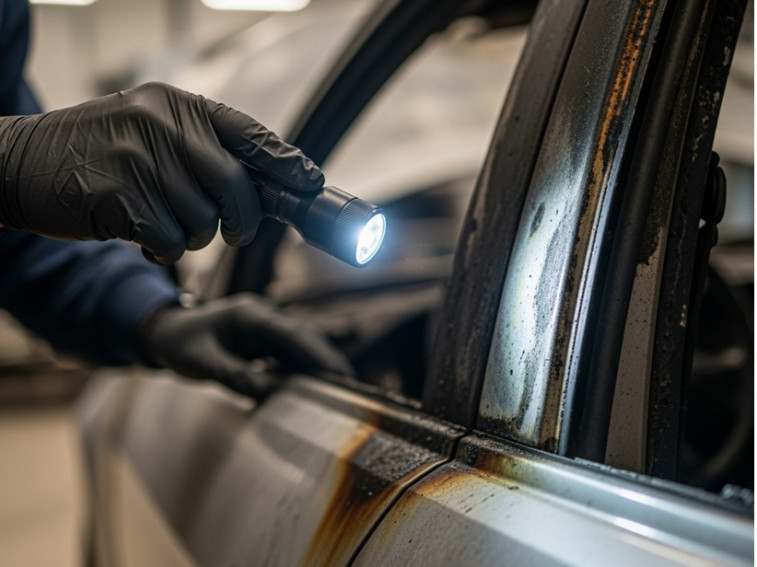
Structural inspection: Use a bright light to examine chassis rails, suspension mounting points, and door frames for discolouration indicating heat exposure. Pay particular attention to welds; these concentrate stress and fail first when heat-weakened.
Category Classification
UK insurance categories help assess fire-damaged vehicles, but fire damage often crosses category boundaries in ways that are not immediately obvious.
-
Category A (scrap only): Any vehicle where fire compromised structural integrity or where toxic contamination makes it unsafe. This includes most cabin fires and any fire that reached suspension mounting points or chassis rails.
-
Category B (break for parts): Vehicles with extensive fire damage but salvageable components. Engine bay fires that did not reach the cabin might yield good interior parts, wheels, and glass. Cabin fires might provide good mechanical components when browsing featured auctions for suitable part-out candidates.
-
Category S (structural damage, repairable): Fire-damaged vehicles rarely fall here unless fire was extremely localised and promptly extinguished. The category is possible for small fires affecting non-structural panels.
-
Category N (non-structural, repairable): Very minor fires might qualify, perhaps a small electrical fire caught immediately, affecting only a small area of wiring harness. These are rare at auction because minor damage does not usually result in insurance write-offs.
Economic Viability
Calculate realistic restoration costs against market value. Fire damage creates a cascade of necessary repairs that exceed initial estimates.
-
Complete interior (seats, carpets, door cards, headliner): £2000-4000
-
Dashboard and instrument cluster: £1500-3000
-
HVAC system replacement: £800-1500
-
Complete wiring harness: £1000-2000 plus 20-30 hours labour
-
Paint correction for smoke staining: £500-1000
-
Total: £5800-11,500 before addressing mechanical issues.
-
Engine replacement or rebuild: £2000-8000 depending on vehicle
-
Wiring harness: £800-1500
-
Ancillary components (alternator, starter, sensors): £500-1000
-
Paint and body repair: £1000-3000
-
Total: £4300-13,500 minimum.
These figures assume no structural damage requiring specialist repair or certification. Add 30-50% to account for hidden damage discovered during restoration.
Health and Safety Considerations
Fire-damaged salvage vehicles contain hazardous materials that require proper handling. Smoke residues include heavy metals from burning electronics, dioxins from plastic combustion, and polycyclic aromatic hydrocarbons from petroleum fires. These compounds are carcinogenic and require respiratory protection during inspection and dismantling.
Lead from battery acid, mercury from switches, and cadmium from wiring all concentrate in fire residues. Professional restoration requires proper protective equipment: respirator with P100 filters, disposable coveralls, and nitrile gloves. Simply sitting in a smoke-damaged vehicle exposes you to harmful particles.
For vehicles you are considering for restoration, factor in professional decontamination costs. This involves removing all soft materials, treating hard surfaces with specialised cleaners, and sealing remaining smoke-contaminated areas. Few restoration shops offer this service, and those that do charge £1500-3000 for thorough decontamination.
Conclusion
Smoke and heat damage assessment requires understanding how fire affects different materials and systems throughout a vehicle. Surface appearance misleads; a car that looks repairable often harbours structural weakness, electrical faults, and toxic contamination that make restoration uneconomical or unsafe.
The most viable fire-damaged vehicles are those with extremely localised damage caught and extinguished quickly, affecting only easily replaceable components. Extensive cabin fires create health hazards that persist despite cleaning. Engine bay fires often damage more than the immediately visible components, with heat conducting through metal and wiring to compromise systems throughout the vehicle.
Before bidding on fire-damaged salvage, calculate realistic restoration costs including complete replacement of affected systems, not repair of damaged components. Factor in professional decontamination for any vehicle with significant smoke exposure. Contact RAW2K to discuss fire-damaged inventory assessment and restoration planning. Most importantly, understand that some fire damage cannot be economically repaired; knowing when to walk away from a vehicle is as valuable as knowing how to assess one. Ready to explore fire-damaged opportunities? Register to bid and access the latest fire-damaged inventory through these comprehensive auctions.