Audi salvage vehicles represent a substantial segment of the UK's insurance write-off market, with premium German engineering meeting accident damage, flood exposure, or theft recovery. We process hundreds of these vehicles annually through our auction platform, and the pattern is clear: buyers who understand what they're examining before bidding consistently secure better value than those chasing badge prestige alone.
The appeal of purchasing Audi salvage vehicles is obvious. A three-year-old Audi A4 with 30,000 miles might retail at £22,000 in good condition. The same vehicle with a Category S structural damage marker could appear at auction for £8,000-£12,000. That £10,000+ saving attracts both trade buyers and private individuals, but the difference between a profitable repair and an expensive mistake often comes down to pre-bid inspection discipline when evaluating Audi salvage vehicles.
Understanding Category Classifications for Audi Models
Insurance companies classify write-offs into four categories, and each carries different implications for Audi vehicles specifically. Category A and B vehicles cannot return to the road - they're designated for scrap or parts only. Category S (structural damage) and Category N (non-structural damage) vehicles can be repaired and re-registered, making them the primary auction targets for buyers seeking Audi salvage vehicles.
Category S Audi vehicles typically involve damage to the chassis, suspension mounting points, or crumple zones. We've seen A6 models with front-end collision damage where the repair costs exceeded the insurer's economic threshold, yet specialist body shops completed the work for £6,000-£8,000. The vehicle returned to roadworthy condition, but the Category S marker remains permanently on the V5C registration document and reduces resale value by 20-30% compared to clean examples of equivalent Audi salvage vehicles.
Category N classifications cover everything from electrical system damage to cosmetic bodywork that doesn't affect structural integrity. An Audi Q5 with £7,000 of paintwork and panel damage from a car park incident might receive a Category N marker, despite requiring no mechanical repairs. These Audi salvage vehicles often represent better value for buyers with access to affordable body shop services.
The critical distinction: Category S repairs for Audi salvage vehicles require more technical expertise and stricter safety verification. An Audi's aluminium space frame construction (used in A8, A6, and Q7 models) demands specialist welding equipment and manufacturer-approved repair procedures. Not every body shop can handle this work competently when restoring Audi salvage vehicles.
Common Damage Patterns in Audi Salvage Stock
After examining thousands of Audi salvage vehicles, certain damage patterns emerge repeatedly. Front-end collisions dominate - approximately 60% of salvage Audis show primary impact damage to the nose, affecting the radiator support, front subframe, and engine bay components. The quattro all-wheel-drive system adds complexity here, as impact forces can transfer through the front differential to the propshaft and rear differential housing in Audi salvage vehicles.
Flood-damaged Audis appear regularly at vehicle auctions, particularly after major UK flooding events. These represent exceptional risk. Water ingress affects the extensive electronic architecture that modern Audis depend on - the MMI infotainment system, adaptive suspension controllers, parking sensors, and the multiple control modules distributed throughout the vehicle. We've documented cases where flood-damaged A4 models appeared cosmetically perfect but developed cascading electrical failures over 6-12 months post-repair, costing owners £4,000-£8,000 in replacement modules on what seemed like stable Audi salvage vehicles.
Theft recovery vehicles follow predictable patterns when appearing at salvage auctions. Stolen Audi A3 and S3 models typically show ignition damage, broken door locks, and sometimes engine bay tampering where thieves attempted to defeat the immobiliser system. More concerning: some recovered Audi salvage vehicles were used for secondary crimes (ram raids, fuel theft) and sustained hidden structural damage that only becomes apparent during detailed inspection.
Rear-end shunts in Audi saloons and estates often damage more than initially visible in the salvage inspection process. The rear subframe mounting points, boot floor structure, and fuel system components require careful examination when evaluating Audi salvage vehicles. Q-series SUV models with rear damage frequently have tow bar mounting point deformation that affects chassis alignment.
Pre-Bid Inspection Checklist
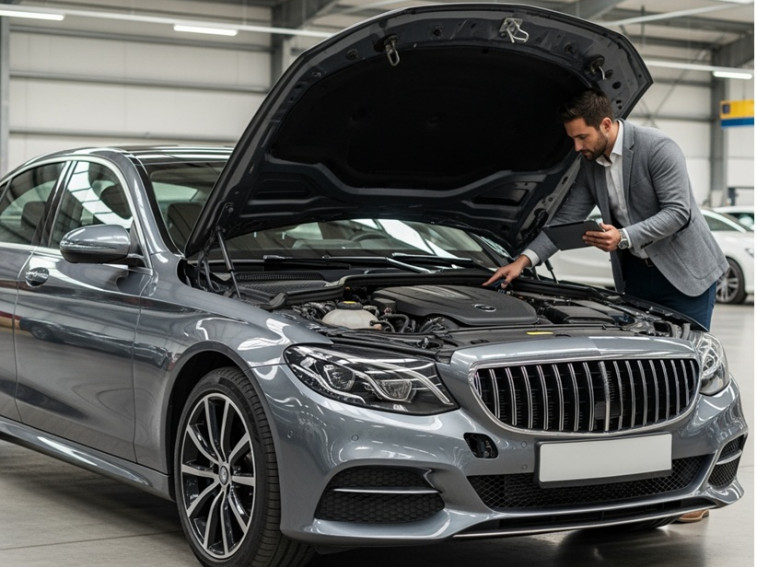
Successful bidders arrive at vehicle auctions with systematic inspection protocols, not emotional attachment to the Audi badge. Start with documentation verification before examining the physical vehicle when assessing Audi salvage vehicles.
Documentation Review:
-
The V5C registration document matches the VIN plate and engine number
-
The insurance category classification is clearly stated
-
Any outstanding finance is disclosed (check via HPI or similar services)
-
The vehicle's MOT history shows no concerning failure patterns pre-accident
-
Service records exist, particularly for high-performance S and RS models of Audi salvage vehicles
Physical inspection requires methodical progression through critical systems. Begin with panel gaps and paint alignment on Audi salvage vehicles. Audi builds to tight tolerances - typically 3-4mm panel gaps with consistent reveal lines. Post-accident repairs often show 6-8mm gaps or misaligned shut lines, indicating hasty or substandard bodywork on repaired Audi salvage vehicles. Run your hand along panel edges; overspray texture on rubber seals or plastic trim confirms repainting.
Structural Examination Points:
-
Weld marks or heat discolouration on structural members (indicates repair attempts)
-
Creasing or rippling in the chassis rails, particularly behind the front wheels
-
Fresh underseal or coating applied to specific areas (often conceals damage)
-
Mismatched bolt heads or fasteners (suggests component replacement)
The quattro system demands specific attention when inspecting Audi salvage vehicles. Crawl underneath and inspect the propshaft, front and rear differentials, and drive axles. Any impact damage severe enough to bend suspension components likely affected the drivetrain. Replacing an Audi rear differential costs £800-£1,500 for parts alone. Front differentials integrated with the gearbox push repair costs to £2,000-£4,000 when dealing with Audi salvage vehicles.
Open every door, the bonnet, and the boot. Check that all panels operate smoothly without binding or misalignment on Audi salvage vehicles. Audi door hinges are precisely adjusted - any door that drops when opened or requires lifting to close properly indicates structural distortion in the A-pillar or door frame.
Electronics and Hidden System Damage
Modern Audi vehicles contain 40-100 electronic control modules depending on specification level. This creates unique challenges with Audi salvage vehicles that sustained impact damage or water exposure. A vehicle might start and drive normally during a brief auction inspection, yet harbour fault codes that indicate expensive future failures when you own these Audi salvage vehicles.
Professional buyers arrive at salvage auctions with OBD-II diagnostic tools capable of interrogating all vehicle systems. Basic code readers (£30-£50) only access the engine and transmission modules. Comprehensive diagnostic equipment (£200-£2,000) reads every control module: airbag system, ABS, parking sensors, adaptive cruise control, LED headlight modules, and climate control when evaluating Audi salvage vehicles.
We've documented cases where seemingly minor front-end damage in an Audi A6 destroyed the adaptive cruise control radar module (£800-£1,200 replacement cost), damaged the camera system for lane-keeping assist (£400-£600), and fractured the LED headlight control module (£300-£500 per side). None of these failures prevented the vehicle from driving, but collectively they represented £2,500-£3,500 in additional repair costs beyond the visible bodywork damage on what appeared to be manageable Audi salvage vehicles.
Water damage creates particularly insidious problems in Audi salvage vehicles. Audi positions control modules throughout the vehicle - under seats, behind kick panels, in door frames. Flood water reaching 30-40cm depth can affect modules that won't fail immediately but develop corrosion over months. The symptoms appear gradually: intermittent electrical faults, systems that stop working randomly, and eventually complete module failure requiring replacement.
Water Damage Indicators:
-
Tide marks on the interior trim or carpet backing
-
Musty odour (even after cleaning attempts)
-
Moisture or condensation inside light clusters
-
Corrosion on seat belt buckles or seat adjustment motors
-
Discolouration on the lower door cards or under-dash panels
The MMI infotainment system serves as a useful diagnostic tool when inspecting Audi salvage vehicles. Navigate through the vehicle settings and activate every function: parking sensors, reversing camera, climate control zones, seat heating-cooling, and navigation. Any system showing errors or non-response suggests module damage.
Engine and Transmission Assessment
Audi's engine range from 1.4 TFSI four-cylinders to 4.0 TFSI V8s requires different inspection approaches, but certain principles apply universally when examining Audi salvage vehicles. Start the engine from cold if possible - this reveals issues that disappear once the engine reaches operating temperature.
Cold Start Diagnostics:
-
Timing chain rattle on cold start (common on 2.0 TFSI engines, indicates wear)
-
Irregular idle or misfiring (suggests ignition coil or injector damage)
-
Excessive turbocharger whistle or grinding (turbo bearing failure costs £800-£2,000)
-
Knocking from the engine bay (potential impact damage to engine mounts or accessories)
Check all fluid levels and conditions when evaluating Audi salvage vehicles. Engine oil should be clean and at the correct level - overfilled oil sometimes indicates coolant contamination from head gasket failure. Coolant should be pink-purple (Audi G12-G13 specification) without oil contamination or rust particles. Brake fluid should be clear amber, not dark brown. Power steering fluid (on older models without electric steering) should be clean red.
Transmission inspection varies by type when assessing Audi salvage vehicles. Audi's S tronic dual-clutch gearboxes (found in A3, A4, A5, Q3 models) require smooth, rapid shifts without hesitation or jerking. Test drive if possible, or at minimum run through all gears whilst stationary. Clutch wear on S tronic units becomes expensive - replacement costs £1,500-£2,500 including labour on Audi salvage vehicles.
Tiptronic automatic gearboxes (typically in larger A6, A7, Q7 models) should shift smoothly without flaring (engine revs rising between shifts) or harsh engagement. Check the transmission fluid - it should be red and clean-smelling, not burnt or contaminated with metal particles when inspecting Audi salvage vehicles.
Manual gearboxes are simplest to assess: clutch engagement should be smooth and progressive, gear selection should be precise without grinding or resistance, and there should be no whining from the gearbox in any gear when examining Audi salvage vehicles.
Cost Calculation and Repair Feasibility
Before bidding on any Audi salvage vehicle, calculate the total landed cost including all repair expenses, fees, and transportation. We've seen buyers focus solely on the hammer price and ignore the additional 15-20% in auction fees, transportation costs, and storage charges that accumulate quickly with Audi salvage vehicles.
Build a realistic repair budget by obtaining quotes for specific work. Take detailed photographs of all damage during inspection and send them to body shops for estimates. Generic assumptions about repair costs lead to budget overruns on Audi salvage vehicles. A front-end collision on an Audi A3 might cost £4,000-£6,000 to repair properly, whilst the same damage on an A8 with aluminium construction could reach £12,000-£15,000 when dealing with Audi salvage vehicles.
Factor in parts availability and costs when purchasing Audi salvage vehicles. Genuine Audi parts carry premium pricing - a replacement bonnet for an A4 costs £400-£600, a front bumper assembly £300-£500, and headlight units £500-£1,500 each depending on specification (halogen versus LED versus Matrix LED). Aftermarket alternatives exist for common models but quality varies significantly.
Labour rates for Audi-specialist body shops typically run £45-£65 per hour in the UK. A front-end repair requiring 40-60 hours of body shop time quickly accumulates £2,400-£3,900 in labour costs alone on Audi salvage vehicles. Add parts, paint materials, and consumables, and a seemingly modest Category S A4 can require £6,000-£8,000 total investment.
Compare your projected total cost (purchase price + fees + repairs + transportation) against the market value of an equivalent vehicle without salvage history when evaluating Audi salvage vehicles. If your total investment reaches 75-80% of clean market value, the risk-reward ratio becomes unfavourable. You've eliminated most profit margin and assumed all risk of hidden damage or unforeseen repairs on Audi salvage vehicles.
Legal and Insurance Considerations
Repairing and re-registering a Category S or N Audi requires specific legal compliance when working with Audi salvage vehicles. The vehicle needs a valid MOT test before you can tax and insure it for road use. The MOT station will examine repair quality closely - any safety-critical items showing substandard repair work will result in failure of your Audi salvage vehicles.
Insurance for salvage-repaired vehicles costs 10-30% more than clean examples, and some insurers refuse to cover Category S vehicles entirely. Obtain insurance quotes before bidding to confirm you can actually insure the vehicle once repaired. Specialist insurers exist who cover Audi salvage vehicles, but premiums reflect the increased risk.
When selling a repaired Audi salvage vehicle, legal requirements mandate full disclosure of the category marker. The V5C registration document displays the category classification permanently, and failure to disclose this information to a buyer constitutes fraud. This transparency requirement significantly impacts resale values - expect 20-30% reduction compared to equivalent vehicles without salvage history on your Audi salvage vehicles.
Some buyers purchase Audi salvage vehicles intending to break them for parts rather than repair. This approach works particularly well for high-specification S and RS models where individual components (engine, gearbox, interior trim, wheels, brakes) command strong prices in the used parts market. A written-off RS6 Avant might yield £12,000-£15,000 in parts sales if dismantled systematically and sold through online marketplaces when sourcing Audi salvage vehicles.
Sourcing and Evaluating Audi Salvage Vehicles
Browse current vehicle listings to compare pricing across different Audi models and damage categories. Understanding market availability helps you identify undervalued opportunities before competitive bidding drives prices up.
Professional inspection services provide additional certainty when assessing Audi salvage vehicles. Third-party inspectors can identify issues that might escape casual observation, reducing your risk of purchasing problematic vehicles that cost significantly more to repair than anticipated.
The Verdict on Audi Salvage Vehicles
Audi salvage vehicles offer genuine value opportunities for informed buyers who approach auctions with realistic expectations and thorough inspection discipline. The combination of premium engineering, strong brand recognition, and high repair costs creates a market where knowledge directly converts to profit - or protects against expensive mistakes when dealing with Audi salvage vehicles.
Success requires understanding that the Audi badge doesn't eliminate risk; if anything, the complex electronics, aluminium construction, and expensive parts unique to Audi models increase the technical knowledge required for sound buying decisions when investing in Audi salvage vehicles.
Category S vehicles demand particular scrutiny around structural repairs and alignment, whilst Category N vehicles often conceal electrical system damage that manifests gradually over time when working with Audi salvage vehicles.
The buyers who consistently profit from Audi salvage purchases share common practices: they inspect methodically rather than emotionally, they calculate total landed costs including all repairs before bidding, they verify parts availability and costs beforehand, and they maintain strict maximum bid limits that preserve adequate profit margin against unforeseen issues. They understand that walking away from a vehicle that doesn't meet inspection standards costs nothing, whilst buying a problem vehicle costs thousands on Audi salvage vehicles.
For those willing to invest time in proper due diligence, develop relationships with Audi-specialist repair shops, and approach each auction with disciplined evaluation criteria, Audi salvage vehicles represent a viable path to vehicle ownership or trade profit. The market rewards expertise and punishes assumptions - ensure you're positioned in the former category before placing your first bid.
For detailed guidance on evaluating specific Audi salvage vehicles or current listings, contact RAW2K for professional support with your purchase decisions.