You'd think a shiny, three-year-old motor would be tougher than an old banger, wouldn't you? After all, it's got all the latest safety tech, stronger materials, and engineering that's light years ahead of what we had two decades ago. Yet here's the kicker: newer cars are getting written off at alarming rates, often from damage that would've been repairable on older models.
After 30-odd years in the motor trade, the shift has become unmistakably clear. Back in the day, you could bash out a dent, slap on some filler, and have a car back on the road within a week. Now? A minor shunt can total a £25,000 vehicle that's barely run in. It's not because modern cars are poorly built. Quite the opposite. It's because the maths behind insurance write-offs has changed completely, and the cars themselves have become vastly more complex.
Understanding why this is happening, what it means for buyers at vehicle auctions, and how you can spot the opportunities amongst new car write-offs requires examining the economics, technology, and market forces at play.
The Economics Behind Modern Write-Offs
Insurance companies don't write off cars based on sentiment or potential. They follow cold, hard calculations. When repair costs hit a certain percentage of a vehicle's market value (typically 60–70%), the insurer declares it a total loss. That's your Category S (structural damage) or Category N (non-structural damage) write-off right there.
Here's where newer cars get caught out. A 2022 model with £30,000 on its head can be written off if repairs exceed £18,000–£21,000. Sounds like a lot, doesn't it? But modern repair bills escalate frighteningly fast, and depreciation rates for newer vehicles mean their market value drops whilst repair costs remain static.
Consider this: replacing a single headlight assembly on a new BMW 3 Series can cost £1,500–£2,000. That's just one headlight. Add in a bonnet (£800–£1,200), a front bumper with sensors (£1,000–£1,500), recalibration of safety systems (£500–£800), and you're already at £4,000–£5,500 before you've even touched the paintwork or structural repairs. Include labour at £60–£80 per hour, and you're staring down a £10,000–£15,000 bill for what looks like relatively minor front-end damage.
Meanwhile, an older car worth £3,000 gets written off at £1,800–£2,100 in repairs. The damage threshold is much lower, but the actual physical damage required to reach it is often far more severe.
Technology Costs Are Killing Repairability
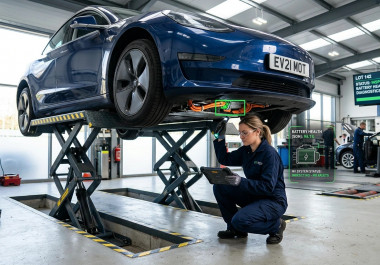
Modern vehicles are rolling computers wrapped in metal and plastic. The average new car has 30–50 electronic control units (ECUs) managing everything from engine timing to automatic emergency braking. When these systems get damaged, you can't just swap parts and crack on. Everything needs diagnostic checks, software updates, and recalibration.
Consider a 2020 Mercedes that had been rear-ended at low speed. Bumper cracked, tailgate dented, nothing major on the surface. But the radar sensor for the adaptive cruise control was knocked out of alignment, and the parking sensors were playing up. The repair shop quoted £6,500. Not because the physical damage was severe, but because recalibrating the safety systems required specialist equipment and three hours of technician time at Mercedes-approved rates.
Contrast that with fixing a 2005 model where you'd bolt on a new bumper, tap out the tailgate, give it a spray, and call it a day for under £1,500.
The Sensor Problem
Advanced Driver Assistance Systems (ADAS) have made cars safer, no question. But they've also made them vastly more expensive to repair. These systems include:
-
Adaptive cruise control radar (front bumper)
-
Lane departure warning cameras (windscreen)
-
Automatic emergency braking sensors (front and rear)
-
Blind spot monitoring (wing mirrors and rear quarters)
-
Parking sensors and cameras (bumpers all round)
Damage to any of these areas means you're not just fixing bodywork. You're replacing sensors that cost hundreds of pounds each, then paying a specialist to recalibrate them using equipment that costs tens of thousands. Many independent garages simply can't do this work, forcing repairs through main dealers at premium rates.
Aluminium and High-Strength Steel
Car manufacturers have spent billions developing lighter, stronger materials to improve fuel efficiency and safety. Brilliant for driving, nightmare for repairs.
Aluminium panels are increasingly common on bonnets, doors, and tailgates because they're lighter than steel. But aluminium can't be repaired the same way. You can't just heat it and bash it back into shape like traditional steel. It loses its structural integrity. Often, the only option is complete replacement.
High-strength steel used in safety cages and crumple zones presents similar issues. It's designed to absorb impact and protect occupants, which it does superbly. But once it's deformed, it can't be straightened safely. Insurance engineers take one look at bent high-strength steel in the A-pillar or sill, and that's a structural write-off right there.
A 2019 Audi A4 had been sideswiped, with the door taking the impact. But the force had slightly deformed the B-pillar. Maybe 5 mm out of true. On an older car, you might've pulled it straight. On this one, the high-strength steel meant the entire side structure was compromised. Written off. The car had 8,000 miles on it.
Parts Availability and Supply Chains
Here's something that catches people out: newer cars often have worse parts availability than older models. Sounds backwards, doesn't it?
Manufacturers are producing more model variants than ever, with different trim levels, option packages, and regional specifications. Each variant needs specific parts. When a new model's only been out for 18 months, there simply aren't many salvage vehicles to pull parts from, and pattern parts haven't hit the market yet.
That means genuine dealer parts at full retail prices. Often they come with lead times of several weeks or months. Insurance companies won't hang about waiting for parts when they can settle the claim and move on. If parts aren't readily available, the repair estimate inflates, and the car gets written off.
The pandemic and subsequent supply chain issues made this worse. New car write-offs have happened purely because key parts had 12-week lead times, making the repair economically unviable even though the parts cost wasn't excessive.
Depreciation Hits Hardest in the First Three Years
New cars lose value fastest in their first few years. Typically, they lose 15–20% in year one, then 10–15% annually for the next two years. By year three, a £30,000 car might be worth £18,000–£20,000. But repair costs don't depreciate. That headlight still costs £1,500 whether the car's three months or three years old.
This creates a perfect storm for write-offs. The car's value is plummeting whilst repair costs remain static. The gap between market value and repair threshold narrows rapidly, making new car write-offs increasingly likely. Depreciation rates for premium brands are particularly harsh, with some luxury models losing 50% of their value within three years.
Older cars have already taken their depreciation hit. A ten-year-old vehicle worth £3,000 has found its floor. It's not losing much more value. The repair-to-value ratio actually becomes more favourable as the car ages, assuming it stays mechanically sound.
Insurance Categories Explained
When a car's written off, it gets assigned a category that determines what can happen to it next. Understanding these is crucial if you're looking at car auctions:
Category A: Complete destruction required. Usually reserved for vehicles with dangerous structural damage or those involved in serious incidents. These can't be repaired under any circumstances.
Category B: Body shell must be crushed, but parts can be salvaged. You'll see these broken for spares but never back on the road.
Category S (formerly Cat C): Structural damage that's been repaired or is repairable. These vehicles can return to the road after proper repairs and re-registration. They're often the sweet spot for savvy buyers.
Category N (formerly Cat D): Non-structural damage. Think cosmetic damage, electrical issues, or interior damage. These are frequently the best value in salvage auctions because the damage sounds worse than it is.
The majority of newer car write-offs fall into Category S or N precisely because the damage isn't catastrophic. It's just economically unviable for the insurer to repair given the car's current market value and steep depreciation rates.
The Opportunities in Salvage Auctions
Here's where it gets interesting for buyers. Those economic calculations that make insurers write off newer cars create genuine opportunities for anyone willing to do their homework.
A Category N write-off might have £8,000 of cosmetic damage on a car worth £20,000 to an insurer. But if you can source parts independently, use a trusted independent garage, or even do some work yourself, you might repair it for £4,000–£5,000. Buy it at auction for £10,000–£12,000, fix it properly, and you've got a nearly-new car for £15,000–£17,000 that would've cost £20,000+ on the forecourt.
Smart buyers have picked up Category S vehicles where the structural damage was limited to bolt-on components. Suspension arms, subframes, nothing involving the safety cell itself. These can be repaired to factory standards by competent technicians, then sold on or kept as perfectly safe, reliable vehicles.
The key is knowing what you're looking at. When browsing featured auctions, pay attention to:
-
Detailed damage reports: Good auction houses provide comprehensive descriptions and photos
-
Category type: S or N? What specific damage caused the write-off?
-
Parts availability: Can you source what you need without dealer-only parts?
-
Repair complexity: Do you need specialist equipment or can an independent handle it?
What to Watch Out For
Not every salvage vehicle is a bargain waiting to happen. Some are written off for very good reasons, and you don't want to discover why after you've handed over your cash.
Flood damage is particularly nasty on modern cars. All those electronic systems? They don't take kindly to submersion. You might dry out the carpets and get it running, but you'll be chasing electrical gremlins for years. Corrosion will creep through wiring looms, connectors will fail, and ECUs will pack in without warning. Unless you're breaking it for parts, stay away from flood-damaged modern vehicles.
Airbag deployment isn't automatically a deal-breaker, but it's expensive to sort properly. You need new airbags, new seatbelt pretensioners, possibly a new steering wheel, and definitely a full system reset. On some vehicles, the airbag ECU won't reset and needs replacing. That's £500–£800 before you've bought a single airbag. Budget at least £2,000–£3,000 to sort airbags properly on a modern car.
Frame damage is the big one. If the safety cell itself is bent, twisted, or compromised, you're taking on serious risk. Modern crash structures are designed to deform in specific ways to protect occupants. Once they've done their job, they can't reliably do it again, even if pulled back into shape. Category S write-offs with chassis or monocoque damage need very careful assessment by someone who knows what they're looking at.
The Future: Getting Worse Before It Gets Better
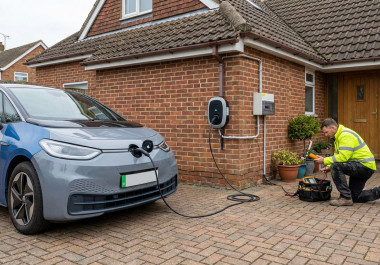
Electric vehicles are going to make this whole situation more extreme. Battery packs cost £8,000–£15,000 to replace, and they're vulnerable in side impacts and underside strikes. Even minor damage to the battery casing can result in a write-off because insurers won't take chances with potential fire risks or battery degradation.
We're also seeing more integrated body structures where panels are bonded rather than bolted. These are lighter and stiffer, but they're essentially unrepairable. Damage to a bonded panel means replacing entire body sections rather than individual components.
The sensor arrays required for autonomous driving systems will make current ADAS look simple. More sensors, more cameras, more lidar, more radar. All of it expensive, all of it requiring specialist calibration, all of it driving up repair costs and contributing to higher new car write-offs.
The write-off trend for newer vehicles isn't reversing anytime soon. If anything, it's accelerating.
Making It Work for You
Despite all this, there's never been a better time to buy salvage vehicles if you know what you're doing. The volume of repairable write-offs hitting online vehicle auctions has increased dramatically, and competition hasn't caught up yet.
Do your research before you bid. Understand what you're buying, what it'll cost to fix, and what it'll be worth when you're done. Understanding depreciation rates helps you predict future value and avoid overpaying for vehicles that will continue losing value rapidly.
Check the vehicle history thoroughly. A Category N write-off from a car park ding is very different from one that's been through three owners and two previous insurance claims. Look at MOT history, service records, and try to understand the full story.
Get proper pre-purchase inspections when possible. Many auction houses allow viewing appointments. Take someone who knows what they're looking at, or pay a mobile inspector to check it over. A hundred quid spent on inspection can save you thousands in nasty surprises.
Budget realistically for repairs. Get quotes before you bid, not after. Factor in parts, labour, MOT, registration fees, and a contingency for unexpected issues. If your sums only work if everything goes perfectly, you're going to get burned.
If you're ready to explore salvage opportunities, register with RAW2K to access our full inventory of repairable write-offs. Alternatively, if you've got a newer vehicle that's been written off, you can auction your car with us to recover maximum value.
The Bottom Line
Newer cars get written off more easily because they're more complex, more expensive to repair, and depreciate faster than repair costs. The same technology that makes them safer, cleaner, and more efficient also makes them economically fragile when damaged.
But that's not necessarily bad news. It means the salvage market is full of relatively young, low-mileage vehicles that can be repaired and returned to service for far less than their pre-accident value. You just need to approach it with your eyes open and your calculator handy.
Whether you're looking to sell a vehicle after an incident, or you're hunting for a bargain amongst the write-offs, understanding these economics puts you ahead of the game. The insurance company's loss can absolutely be your gain. You just need to do your homework first. For additional support and guidance, contact us with any questions about specific vehicles or auction processes.