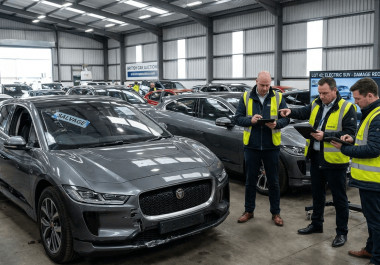
When evaluating inventory at a digital salvage auction, inexperienced participants frequently walk away from Category N vehicles due to unfounded fears regarding structural integrity. For example, a trade buyer might pass on a lightly damaged premium saloon because they assume the salvage marker indicates a severe hazard. A more experienced commercial operator will acquire that same asset, rectify the cosmetic issues, and secure a substantial profit margin simply by understanding the underlying mechanics of insurance classifications.
The broader discussion surrounding salvage car safety is frequently riddled with misconceptions, half-truths, and outdated industry myths. Many retail consumers treat every recorded vehicle as an inherent liability, while trade professionals view the same inventory as a primary source of commercial profit. The reality sits somewhere in the middle. Successfully navigating this sector requires a strict, data-driven approach to acquisitions.
The question of whether these vehicles represent a commercial risk ultimately comes down to understanding what the official insurance category actually means, rather than relying on generalized market assumptions.
What "Salvage" Actually Means
The term 'salvage' does not inherently indicate danger. It merely signifies that an insurance provider determined the commercial repair costs were not economically viable when compared to the vehicle's pre-accident retail value. Recognizing this distinction is crucial for any trade buyer attempting to source profitable stock.
When an insured vehicle sustains damage, the underwriter calculates whether commercial repair estimates exceed a specific percentage of the asset's market value, which typically sits between 60 and 70 percent. If the estimates exceed this threshold, the insurer writes off the vehicle, settles the policyholder's claim, and applies a permanent salvage category marker to the chassis.
However, the mathematics behind this decision often mask the true physical condition of the asset. A vehicle valued at £3,000 only requires £2,100 in commercial repair estimates to trigger a write-off. A deep scrape along two side panels requiring professional paint blending could easily hit that financial threshold. The vehicle is not inherently unsafe; the rectification process simply does not align with the insurer's economic parameters.
Understanding salvage categories is comparable to reading a commercial property survey. A Category N designation is akin to cosmetic damage requiring new fixtures, whereas a Category S designation implies structural work is necessary but the core asset remains salvageable.
The Four Salvage Categories Explained
The UK utilizes four primary salvage categories to classify damaged inventory: A, B, S, and N. The first two categories must never return to the public highway, while the latter two can be legally repaired and re-registered, presenting significant opportunities for trade buyers sourcing inventory through digital vehicle auctions.
Category A vehicles have suffered catastrophic damage, typically resulting from severe fire or heavy collision. These units must be crushed entirely, including all salvageable components. These assets never appear on public auction listings because their only legal destination is immediate destruction.
Category B vehicles possess severe structural damage. The core bodyshell must be crushed, although specific mechanical components can be legally extracted and sold for spares. Because the chassis cannot return to the road under any circumstances, these units are acquired strictly by licensed breakers.
Category S indicates structural damage that is commercially repairable. This classification covers damage to the core chassis, crumple zones, or suspension mounting points. These vehicles can legally return to the road following professional rectification and independent alignment verification, but they require rigorous assessment before capital is committed.
Category N covers non-structural damage. This classification encompasses cosmetic bodywork, light suspension damage, or severe electrical faults. The core chassis geometry remains sound. These units consistently represent the highest value propositions at auction because the market discount often outweighs the actual physical deterioration.
Why Category N Cars Get a Bad Reputation
Category N vehicles suffer from a severe perception problem within the broader retail market. The official salvage label deters retail buyers who do not understand the classification metrics, thereby creating a highly lucrative pricing opportunity for trade professionals who do.
Category N vehicles featuring nothing more than superficial side panel damage and cracked light clusters regularly appear at auction. The structural integrity is never compromised, the airbag systems remain intact, and the vehicle frequently remains entirely drivable. Despite this, the permanent marker causes the asset to sell for 30 to 40 percent below standard retail market value.
The myth surrounding these vehicles stems from a fundamental misunderstanding where end-consumers assume a write-off equates to a safety hazard. In reality, it merely indicates the vehicle was uneconomical to repair through mainstream insurance channels. A main dealership might quote £2,500 to replace and blend three panels, while an independent commercial bodyshop could execute the same rectification for £900. The vehicle's inherent salvage car safety has not changed; only the commercial repair economics have shifted.
However, trade buyers must still exercise caution. Flood damage frequently results in a Category N classification because water ingress does not twist the chassis. Unfortunately, severe flooding can cause long-term electrical deterioration that vastly exceeds the initial purchase price, making strict due diligence mandatory.
When Category S Cars Are Actually Risky
Category S vehicles demand a much higher level of scrutiny because structural damage directly impacts crash safety. Despite the stigma, properly repaired Category S cars can be perfectly safe for daily operation, provided the rectifications are executed to a professional standard.
The critical factor is the quality of the rectification. A Category S vehicle repaired by a qualified commercial technician utilizing manufacturer-approved alignment jigs and genuine replacement panels will meet standard safety metrics. The primary challenge for any trade buyer evaluating stock across regional hubs, such as vehicle auctions in the West Midlands, is verifying that this work was completed correctly before acquiring a previously repaired unit.
Straightforward structural repairs present minimal risk. A front-end collision that damages the radiator support and front crumple zones can be rectified by replacing those specific components entirely. If the repair is fully documented with invoices, high-resolution photographs, and an independent engineer's report, the asset holds genuine commercial viability.
Conversely, poorly executed structural work presents extreme liability. Bent chassis rails that have simply been pulled straight with heat, rather than replaced, severely compromise the vehicle's crash performance. The buyer's responsibility is to rigorously verify the physical condition of the chassis rather than blindly trusting the category label.
The Real Dangers: What Actually Makes Salvage Cars Risky
Genuine salvage car safety risks do not stem from the official category marker itself. Poor rectification work, inadequate vendor disclosure, and buyer ignorance create the actual financial and physical dangers within the market.
Substandard repairs are the primary hazard. Operators who utilize excessive filler instead of replacing damaged panels, or who attempt to straighten a bent subframe without proper alignment geometry equipment, create vehicles that look acceptable cosmetically but perform terribly under stress. This is precisely why conducting a rigorous salvage vehicle inspection matters, especially when assessing Category S chassis integrity.
Flood damage remains particularly insidious. Water ingress initiates aggressive corrosion within complex electrical harnesses, frequently leading to catastrophic failures months after the initial event. A vehicle might appear fully functional at auction, only to develop severe engine management faults shortly after acquisition. Professionals always check for subtle water lines within the interior footwells and boot cavities.
Inadequate historical documentation creates massive commercial risk because buyers have no verifiable method to confirm what was repaired. Acquiring a previously repaired Category S vehicle without corresponding invoices or alignment reports is a severe commercial gamble that rarely yields sustainable profit margins.
How RAW2K Lists Salvage Vehicles
Transparency matters enormously in the digital auction environment. A reputable digital gateway must provide trade buyers with the precise intelligence required to make informed commercial decisions before capital is deployed.
The platform lists every vehicle with its exact official salvage category, a detailed damage description, and objective condition notes. Every listing includes high-resolution photography from multiple angles, clearly displaying both the primary impact zones and the general overall condition of the asset.
Listings explicitly state whether the vehicle currently starts and drives, whether the operational keys are present, the current V5C documentation status, the recorded mileage, and the specific storage facility where the asset is currently located. This level of detail supports comprehensive salvage vehicle inspection planning before bidding begins.
By providing clear, objective data, the platform allows commercial operators to cross-reference the visual damage against their own internal repair cost estimates, ensuring every acquisition is based on strict mathematics rather than guesswork.
Which Salvage Cars Represent Good Value
Not all salvage units represent equal commercial opportunities. Trade professionals must strategically target specific damage profiles to maintain reliable profit margins while avoiding assets that drain working capital.
Category N cosmetic damage represents the most reliable acquisition strategy. A vehicle featuring heavily scratched panels or a damaged bumper can be rectified highly cost-effectively, especially by operators utilizing internal bodyshop facilities. These units frequently pass subsequent MOTs without issue once the visual damage is addressed. Trade buyers monitoring vehicle auctions in the North West consistently target these light-damage units for rapid commercial turnaround.
Category N electrical faults occasionally provide excellent value for buyers possessing advanced diagnostic capabilities. A vehicle written off due to an airbag deployment fault or a complex ABS sensor issue might only require minimal capital for replacement parts alongside a few hours of skilled labour.
Category S units with fully documented professional repairs are viable if the quality is independently verifiable. Trade buyers operating full-scale repair facilities frequently target unrepaired Category S vehicles because they possess the heavy jig equipment required to rectify structural damage properly, allowing them to secure substantial margins that retail buyers cannot access.
What the Insurance Industry Won't Tell You
The broader insurance industry indirectly benefits from the public perception that salvage categories represent severe danger. The more retail consumers fear recorded vehicles, the lower the residual market value drops, which actively reduces the insurer's net payout during total loss settlements.
When an underwriter writes off a vehicle, they compensate the policyholder for the pre-accident market value, minus whatever they can recover by liquidating the damaged asset at auction. If public perception suppresses salvage values, the insurer's net liability decreases. Therefore, the industry has little incentive to educate the public regarding the actual safety of professionally repaired Category N units.
Furthermore, mainstream insurers frequently charge retail consumers significantly higher annual premiums for recorded vehicles, citing an increased risk profile. For the trade professional, this retail friction is a critical metric; because the end-consumer faces higher insurance costs, the available retail buyer pool shrinks. Trade buyers must factor this market resistance into their initial auction bids. However, the standard DVSA MOT test does not differentiate between salvage and non-salvage vehicles; it tests strict mechanical roadworthiness. If a repaired vehicle ultimately proves too difficult to sell to the retail market, commercial operators frequently utilize a dedicated scrap my car service to rapidly liquidate the chassis and recover baseline capital.
How to Assess Salvage Vehicles Before Bidding
Commercial due diligence is the only reliable defence against acquiring a problematic asset. Trade professionals must implement a strict verification process before engaging with any digital auction platform.
The process begins by forensically analyzing the listing details. Buyers must note the exact salvage category, evaluate the damage description against the high-resolution imagery, and verify the documentation status. Missing V5C paperwork or absent keys instantly adds logistical complexity and financial overhead to the recovery process.
Trade buyers must also conduct independent external HPI checks prior to bidding. This external verification confirms the official salvage category, checks for outstanding finance agreements, and ensures the recorded mileage aligns with historical MOT data. Discovering mileage discrepancies via external checks prevents buyers from acquiring heavily clocked inventory. Operators targeting specific regional stock, such as evaluating vehicle auctions in Northern Ireland, rely heavily on these external digital checks before arranging expensive logistical transport.
When physical viewings are restricted, professionals rely on the platform's high-resolution imagery to spot secondary indicators of severe damage, such as misaligned panel gaps on the opposite side of the primary impact zone, which heavily suggests underlying structural twisting.
The Bottom Line on Salvage Safety
The official salvage category does not equal inherent danger. The critical difference between a highly profitable commercial asset and a severe financial liability lies entirely in the specific damage profile, the quality of the subsequent rectifications, and the buyer's ability to accurately assess both factors.
Category N vehicles featuring light cosmetic damage represent some of the most lucrative opportunities within the motor trade. They remain structurally sound, frequently operate perfectly, and require minimal capital to return to a retail standard. Category S vehicles require significantly more caution and advanced repair capabilities, but they are not inherently dangerous when rectified by qualified professionals utilizing appropriate alignment technology.
The genuine risks within this sector stem from poor workmanship and inadequate buyer preparation. A transparent listing combined with a thorough salvage vehicle inspection will guide commercial buyers to the correct acquisition.
If trade professionals require assistance with account verification or have questions regarding tier-based buyer fees, please contact our customer support team for immediate guidance.
To apply this professional due diligence to live inventory and build a highly profitable acquisition strategy, secure auction bidding access today.
Once registered, professionals can immediately evaluate the extensive catalog of trade inventory available across the RAW2K digital gateway.