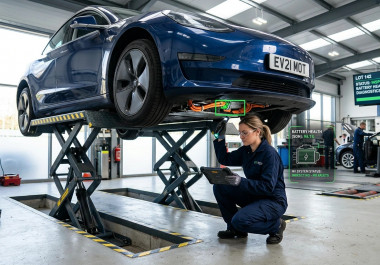
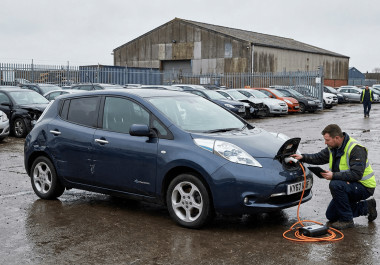
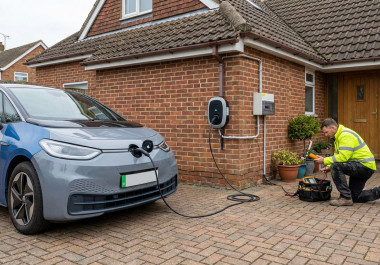
The professional salvage market operates on a simple premise: turning an insurance company's liability (a vehicle declared 'beyond economical repair') into a savvy investor's asset. The key to unlocking this potential involves moving beyond superficial damage and accurately calculating the true residual worth. To succeed, one must master the essential skill of assessing damaged car value and transforming project vehicles into substantial returns.
Focusing on the disciplined inspection and strategic valuation techniques that yield consistent salvage profit tips provides the necessary tools. Professionals often use the RAW2K platform to monitor these opportunities and ensure a robust profit margin is guaranteed before a single bid is placed on a digital platform.
Phase 1: Decoding Risk and Opportunity (The Categories)
The initial strategic step involves understanding the legal classification of the damage. In the UK, this means differentiating between Category S and Category N. These classifications dictate the complexity of the repair and the resale documentation required. When browsing for damaged cars, identifying the specific code is the first step in risk management.
Category N (Non-Structural Damage)
Category N non-structural vehicles offer the most accessible path to profit, as the damage is usually cosmetic or mechanical (electrics, suspension, panels), with the core chassis integrity retained. The write-off decision is purely financial; the insurer has determined the cost of a main-dealer repair exceeds the market value, often ignoring the potential for lower-cost restoration.
Category S (Structural Damage)
Category S vehicles have sustained damage to the structural frame or chassis. While repairable, they demand professional jig work and require mandatory disclosure and specific documentation with the DVLA. To ensure compliance with all legal requirements and to understand the precise scope of structural repair, a deep dive into the insurer's rationale is necessary.
Phase 2: Mastering the Valuation Formula
Success in salvage car auctions is not about luck; it is about mathematics. Profitability hinges on a precise calculation of the maximum permissible bid, ensuring that the damaged car value is accurately determined after all restorations are considered.
Establishing Pre-Accident Value (PAV)
Identification of the car’s worth before the incident initiates the process. This Pre-Accident Value (PAV) sets the revenue ceiling. For the most accurate, real-time market comparison data, robust tools for examining salvage car auctions must always be utilised. A margin of error here will destroy profitability, as overestimating the ceiling price leaves no room for repair expenditure.
Estimating the True Cost of Repair
The repair estimate must be forensic, incorporating three key variables:
-
Parts Sourcing: The ability to achieve efficient used car parts sourcing is the single biggest factor in reducing the overall repair bill.
-
Labour: Firm quotes must be secured from trusted body shops before the acquisition is finalised.
-
Contingency: A 15–20% buffer must always be factored in for hidden damage, such as broken brackets or displaced sensors, that may not be apparent in static photographs.
Market Trend Analysis and Non-Monetary Factors
The accurate valuation process extends beyond physical inspection and repair costs, requiring a thorough analysis of current market dynamics. Understanding the market landscape ensures that the final resale value is realistic. Key variables include seasonality, which affects demand for certain vehicle types, and current supply levels for the specific model.
Furthermore, several non-monetary factors influence the PAV. A vehicle’s vehicle history records and MOT test logs provide critical insight into its long-term maintenance and reliability. A full, verifiable history can substantially increase buyer confidence upon resale. Paint colour rarity and factory option packages also play a role; a desirable specification justifies a more aggressive bid. Every data point, from vehicle history records to digital MOT certificates, contributes to the forensic valuation.
Phase 3: The Profit Pathway Decisions
With the maximum bid calculated, the vehicle’s ultimate fate is decided: repair and resell, or dismantle for high-value components. This choice is critical for maximising salvage profit tips.
The Repair and Resale Strategy
This involves purchasing Category N non-structural vehicles, restoring them to roadworthy condition, and selling them with full disclosure and comprehensive documentation. This strategy hinges on meticulous restoration to a verifiable roadworthy standard. Post-repair assessment involves rigorous quality control, where every aspect of the repair is scrutinised.
Documentation of the repair process is mandatory. This transparency is essential for the final sale, as it builds buyer trust. For detailed guidance on specific documentation requirements, the help section provides further clarity on write-off procedures. Buyers targeting specific geographies can often find local opportunities through vehicle auctions in the North West.
The Component Pathway Strategy
For vehicles with rare or highly expensive major components, the most profitable route is often dismantling. Purchasing a vehicle specifically to strip and sell high-demand items through the Component Pathway can yield returns far greater than the value of the fully repaired car.
Maximising returns through used car parts sourcing requires robust logistical planning. Identifying high-value units like ECUs or expensive light clusters must be followed by efficient dismantling. This approach is highly effective for vehicles that are beyond economic repair but contain specific units that retain significant market value.
Phase 4: Documentation, Compliance, and Re-Registration
A successful salvage operation concludes with the correct legal documentation. For Category S vehicles, a formal post-repair inspection is legally required to ensure the structural integrity has been fully restored to the manufacturer's specification. While Category N vehicles do not require this structural check, both categories must pass a standard MOT test before being sold or put back on the road.
The responsibility for accurately updating the DVLA records rests with the buyer. Maintaining an auditable trail of all receipts and certification documents is not merely a formality; it is a legal requirement that directly impacts the ease and final value of the resale, securing the integrity of the investment. A parallel dismantling strategy applies equally to the two-wheeler market, where high-value components can be sourced through motorcycle auctions.
Conclusion: Strategic Bidding and the Next Step
The difference between a failed project and a highly profitable investment is disciplined execution. By rigorously calculating the true damaged car value against repair capability and market resale value, guesswork is eliminated.
To apply these salvage profit tips to verified, high-quality stock, one can start navigating the full range of UK write-off categories through online car auctions and secure the next project today. If you have any questions regarding specific lot details, feel free to reach out by contacting us for assistance. To begin, simply register an account and start browsing the latest available inventory.