You have just won a salvage vehicle at auction. The payment has cleared, and now you face a decision that can significantly impact your profit margin: do you collect it yourself or pay for professional transport?
This is not a simple question with a universal answer. The right choice depends on distance, vehicle condition, your available time, and equipment. Get it wrong, and you could wipe out your margin on fuel and wasted hours. Get it right, and you either save hundreds on transport costs or free up valuable time for more profitable activities.
Understanding self-collection vs transport options is essential for anyone buying regularly through platforms like RAW2K. This guide breaks down the real costs, practical considerations, and decision factors that determine which salvage vehicle delivery options make sense for your situation.
The Real Cost of Self-Collection
Most buyers underestimate what self-collection actually costs. They look at fuel prices and assume collecting is cheaper than paying a transporter. But the true cost includes far more than diesel.
Fuel Costs
A 200-mile round trip in a van towing a trailer uses roughly 25-30 litres of fuel. At current prices, that is £40-£50 before you have even loaded the vehicle. Longer distances scale accordingly. A 400-mile round trip doubles your fuel bill to £80-£100.
Time Investment
Time has value, especially for trade buyers. A 200-mile collection takes 4-5 hours minimum, including loading, paperwork, and yard procedures. If your time is worth £25 per hour, that collection just cost you £100-£125 in opportunity cost. Add that to your fuel, and self-collection is already approaching professional transport prices.
Equipment Costs
If you do not own a trailer, you need to hire one. Basic car trailer hire runs £40-£60 per day. Add straps, a winch for non-runners, and any specialist equipment, and you are looking at £60-£100 before the collection even starts.
Hidden Costs
Long collections mean meals on the road, possibly overnight accommodation for very distant yards, and wear on your tow vehicle. Motorway tolls add up on certain routes. A breakdown or puncture mid-journey creates additional expenses and delays.
When you add everything together, a self-collection that looked like a £50 fuel cost often totals £150-£200 in real terms. Suddenly, that £180 transport quote does not look so expensive.
When Self-Collection Makes Financial Sense
Despite the hidden costs, self-collection remains the right choice in several scenarios. Understanding when to collect yourself is part of mastering self-collection vs transport decisions.
Short Distances
If the storage yard is within 50 miles of your location, self-collection almost always wins. A 100-mile round trip costs £25-£30 in fuel, takes 2-3 hours, and lets you inspect the vehicle thoroughly before loading. Professional transport for short distances often has minimum charges that make it poor value.
Running Vehicles
If the salvage vehicle runs and drives, you can simply drive it home on trade plates or temporary insurance. This eliminates trailer costs entirely. Your only expense is fuel for the salvage vehicle itself, typically £20-£40 depending on distance. This represents the most cost-effective salvage vehicle delivery option available.
Owning Your Own Equipment
Trade buyers who own trailers and suitable tow vehicles have already absorbed the equipment costs. For them, self-collection costs only fuel and time. If you are collecting regularly, owning equipment pays for itself quickly compared to repeated transport fees.
Multiple Vehicles at One Yard
Winning two or three vehicles stored at the same location changes the maths dramatically. One collection trip for three vehicles splits your fuel and time costs three ways. Professional transport would charge per vehicle, making self-collection significantly cheaper for multi-vehicle pickups.
Flexible Schedule
If you have time available and no pressing alternative use for those hours, the opportunity cost of self-collection drops. A semi-retired buyer collecting a project car has different time economics than a busy trader juggling multiple commitments.
When Professional Transport Saves Money
Professional transport looks expensive until you calculate what self-collection actually costs. In many scenarios, paying a transporter delivers better value.
Long Distances
Any collection over 150 miles deserves serious consideration of professional transport. A 300-mile round trip consumes an entire day, uses £80-£100 in fuel, and puts significant wear on your vehicle. Professional transporters running regular routes often quote competitive prices for long distances because they consolidate multiple deliveries.
Non-Running Vehicles
Collecting a non-runner requires a trailer, winch capability, and often a second person to help load. If you do not have this equipment, hire costs plus the complexity of loading a dead vehicle make professional recovery the sensible choice. Recovery specialists do this daily and can load vehicles you would struggle with.
Complex Recovery Situations
Some salvage vehicles present genuine challenges. Accident damage affecting the wheels, seized brakes, missing keys, or tight yard access all complicate collection. Professional recovery drivers have the equipment and experience to handle these situations efficiently. What takes them 20 minutes might take you two hours of frustration.
High-Value Vehicles
That Cat S BMW or Mercedes might be worth £8,000 after repairs. Risking it on your own trailer, potentially without enclosed protection, creates unnecessary exposure. Enclosed transport or professional flatbed services provide insurance-backed protection that justifies the premium for valuable salvage.
Time-Pressed Situations
If your time genuinely generates income, spending a day on collection makes poor business sense. A trader who could spend that day preparing and selling vehicles sacrifices real profit to save a transport fee. Calculate your actual hourly value and compare it to transport costs. The numbers often favour professional delivery among salvage vehicle delivery options.
Understanding Professional Transport Options
Not all transport services are equal. Understanding what is available helps you choose the right service for each vehicle.
Standard Flatbed Recovery
The most common option for salvage vehicles. A flatbed truck collects your vehicle, loads it via winch or driven, and delivers to your address. Prices typically range from £1.50-£2.50 per mile depending on the provider and route. A 100-mile delivery costs £150-£250.
Enclosed Transport
For high-value salvage or vehicles needing weather protection, enclosed transporters provide full coverage during transit. Expect to pay 30-50% more than standard flatbed services. This option makes sense for classic cars, prestige vehicles, or anything where cosmetic condition affects value significantly.
Multi-Vehicle Transporters
Trade buyers moving multiple vehicles can access car transporter services that carry 4-8 vehicles simultaneously. Per-vehicle costs drop significantly with volume. If you are winning several vehicles weekly, establishing a relationship with a transporter can secure preferential rates.
Specialist Recovery
Some salvage vehicles need specialist handling. Motorcycles require bike-specific equipment. Commercial vehicles over 3.5 tonnes need appropriate recovery trucks. Accident-damaged vehicles with structural issues might need careful loading to prevent further damage. Specialist services cost more but handle complex situations safely.
Getting Transport Quotes
Smart buyers get transport quotes before the auction ends. Knowing the delivery cost lets you factor it into your maximum bid accurately.
Information Transporters Need
To quote accurately, transport companies need the collection postcode, delivery postcode, vehicle make and model, whether the vehicle runs and drives, whether keys are available, and any access restrictions at either end. Provide this information upfront for accurate quotes without surprises.
Obtaining Multiple Quotes
Prices vary significantly between providers. Get at least three quotes for any transport job. Online comparison platforms can streamline this process, but direct quotes from established recovery companies often beat aggregator prices. Check the salvage auction guide for additional guidance on arranging transport.
Comparing Like-for-Like
Ensure quotes cover the same service level. A cheap quote might exclude winch loading, require you to meet the driver at a main road rather than door-to-door delivery, or lack adequate insurance cover. Read the terms carefully before booking the cheapest option.
Seasonal and Regional Variations
Transport prices fluctuate. Busy periods around plate-change months see higher demand and prices. Rural collections cost more than urban ones due to access and route efficiency. Northern collections to southern destinations often cost more than the reverse due to traffic patterns and transporter base locations.
Preparing for Self-Collection
If you decide to collect yourself, proper preparation prevents problems. Arriving unprepared wastes time and potentially leaves you unable to complete the collection.
Equipment Checklist
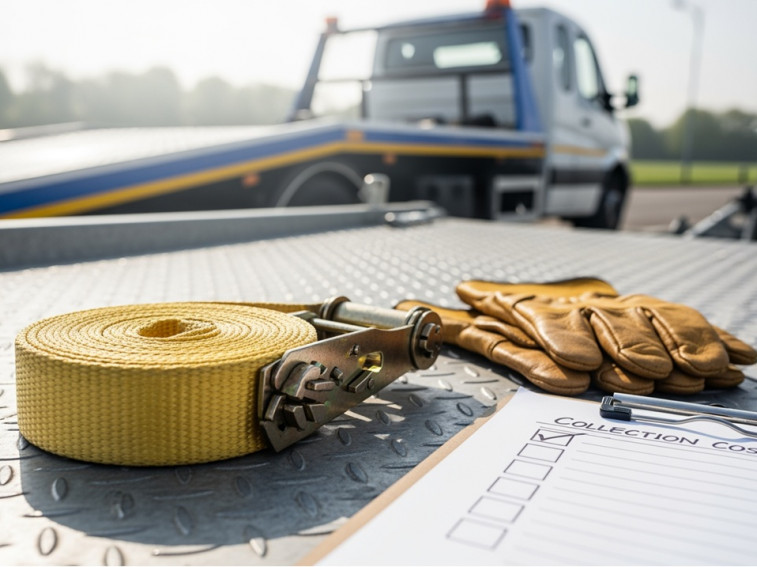
Bring more than you think you need. Essential items include a trailer with adequate capacity, ratchet straps rated for the vehicle weight, a working winch if the vehicle might not roll, jump leads or a jump pack, basic tools including a tyre inflator, tow rope as backup, wheel chocks, and work gloves.
Legal Requirements
If you are driving the salvage vehicle home, you need valid insurance. Trade policies typically cover collection drives on trade plates. Private buyers must arrange temporary cover before driving. Check your tow vehicle's licence requirements. Anything over 3,500kg combined weight requires additional licence categories.
Documentation
Bring your photo ID, collection reference, proof of payment, and any gate pass or release code provided by the auction house. If someone else is collecting on your behalf, they need a signed letter of authority plus their own ID.
Vehicle Inspection
Before loading, inspect the vehicle against the listing description. Check for damage not shown in photos, verify the VIN matches documentation, and confirm key items like keys, logbook, and service history are present as described. Photograph everything before loading. Once you leave the yard, disputing condition becomes much harder.
Arranging Professional Transport
Booking transport efficiently ensures your vehicle arrives without drama or delays.
Booking Timeline
Book transport as soon as payment clears. Good transport providers schedule days in advance, especially during busy periods. Last-minute bookings cost more and offer less flexibility on timing. For non-urgent deliveries, booking a week ahead often secures better rates among salvage vehicle delivery options.
Coordinating with the Auction House
Your transporter needs a collection slot just like you would for self-collection. Provide them with the yard contact details, your collection reference, and any specific yard requirements. Some yards have restricted hours or need advance notice for third-party collections. Confirm all details before the transporter sets off.
Communication
Provide the transport company with your contact number and stay available on collection day. Yard access issues, traffic delays, or vehicle condition questions may need quick resolution. Being unreachable creates problems that delay delivery and potentially incur additional charges.
Tracking and Confirmation
Most professional transporters provide tracking or updates during transit. Confirm expected delivery time and ensure someone is available to receive the vehicle. Inspect it immediately on arrival and note any damage before signing the delivery receipt. Transport company liability ends once you sign.
Special Considerations for Different Vehicle Types
The self-collection vs transport calculation varies by vehicle type. Different categories present unique challenges.
Motorcycles
Collecting motorcycles requires bike-specific equipment. A standard car trailer without wheel chocks and appropriate tie-down points risks damage. Professional bike transport uses dedicated equipment and experienced handlers. Unless you have proper motorcycle transport kit, professional delivery often makes sense for salvage motorcycle wins.
Commercial Vehicles
Vans and trucks present size and weight challenges. Larger vehicles may exceed your towing capacity or require specialist transporters. Driving commercial salvage home works well for running vehicles, but non-running vans need appropriately rated recovery equipment.
Classic and Prestige Vehicles
High-value salvage deserves careful handling. Enclosed transport protects paintwork from road debris and weather. Experienced handlers understand how to load older vehicles without causing damage. The premium for careful transport is worthwhile when the vehicle's value justifies it.
Accident-Damaged Vehicles
Vehicles with structural damage need assessment before transport. Bent suspension components, damaged axles, or compromised steering create loading and unloading challenges. Professional recovery drivers evaluate these issues and use appropriate techniques. Attempting to collect severely damaged vehicles without proper equipment risks further damage and personal injury.
Insurance and Liability
Understanding who is responsible for what protects you financially during collection or delivery.
Trade Plates and Driving Away
Trade plates let registered motor traders drive unregistered vehicles on public roads for business purposes. If you are driving salvage home on trade plates, your trade policy should cover collection drives. Verify this with your insurer. Driving uninsured creates serious legal and financial exposure at UK salvage auctions.
Transport Company Insurance
Reputable transport companies carry goods-in-transit insurance. This covers damage occurring during loading, transit, and unloading. Ask for proof of cover before booking. Verify the policy covers the vehicle's value. Budget operators sometimes have inadequate insurance that leaves you exposed if something goes wrong.
Your Liability During Self-Collection
When you collect yourself, you bear responsibility for any damage during loading and transport. Your trailer insurance or motor policy may provide some cover, but check the terms carefully. Loading a vehicle onto a trailer creates risks that standard policies may not cover.
Making a Claim
If damage occurs during professional transport, document it immediately. Photograph the damage, note it on the delivery receipt before signing, and notify the transport company the same day. Delayed claims are harder to prove and easier for insurers to dispute. Keep all documentation including the original listing photos showing pre-transport condition.
Making the Decision: A Practical Framework
Use this framework to decide between self-collection and professional transport for each vehicle.
Distance-Based Starting Point
Under 50 miles: Self-collection usually wins unless the vehicle presents loading challenges.
50-150 miles: Calculate true costs including time. Either option may be appropriate depending on your situation.
Over 150 miles: Professional transport deserves serious consideration. Self-collection costs often equal or exceed transport quotes.
Vehicle Condition Factor
Running and driving: Self-collection becomes more attractive. Driving the vehicle home eliminates trailer costs entirely.
Non-runner with keys: Either option works. Consider your equipment and loading capability.
Non-runner without keys or significant damage: Professional recovery is usually the sensible choice.
Time Value Calculation
Estimate your collection time honestly, including travel, paperwork, and loading. Multiply by your realistic hourly value. Add fuel and any equipment costs. Compare this total to transport quotes.
If self-collection total exceeds transport quote, the decision is clear. If self-collection is cheaper but close to transport cost, consider whether the convenience of professional delivery justifies a small premium.
Break-Even Analysis
For regular buyers, calculate your average collection costs over several vehicles. Compare this to average transport costs. The difference reveals which approach delivers better value for your typical purchases among salvage vehicle delivery options.
Conclusion
The self-collection vs transport decision has no universal right answer. Each salvage vehicle purchase presents unique factors that shift the calculation.
Short distances, running vehicles, and owned equipment favour self-collection. Long distances, non-runners, and time-pressed situations favour professional transport. High-value vehicles warrant the protection that professional handling provides regardless of distance.
Calculate the true costs for each scenario rather than assuming one approach always wins. Factor in your time, equipment, fuel, and opportunity cost alongside the transport quote. The right choice maximises your profit margin, and sometimes that means spending money on professional delivery rather than spending hours on collection.
Browse salvage cars for sale and damaged vehicle auctions to find your next project. Register for salvage auctions today.