A front-end collision transforms a vehicle's economics instantly. The bonnet crumples, the radiator splits, and suddenly you're weighing repair costs against scrap value. Hundreds of these cases process monthly at UK salvage auctions through RAW2K, and the decision tree is more nuanced than most owners realise.
The threshold between repair and part-out isn't just about visible damage. It's about structural integrity, market timing, and whether your 2015 Ford Focus holds more value as transport or as components when you evaluate options through car auctions.
The True Cost of Front End Collision Damage Repairs
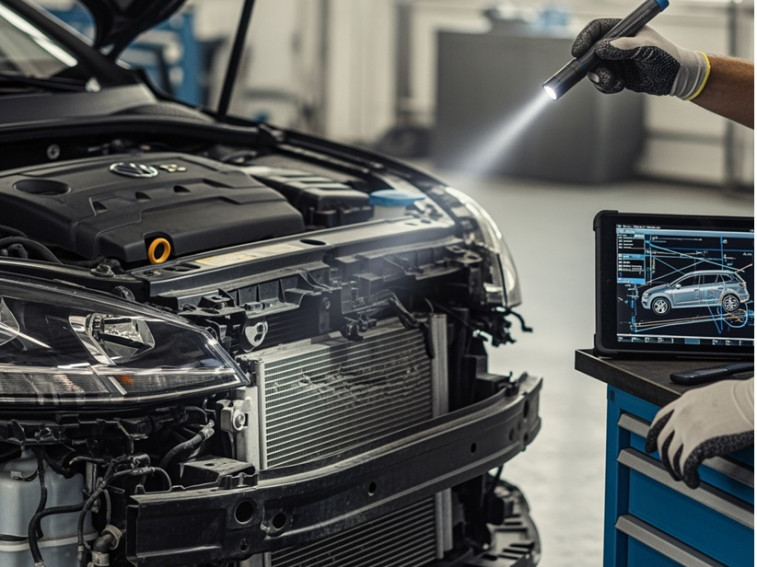
Front end damage rarely stops at the bumper. A 30mph impact typically affects seven to twelve components, even when external damage looks modest. The repair bill compounds quickly:
-
Bonnet replacement: £300-800
-
Radiator and cooling system: £400-1,200
-
Front bumper assembly: £250-600
-
Headlight units (modern LED): £400-900 each
-
Suspension components: £300-800
-
Airbag deployment: £800-1,500
-
Paint and labour: £600-1,400
A seemingly straightforward collision easily reaches £3,000-5,000 in repairs. Factor in structural damage to the crumple zone or engine bay, and costs double.
The insurance industry uses a category system that reflects this reality. Category S (structural damage) and Category N (non-structural) vehicles can legally return to the road, but their resale value drops 20-40% immediately. Category A and B vehicles face mandatory destruction or part-out respectively.
When Repair Makes Financial Sense
Three factors determine whether collision damage repair pencils out: vehicle value, damage extent, and your intended use.
High-Value Vehicles Under Three Years Old
A 2022 BMW 3 Series with £28,000 pre-accident value justifies a £6,000 repair. You'll still own a £20,000+ vehicle after accounting for diminished value. The maths works because the gap between repair cost and retained value stays positive.
Owners repair vehicles with 40% damage ratios when the base value exceeds £25,000. The category marker hurts resale, but keeping the vehicle long-term negates that concern.
Structural Integrity Remains Intact
Front end damage that stops before the bulkhead or chassis rails changes the equation. If the crumple zones absorbed impact as designed and no frame straightening is needed, repair costs stay manageable.
A competent body shop can assess this in 30 minutes. They'll check for:
-
Door alignment (misaligned doors signal frame damage)
-
Equal panel gaps across unaffected areas
-
Suspension mounting points
-
Steering geometry
Clean results in these areas mean the vehicle's fundamental structure survived. Repairs become bolt-on component replacement rather than structural reconstruction.
Personal Attachment or Specific Needs
Financial logic doesn't always dominate. Cases exist where owners chose repair despite marginal economics because the vehicle was modified, held sentimental value, or met specific accessibility needs that replacement couldn't match.
A wheelchair-accessible van with £4,000 front end damage and £8,000 market value fails the typical repair test. But converting a replacement vehicle costs £15,000-20,000, making repair the clear choice.
The Part-Out Advantage
Dismantling a collision-damaged vehicle for components often recovers 60-80% of pre-accident value, sometimes more than repair economics suggest. Understanding part-out potential through featured auctions helps identify which vehicles suit component recovery strategies.
Component Demand Drives Value
Modern vehicles contain £8,000-15,000 in reusable parts even after significant collision damage repair attempts prove uneconomical. The rear-end components, interior, and mechanical systems remain unaffected, and demand for used OEM parts stays consistently strong.
A 2018 Volkswagen Golf with £4,500 front-end damage might fetch £2,500 as a Category B salvage vehicle. Part it out systematically, and you'll recover:
-
Engine and gearbox: £1,200-1,800
-
Rear lights and tailgate: £400-600
-
Wheels and tyres: £300-500
-
Interior components: £600-900
-
Doors and glass: £400-700
-
Electronics and modules: £300-600
Total recovery: £3,200-5,100, exceeding the wholesale salvage price by 28-104%.
The salvage vehicle market has professionalised significantly. Online platforms connect dismantlers with buyers across Europe, improving price realisation for components.
Time and Expertise Requirements
Part-out success demands specific capabilities. You need:
-
Secure storage space (vehicles take 4-8 weeks to fully dismantle)
-
Basic mechanical knowledge
-
Time to photograph, list, and ship components
-
Understanding of vehicle categorisation rules
Professional dismantlers process this efficiently, but private individuals often underestimate the labour involved. Removing, cleaning, photographing, storing, and shipping 40-60 components consumes 30-50 hours of work.
The Category System's Impact on Your Decision
Vehicle categorisation fundamentally alters collision damage repair economics. Insurance assessors assign categories based on damage severity relative to vehicle value, and these markers follow the vehicle permanently.
Category S (Structural Damage)
Repairable but requires disclosure on all future sales. Resale value drops 25-40% compared to clean examples. Finance companies often refuse to lend against Cat S vehicles, limiting your buyer pool.
Repair makes sense when you plan to keep the vehicle 5+ years or when the vehicle's utility value exceeds its market value (commercial vehicles, specialist equipment).
Category N (Non-Structural)
Lighter impact on resale (15-25% reduction). These vehicles often represent repair opportunities, especially when damage is cosmetic or limited to bolt-on components.
A Category N classification with £2,500 damage on a £12,000 vehicle creates a viable repair scenario. You'll retain £8,000-10,000 in value after repairs and category adjustment.
Category B (Break for Parts)
The vehicle cannot return to the road, but all components except the body shell can be sold. This category suits part-out strategies perfectly. The Cat B salvage process requires certified destruction of the shell, but component sales proceed normally.
Dismantlers recover 70-90% of pre-accident value from recent Category B vehicles with isolated front-end damage. A 2020 model with undamaged rear, interior, and drivetrain components holds substantial part-out value.
Market Timing Considerations
Seasonal patterns and model-specific demand affect both repair and part-out economics.
Winter months (November-February) see 23% higher demand for used components as owners address accident damage and weather-related failures. Part-out values increase accordingly.
Model popularity matters significantly. Common vehicles (Ford Fiesta, Vauxhall Corsa, Volkswagen Golf) generate consistent part demand but face more competition. Niche or premium models (Range Rover, BMW M-Sport variants) command higher per-component prices but take longer to sell through vehicle auctions.
The vehicle recovery industry processes 450,000-500,000 insurance write-offs annually in the UK. This volume creates liquid markets for both salvage vehicles and components, but timing your entry affects realised prices by 15-30%.
Insurance Settlement Strategies
How you handle the insurance claim affects your options significantly.
Accepting the Settlement
The insurer pays out the pre-accident value minus excess, takes ownership of the vehicle, and assigns a category. You walk away with cash but lose control of the vehicle's fate.
This works when you want clean separation and plan to replace the vehicle. The settlement typically arrives within 10-15 days.
Buying Back the Salvage
You can purchase the salvage vehicle from your insurer, typically at 20-40% of pre-accident value. This option makes sense when you plan to repair or part out the vehicle yourself.
The insurer deducts the buyback price from your settlement. If they value your vehicle at £8,000 and offer £2,000 buyback, you receive £6,000 cash plus the damaged vehicle.
This strategy works brilliantly for part-out scenarios. You control the dismantling timeline and retain all component sale proceeds.
The Hidden Costs of Both Approaches
Repair and part-out both carry expenses beyond the obvious.
Repair Hidden Costs
-
Hire vehicle during repairs (£30-60 daily)
-
Betterment charges (insurers won't pay to upgrade worn components)
-
Paint fade matching on older vehicles
-
Supplementary damage discovered during repair
-
Re-inspection fees for category vehicles
Budget an additional 15-25% beyond the initial estimate for these factors.
Part-Out Hidden Costs
-
Storage fees (£50-150 monthly if you lack space)
-
Listing fees on selling platforms
-
Shipping materials and postage
-
Disposal costs for unsellable components
-
Time cost of managing 30-50 individual transactions
Professional dismantlers absorb these costs through volume, but private part-outs often see 20-30% of gross proceeds consumed by these expenses.
Making Your Decision
Start with three calculations:
1. Repair Threshold
Repair Threshold = (Pre-accident value × 0.6) - Diminished value
If repair costs exceed this figure, repair economics fail. A £10,000 vehicle becomes worth £7,000-8,000 after Category S repair. Your threshold is £6,000-£8,000 minus the £2,000-3,000 diminished value = £4,000-5,000 maximum repair cost.
2. Part-Out Potential
Part-Out Potential = Sum of component values - (Time cost + Expenses)
List the ten highest-value components and research sold prices on eBay or specialist forums. Add 40% of remaining vehicle value for smaller components. Subtract 25% for expenses and time.
3. Opportunity Cost
Opportunity Cost = Settlement amount + Buyback savings
The cash you receive from insurance can earn returns or fund a replacement immediately. Delaying this by 2-3 months for part-out has a genuine cost.
Compare these three figures against your specific circumstances. A clear winner usually emerges.
Conclusion: Making Economically Sound Decisions
Front-end collision damage forces an immediate economic decision, but the right answer depends on your specific vehicle, damage extent, and personal circumstances rather than universal rules. Understanding these factors through hands-on assessment and market knowledge guides better outcomes than assumptions.
Collision damage repair makes sense for newer, higher-value vehicles with contained damage and when you plan extended ownership. The category marker matters less when you're keeping the vehicle five-plus years, and structural integrity preservation justifies the investment. Explore repair options through van auctions and truck auctions where comparable vehicles help benchmark your decision.
Part-out delivers superior returns for older vehicles, those with category B classification, or when component demand is strong. The time and expertise requirements are genuine, but recoverable value often exceeds both repair costs and wholesale salvage prices by significant margins.
The category system provides a useful framework, but don't let it make your decision automatically. Category S vehicles worth repairing exist, as do clean-looking damage scenarios that make part-out the obvious choice. Get a thorough structural assessment, research component values for your specific model, and calculate the true costs of both paths including hidden expenses and time investment.
The UK salvage market's liquidity means you have genuine options. Whether you repair, part out, or accept the insurance settlement and move on, base your decision on hard numbers rather than assumptions. Front end collision damage is expensive and disruptive, but understanding the economics helps you minimise the financial impact and make the choice that serves your situation best.
Ready to explore collision-damaged inventory and valuation strategies? Register to bid and access comprehensive collision damage vehicle selection, or contact us to discuss your specific situation.