Water damage transforms a vehicle's value faster than almost any other type of salvage category. A car submerged to its door sills might retain 60% of its pre-incident value, whilst one flooded past the dashboard typically drops to 15-20%. Understanding these water damage levels matters whether you're bidding at auction, selling flood damaged cars, or assessing insurance claims when exploring car auctions for water-damaged inventory.
The UK sees approximately 5,000-7,000 flood damaged cars enter salvage auctions annually, with numbers spiking during heavy rainfall seasons. These vehicles carry specific markers that determine their category rating, repair viability, and ultimately their market value.
The Three Water Damage Thresholds
Door Sill Level (Category S)
Door Sill Level represents the first critical threshold. Water reaching the door sills typically affects carpets, lower door panels, and potentially the seat bases. The ECU and main electrical systems usually remain dry. These vehicles often retain 50-65% of their pre-damage value because repairs stay manageable - typically £2,000-£4,000 for a standard family car.
Dashboard Level (Category S or N)
Dashboard Level marks the danger zone. Water reaching the dashboard means the main wiring loom, ECU, and instrument cluster have been submerged. Airbag systems may have deployed or sustained damage. Repair costs jump to £5,000-£12,000, and these vehicles typically sell for 30-45% of their original value. The complexity increases exponentially because electrical faults often emerge months after initial repairs.
Roof Level (Category B or S)
Roof Level signals total loss in most cases. Complete submersion affects every system - engine internals, transmission, all electronics, and structural components. Even if the engine didn't hydro-lock, contaminated oil systems and corroded electrical connections make economical repair nearly impossible. These vehicles rarely exceed 15-20% of pre-damage value and often go to parts recyclers rather than rebuilders when evaluating options at featured auctions.
How Salt Water Changes Everything
Fresh water flooding creates challenges. Salt water flooding creates catastrophes. We've processed vehicles from coastal flooding where salt water accelerated corrosion by 400-500% compared to freshwater incidents.
A freshwater-flooded vehicle to dashboard level might need £6,000 in repairs. The same vehicle in salt water requires £15,000-£20,000 because every electrical connector, every wire, every metal surface becomes a corrosion point. Salt crystals remain in crevices and continue corroding metal for months after the initial exposure.
Insurance companies typically write off any vehicle exposed to salt water above door sill level. The long-term reliability risks simply don't justify repair attempts. At auction, salt water vehicles command 20-40% less than equivalent freshwater damage cases.
The Hidden Damage Timeline
The immediate damage tells only part of the story. Water-damaged vehicles follow a predictable deterioration pattern that savvy buyers factor into their valuations.
Weeks 1-4: Immediate Issues
Obvious problems surface - starting issues, warning lights, interior odours, visible mould growth. These immediate issues account for roughly 60% of the total damage cost.
Months 2-6: Secondary Failures
Secondary electrical faults emerge. Window regulators fail. Central locking becomes intermittent. Instrument clusters display phantom warnings. This phase adds another 25-30% to repair costs and explains why initial repair estimates often prove inadequate.
Months 7-24: Long-Term Corrosion
Long-term corrosion manifests. Wiring harnesses fail internally where water penetrated the insulation. Rust appears in unexpected locations. Module failures cascade as corroded connections create voltage irregularities. This final 10-15% of costs often exceeds the vehicle's remaining value.
Professional buyers account for this timeline. A vehicle showing dashboard-level water damage might appear repairable for £5,000, but experienced buyers bid based on the realistic £8,000-£10,000 total cost including probable secondary failures.
Category Ratings and Market Impact
The DVLA's salvage categories directly influence flood damaged cars values, but the classification isn't always straightforward.
Category N (Non-Structural Damage)
Category N (non-structural damage) applies to vehicles where water damaged electrical and mechanical systems but didn't compromise structural integrity. These typically sell for 40-60% of equivalent undamaged salvage vehicles. A Category N water-damaged vehicle worth £3,000 at auction might have fetched £5,000-£7,500 without the damage history.
Category S (Structural Damage)
Category S (structural damage) gets applied when water causes structural corrosion or when the vehicle sat in floodwater long enough to affect chassis components. These command 30-50% of comparable undamaged salvage values. The structural designation adds complexity and cost to the repair process, requiring professional inspection and certification.
Category B (Break for Parts)
Category B (break for parts) represents the end of the road. Only components can be salvaged. These vehicles sell purely for parts value - typically £200-£800 for a standard car depending on make, model, and which components remained above water when sourced from vehicle auctions.
The category rating creates a permanent record. Even after professional repair, buyers discount Category S or N vehicles by 20-40% compared to clean-history equivalents. This future value impact must factor into any purchase decision.
Engine and Transmission Considerations
Water entering the engine creates the most expensive single repair scenario. A hydro-locked engine - where water entered the cylinders and prevented piston movement - requires complete rebuilding or replacement. This single issue can add £3,000-£8,000 to repair costs.
Was the Engine Running?
The critical factor: was the engine running when water entered? An engine that ingested water whilst running typically suffers bent connecting rods, damaged pistons, and crankshaft damage. An engine that was off when submerged might only need fluid changes and sensor replacements if caught quickly.
Transmission Damage Assessment
Automatic transmissions present similar concerns. Water contamination requires complete fluid replacement, often multiple times, plus potential valve body replacement. Manual transmissions prove more resilient but still need complete servicing. Budget £400-£800 for transmission work on any vehicle with water above the transmission pan level.
Interior Damage and Health Risks
The interior damage calculation goes beyond replacement costs. Health regulations now require specific treatments for flood-damaged interiors due to mould, bacteria, and potential sewage contamination.
Interior Component Costs
-
Carpets and underlay: £300-£600
-
Seat replacement (if contaminated): £400-£1,200
-
Door cards and trim: £200-£500
-
Headlining (if affected): £200-£400
-
Professional sanitisation: £150-£300
These costs assume parts availability. For older or specialist vehicles, interior components might be unavailable or prohibitively expensive, rendering the vehicle uneconomical to repair regardless of mechanical condition.
The Odour Factor
The smell factor significantly impacts value. Even after professional cleaning, flood damaged cars often retain a musty odour that reduces desirability. This intangible factor typically reduces final sale value by an additional 10-15% compared to equivalent vehicles without odour issues.
Documentation and Transparency Impact
Complete documentation significantly affects water-damaged vehicle values. A vehicle with detailed damage photos, repair invoices, and electrical system testing reports commands 15-25% more than equivalent vehicles with minimal documentation.
Buyers pay premiums for transparency because it reduces risk. Knowing exactly which systems were submerged, which components were replaced, and what testing was performed allows accurate assessment of remaining risk. Vehicles with comprehensive documentation also prove easier to insure and sell onward.
Conversely, vehicles with suspicious or incomplete histories face steep discounts. A car showing signs of water damage but marketed without disclosure typically loses 30-50% of potential value once buyers identify the issues. The trust deficit compounds the technical concerns.
Market Timing and Seasonal Variations
Water-damaged vehicle values fluctuate seasonally. Immediately following major flooding events, supply overwhelms demand and prices drop 20-30%. Professional buyers wait for these peaks, knowing they can secure better deals when insurance companies rush to clear inventory.
Seasonal Demand Patterns
Spring and summer see stronger demand for flood damaged cars. Repair businesses have capacity, and buyers have time to complete repairs before winter. Autumn and winter depress values by 10-15% as buyers factor in storage costs and delayed repair timelines.
Geographic Factors
Geographic factors also matter. Vehicles damaged in well-publicised flooding events carry stigma that reduces values by an additional 10-20%. A car flooded in an unnamed incident sells better than one from a televised disaster, even if actual damage levels match.
Professional Assessment Value
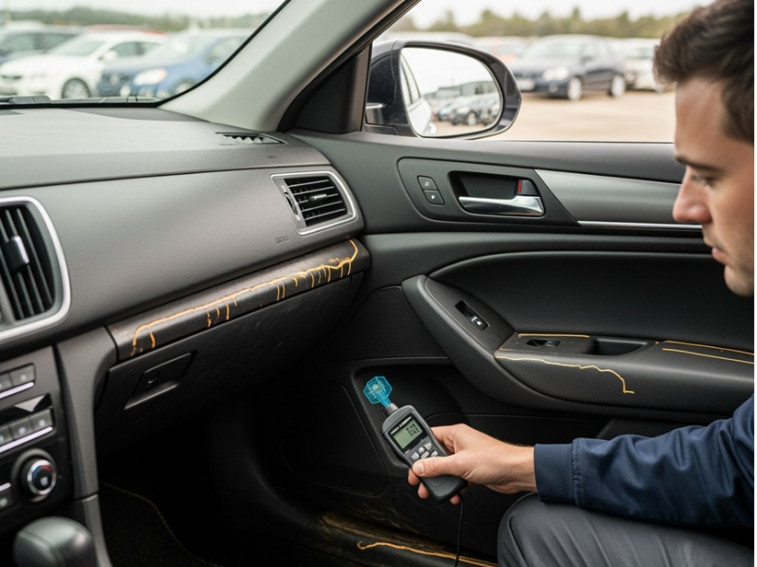
Professional pre-purchase inspection for water-damaged vehicles costs £150-£300 but typically saves £1,000-£3,000 in avoided problems. Inspectors identify water damage levels, check for hidden issues, and provide realistic repair cost estimates.
Key Inspection Elements
-
Electronic system testing (not just visual checks)
-
Compression testing to verify engine integrity
-
Moisture metre readings in hidden cavities
-
Corrosion assessment of structural components
-
Documentation verification
Vehicles that pass professional inspection command 20-30% premiums over uninspected equivalents because they transfer risk from buyer to inspector. This premium often exceeds the inspection cost, making professional assessment worthwhile even for sellers.
Making the Value Calculation
Calculating fair value for a water-damaged vehicle requires working backwards from retail value through multiple discount layers:
Step-by-Step Valuation Process
-
Start with the vehicle's pre-damage retail value
-
Apply the category discount (20-40% for Category N/S)
-
Apply the water damage levels discount (35-50% for door sill, 55-70% for dashboard, 80-85% for roof level)
-
Factor in salt water if applicable (additional 20-40%)
-
Account for age and parts availability (older vehicles face steeper discounts)
-
Consider documentation quality (15-25% premium for excellent records)
A three-year-old family car worth £12,000 before damage, with dashboard-level freshwater flooding, Category S rating, and good documentation might calculate as: £12,000 × 0.70 (category) × 0.40 (damage level) × 1.20 (documentation) = £4,032.
This mathematical approach provides a starting point, but market conditions, specific make/model demand, and parts availability all influence final values.
The Repair or Part-Out Decision
The crossover point between repair and part-out typically occurs when repair costs exceed 70-75% of post-repair value. For water-damaged vehicles, this threshold arrives quickly because post-repair value already carries the category rating discount.
Economic Viability Assessment
A vehicle worth £8,000 after proper repair but requiring £6,000 in repairs sits right at the viability threshold. Factor in the 100-150 hours of labour involved, the risk of secondary failures, and the difficulty of selling a repaired flood vehicle, and the economics often favour part-out.
Professional breakers pay £200-£1,200 for complete vehicles depending on make, model, and which components remained undamaged. For severely damaged vehicles, this guaranteed return often exceeds the uncertain profit from repair and resale.
Understanding Water Damage Impact
Understanding water damage levels creates a permanent value impact that extends far beyond immediate repair costs. The severity threshold - door sill, dashboard, or roof level - determines whether a vehicle remains economically viable or becomes parts inventory. Salt water exposure, category rating, documentation quality, and timing all compound these base valuations.
Professional buyers succeed in this market by accounting for the complete damage timeline, not just immediate visible issues. The 60-25-15 rule - where 60% of costs appear immediately, 25% emerge in months 2-6, and 15% surface after six months - provides a framework for realistic valuation.
Whether you're bidding at salvage auctions or selling flood damaged cars, accurate assessment of these factors determines profitability. Contact us to discuss water damage assessment strategies and inventory access. The vehicles that appear cheapest at auction often carry the highest total costs, whilst properly documented, moderately damaged vehicles offer the best value retention. Register to bid and gain access to our comprehensive water-damaged vehicle selection. Understanding where each vehicle sits on the damage spectrum, and pricing accordingly, separates successful salvage transactions from expensive mistakes.