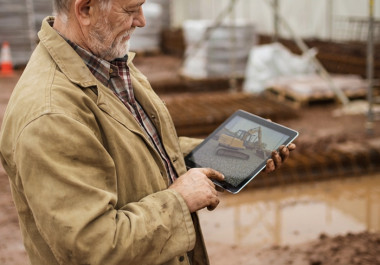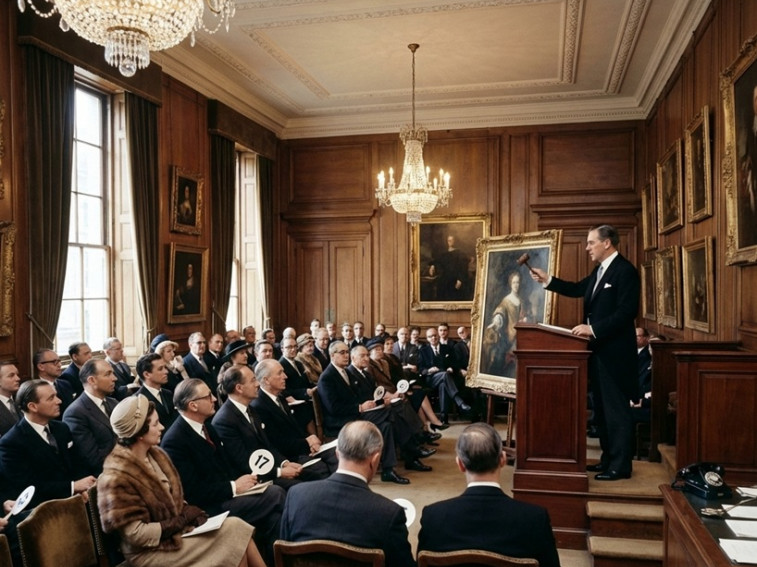
There's a certain magic to an auction, isn't there? That buzz in the air, the rhythmic chant of the auctioneer, the quickening pulse as bids climb higher… and the final bang of the gavel sealing the deal. Whether you're a seasoned business owner hunting for fleet vehicles or just someone fascinated by the prospect of bagging a bargain, the auction floor holds a unique appeal. It's a tradition stretching back centuries, a marketplace format that has proven remarkably resilient.
While today you might be comfortably bidding online from your office or home through platforms like Raw2k, securing cars, vans, or motorbikes with a click, the roots of this process run incredibly deep. We're talking millennia! Understanding this heritage gives us a richer appreciation for the modern auction experience. So, let's take a trip back in time and explore some of the oldest auction houses that are remarkably still operating, setting the stage for the vibrant auction scene we know in the UK today.
Where Did It All Begin? Auctions Through the Ages
Believe it or not, the concept of auctioning goods isn't a modern invention or even one from the last few centuries. Historians like Herodotus wrote about auctions in Babylon around 500 B.C., primarily for selling women for marriage (a thankfully defunct practice!). The Roman Empire also embraced auctions, known as auctio (from the Latin augere, meaning 'to increase'), to sell everything from spoils of war ("under the spear") to estates. They even famously auctioned off the entire Roman Empire in 193 A.D. after the Praetorian Guard assassinated the emperor!
Fast forward quite a bit, and the word "auction" made its first appearance in the Oxford English Dictionary in 1595. By the late 17th century, London coffeehouses and taverns were buzzing with auctions, particularly for art and books, as reported in the London Gazette. This period saw the birth of the auction house as a formal institution.
The Granddaddy of Them All: Stockholms Auktionsverk
Whilst London would soon become a major hub, the title of the world's very oldest auction houses still in operation goes to Stockholms Auktionsverk, founded in Sweden way back in 1674. Imagine that! They were auctioning off Baroque, Rococo, and Gustavian items when they were contemporary styles. The Stockholms Auktionsverk establishment represents nearly 350 years of continuous operation. Today, Stockholms Auktionsverk is still going strong, blending its incredible heritage with modern online auctions, proving the enduring power of this sales model.
London Calling: The Birthplace of Auction Icons
Whilst Sweden holds the record, London quickly became the epicentre for the kind of prestigious houses that still dominate the high-end market today. Two names, in particular, stand out, giants whose reputations were forged in the 18th century and continue to resonate globally. These institutions with continuous operation achieved global recognition.
Sotheby's: From Bookseller to Global Art Powerhouse
It all started with a bookseller named Samuel Baker. On March 11, 1744, he held his first auction under his own name in London, selling the library of a Sir John Stanley for a few hundred pounds. Baker specialised in auctioning great libraries – including, remarkably, the books Napoleon took into exile on St. Helena!
After Baker's death in 1778, his nephew, John Sotheby, inherited a share of the business alongside partner George Leigh, and the name 'Sotheby's' entered the lexicon. For over 80 years, the Sotheby family guided the firm, expanding into prints, coins, and medals, cementing a reputation for scholarly expertise, particularly with rare books. The evolution of Sotheby's Book Department during this period established the foundation for the company's future diversification.
The significant shift towards fine art, the area Sotheby's is arguably most famous for today, really gathered pace after World War I. The move to their iconic New Bond Street premises in 1917 marked a new era. But it was post-World War II, under the dynamic leadership of chairman Peter C. Wilson (1958–80), that Sotheby's truly transformed. Wilson drove international expansion, notably through the Parke-Bernet acquisition in 1964, which established a major presence in the American market. The Parke-Bernet acquisition was a pivotal moment, turning Sotheby's into a truly transatlantic operation. Wilson also turned auctions into glamorous, high-profile events. What started as a London bookseller became a global titan in the art market, a journey spanning nearly three centuries.
Christie's: A Legacy Built on Art from Day One
Just a couple of decades after Baker's first sale, another legendary name appeared on the London auction scene. James Christie, a charismatic figure, conducted his first recorded sale on December 5, 1766. Unlike Sotheby's initial focus, Christie's was more centred on art from the outset, quickly establishing itself by handling important collections. A pivotal moment was the sale of Sir Robert Walpole's paintings to Catherine the Great of Russia in 1778, which significantly boosted the firm's reputation.
Christie's cleverly capitalised on London's rise as the international art trade hub, especially as the French Revolution caused disruption on the continent. James Christie the Younger took over after his father's death, bringing expertise in classical art. The company remained private for a very long time, with Christie's King Street premises in St James's, London serving as its historic base for centuries. The firm only went public in 1973 before being acquired by French businessman François Pinault's Groupe Artémis in 1998.
Based at their Christie's King Street premises, the auction house expanded globally, particularly from the late 1950s onwards, opening offices in Rome, Geneva, Tokyo, New York, and many other major cities. Like Sotheby's, Christie's played a key role in transforming auctions from quiet affairs for dealers into major social and media spectacles, attracting celebrity collectors and achieving record-breaking prices.
How Auction Houses Changed the Game
These historic institutions, particularly the London giants, didn't just sell things; they shaped the market. They cultivated expertise, published scholarly catalogues, and built trust. During its early decades, Sotheby's Book Department established scholarly standards that influenced the entire industry. They moved beyond just books and art to encompass jewellery, wine, furniture, and eventually, automobiles.
The very atmosphere of the auction room evolved. The "auction chant," that rapid-fire patter of the auctioneer, became iconic. Auctions became competitive arenas, not just for acquiring goods but also for social standing. High-profile sales, especially those involving items owned by celebrities like Marilyn Monroe or Princess Diana, captured public imagination and cemented the auction house's place in popular culture.
Bringing it Home: Enduring UK Auction Houses and the Dawn of Car Auctions
Whilst Sotheby's and Christie's represent the pinnacle of long-established, high-value auctioneering, the UK auction landscape is far broader. The concept of the auction proved adaptable, eventually paving the way for specialists in entirely new categories – most notably for our interests, vehicles. These enduring UK auction houses demonstrate the model's flexibility.
Interestingly, dedicated car auctions are a much more recent phenomenon compared to the centuries-old art and book auctions. Whilst carriages might have occasionally passed through the older houses, the mass-market car required a new approach.
The Spark: British Car Auctions (BCA)
One of the most significant players in the UK vehicle auction market has its origins just after World War II. In 1946, a Royal Navy officer named David Wickins decided to sell his Riley Lynx tourer. He advertised it for £200, expecting one buyer. Instead, a crowd turned up at his mother's house in Farnham, Surrey. Sensing an opportunity, he auctioned it off on the spot for £420!
This impromptu success sparked an idea. Wickins rented a field and held his first proper public car auction, selling 14 cars for £8,250. He promptly founded Southern Counties Car Auctions. Initially, a major part of the business involved selling surplus ex-military vehicles for the Ministry of Defence – a vital service in post-war Britain.
This company eventually became British Car Auctions (BCA). From selling just 14 cars at that first event, BCA grew into Europe's largest vehicle remarketing company, selling over a million vehicles annually by the 21st century. Its story perfectly illustrates the evolution of auctions to meet modern needs, from ex-military vehicles to today's diverse range including commercial van auctions. Now part of the Constellation Automotive Group, its legacy in shaping the UK car auction market is undeniable.
Niche Experts: Classic and Performance Specialists
Beyond the large-scale operations like BCA, the UK also boasts enduring auction houses that cater to specific automotive passions.
Barons Classic Car Auctioneers: Established in 1998, Barons bills itself as one of the UK's oldest classic car auction houses. Based near Southampton, this family-run business highlights the enduring appeal of auctions for enthusiasts seeking specific vintage or classic models. Their longevity in this niche speaks volumes about the auction model's ability to serve dedicated communities.
Hampson Auctions: Another family-run business with auctioneering roots claimed back to 1987, Hampson specialises in classic cars, supercars, and performance vehicles, including motorcycles. Operating primarily in Cheshire, they emphasise creating an 'event' atmosphere at their sales, attracting enthusiasts from across the UK and beyond. Today's buyers seeking similar variety can explore everything from classic cars to modern motorcycle auctions through online platforms.
These examples show how the auction format thrives not just at a massive scale but also within specialised sectors, driven by passion and expertise – key characteristics shared with the oldest auction houses like Sotheby's and Christie's, just applied to a different asset class.
The Digital Hammer: Auctions in the 21st Century
The biggest evolution in recent decades has undoubtedly been the move online. While the history we've explored is rooted in physical salerooms – grand halls in London, farmers' fields in Surrey – the internet changed everything.
Initially, online bidding supplemented physical auctions. Now, purely online auctions are commonplace, transforming accessibility. No longer do you need to travel to a specific location at a set time. Buyers and sellers can connect from anywhere, vastly expanding the potential market.
This digital shift has brought new innovations:
Enhanced Information: Online listings often provide detailed descriptions, extensive photo galleries, and condition reports for everything from cars to motorcycles, allowing buyers to make informed decisions remotely.
Sophisticated Platforms: Modern platforms offer seamless bidding interfaces, watchlists, notifications, and secure payment processing.
Data and AI: Behind the scenes, technology is playing an increasing role. AI can help with vehicle valuations based on vast datasets, while blockchain technology is being explored to enhance transparency regarding vehicle history and ownership transfer.
Virtual Inspections: Whilst not yet universal, VR and AR technologies are emerging to offer more immersive remote vehicle inspections.
This evolution doesn't replace the core principles of auctioning; it enhances them, making the process more efficient, transparent, and convenient.
Raw2k: Modern Auctions, Timeless Appeal
This brings us neatly back to the present day and platforms like Raw2k. As one of the UK's leading online auction specialists for salvage and used vehicles, Raw2k embodies this blend of historical auction principles and modern digital convenience.
We operate entirely online, offering a huge range of vehicles sourced from insurance companies, dealerships, and fleet operators. This means businesses and private buyers alike can access a constantly changing inventory of:
-
Cars: From everyday runners to repairable salvage vehicles.
-
Vans: Essential workhorses for businesses of all sizes available at our van auctions.
-
Motorcycles: Catering to enthusiasts and trade buyers through dedicated motorcycle auctions.
Our platform leverages the power of the internet to bring the auction floor to you. Whether you're a garage owner in the North West, a fleet manager in the West Midlands, a start-up in Scotland, or a private buyer in the South East, our comprehensive vehicle auctions provide UK-wide access. We ensure opportunities reach buyers across all regions, including the North East, Wales, and Northern Ireland.
The fundamental excitement remains: the competitive bidding, the potential to find incredible value, the satisfaction of securing the winning bid. Raw2k simply makes this process more accessible and efficient for the modern era, building on centuries of auction heritage established by the oldest auction houses and adapted by innovators focused on vehicles.
The Gavel Falls, The Legacy Continues
From ancient marketplaces and the grand salerooms of 18th-century London to the bustling online auctions of today, the core concept of selling to the highest bidder has proven remarkably adaptable and enduring. The oldest auction houses like Sotheby's and Christie's laid a foundation of trust, expertise, and global reach. Later innovators, including UK pioneers like BCA, adapted the model for the automotive age.
Today, online platforms like Raw2k continue this legacy, democratising access and leveraging technology to connect buyers and sellers efficiently. The thrill of the auction, the hunt for value, and the satisfaction of a successful bid are timeless elements that continue to drive this dynamic market.
Ready to experience the modern evolution of this centuries-old tradition? Take a look at the vehicles currently available on the Raw2k homepage or register to start bidding on your next vehicle. Feel free to contact us if you have any questions. Happy bidding!