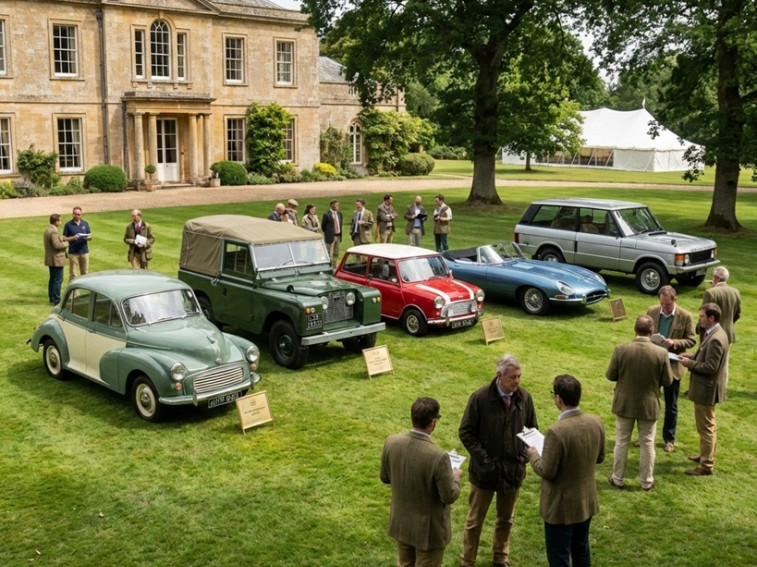
Let's take a fascinating journey through Britain's automotive past, exploring the iconic vehicles that have not only defined eras but continue to capture imaginations at auction today. Cars, vans, and motorbikes charting the course of the UK's recent history frequently find new keepers through the auction process, each one a rolling snapshot of social change, design innovation, and national milestones.
These British History Auction Vehicles are more than just transport; they represent genuine pieces of our heritage. Auctions have always been central to the life cycle of these vehicles, acting as vibrant marketplaces where history changes hands. While modern platforms like Raw2k offer incredible variety and convenience for today's buyers and sellers, the heritage represented by classic British marques remains a powerful draw. Join us as we look at some key vehicles from British history that regularly grace the auction block, reminding us of where we've come from on four (or sometimes two or three!) wheels. This exploration is for history enthusiasts, dedicated restorers, and anyone thrilled by a piece of genuine British motoring heritage appearing at UK historical vehicle auctions.
The Post-War Recovery & Rationing Era: Making Do
Britain Rebuilds on Wheels
The late 1940s and 1950s were a time of rebuilding, austerity, and making the best of things. Petrol was rationed, materials were scarce, but Britain needed to get moving again. The vehicles that emerged from this period reflect that necessity – prioritising affordability, practicality, and reliability over outright performance or luxury. Finding these early models connects us directly to that determined post-war spirit.
The People's Car: Morris Minor
Affectionately known as the 'Moggy', the Morris Minor (launched 1948) was a masterpiece of Issigonis design (before the Mini). It offered relatively good space, decent handling for its time, and a charming character that won hearts across the nation. From the early 'lowlight' models to the later Traveller estates with their external ash framing, Minors were everywhere. Their mechanical simplicity and the sheer number produced mean many survive, making them popular and relatively affordable post-war British cars found at auction – a true symbol of post-war optimism.
The Go-Anywhere Legend: Land Rover Series I/II
Born out of a need for a versatile, rugged utility vehicle for farm and light industrial use (famously sketched in the sand on a Welsh beach), the Land Rover (launched 1948) was an instant success. Built with simple, durable components (and often surplus aluminium), it defined the off-road genre. Early Series I and II models, with their basic interiors and unstoppable nature, are now highly sought after by collectors and restorers, frequently appearing at auctions as tangible links to Britain's agricultural and industrial heritage. Today's enthusiasts can explore similar utility vehicles at auction platforms.
Basic Motoring for the Masses: Ford Anglia/Popular
Ford's Dagenham plant churned out vast numbers of simple, affordable cars like the Anglia and the even more basic Popular. These side-valve engine models offered no-frills transport to families graduating from motorcycles or pre-war bangers. While perhaps less glamorous than others, their presence at auctions reflects their significance in democratising car ownership in Britain.
These vehicles represent ingenuity born from scarcity. Seeing them today, perhaps needing restoration after being discovered in a barn, reminds us of a different era of motoring, part of the broader heritage vehicle market that continues to thrive.
The Swinging Sixties: Style and Aspiration
Motoring Finds its Groove
As Britain emerged from austerity, the 1960s exploded in a riot of colour, music, fashion, and cultural change. Cars became more than just transport; they were expressions of personality, freedom, and newfound prosperity. This era produced some of the most iconic and desirable British History Auction Vehicles ever made.
The Giant Slayer: Mini Cooper/Cooper S
Another Issigonis marvel, the Mini (launched 1959) revolutionised small car design. But it was John Cooper's souped-up versions that cemented its legendary status. The Mini Cooper and Cooper S were affordable, handled like go-karts, and famously took on and beat much larger cars in motorsport, including multiple Monte Carlo Rally wins. A classless icon driven by everyone from pop stars to nurses, the Mini Cooper is pure 60s cool and always draws attention at UK historical vehicle auctions.
The Ultimate Head-Turner: Jaguar E-Type
Launched in 1961, the E-Type caused a sensation. Enzo Ferrari reportedly called it "the most beautiful car ever made." With its stunning looks, 150 mph performance (a staggering figure then), and relatively affordable price compared to Italian exotics, it became an instant global icon. Epitomising the glamour and optimism of the decade, E-Types, especially early models, are among the most valuable classic British marques and command significant prices at auction.
Britain's Favourite Family Car: Ford Cortina MkI/MkII
While the Mini and E-Type grabbed headlines, the Ford Cortina was the car most Britons actually bought. Launched in 1962, it offered style, practicality, and various trim levels (including the sporty GT) at a price ordinary families could afford. It became a sales phenomenon. Seeing a well-preserved MkI or MkII Cortina at auction evokes memories of family holidays, first cars, and everyday life in 60s Britain.
Affordable Fun: MGB & Triumph Spitfire
For those seeking open-top thrills without breaking the bank, the MGB (1962) and Triumph Spitfire (1962) were perfect. Simple, stylish, and fun to drive, these roadsters captured the spirit of carefree motoring. Both were produced for many years and sold in huge numbers, meaning they are readily available at auction today, often as accessible project cars for aspiring classic owners. Enthusiasts can still find classic sports cars for sale through modern auction platforms.
The sixties were a golden age for British car design and manufacturing, producing vehicles that still resonate deeply today, both emotionally and in terms of auction value.
The Challenging Seventies: Industrial Strife & Bold Designs
Tough Times, Tough Cars (Sometimes)
The 1970s presented a stark contrast to the optimism of the sixties. Economic woes, industrial unrest (particularly impacting British Leyland), and the oil crisis cast long shadows. Yet, it was also an era of bold, sometimes controversial, automotive designs and the emergence of new market segments. Vehicles from this decade often tell a story of resilience, ambition, and sometimes, unfortunate compromise when they appear among auction listings.
The Promise Kept?: Ford Capri
Ford hit gold again with the Capri (launched 1969). Marketed as "The car you always promised yourself," it offered sporty coupe looks on reliable Cortina mechanicals, with engine sizes ranging from basic 1.3s to potent 3.0 V6s. It became a cultural icon, beloved by boy racers and family men alike. Capris are hugely popular at UK historical vehicle auctions, with early models and performance versions particularly sought after. Modern buyers can explore performance classics through online auctions today.
Inventing a Genre: Range Rover Classic
Launched in 1970, the original Range Rover was revolutionary. It combined Land Rover's off-road capability with saloon car comfort and luxury, effectively creating the luxury SUV market. Early two-door models, with their utilitarian chic and powerful V8 engine, are now design icons and command strong prices amongst collectors who appreciate these key British History Auction Vehicles.
Hot Saloon: Triumph Dolomite Sprint
In the midst of British Leyland's troubles, Triumph produced a gem: the Dolomite Sprint (1973). Its 16-valve engine was advanced for its time, offering impressive performance that made it a successful touring car racer. It represented British engineering ingenuity fighting against the odds. Finding a good 'Dolly Sprint' at auction is a treat for enthusiasts.
The Symbols of Struggle: Austin Allegro & Morris Marina
No history of 70s British motoring is complete without mentioning the Allegro (1973) and Marina (1971). Plagued by quality issues and representing BL's decline, they became symbols of the era's industrial problems. Yet, millions were sold. They appear frequently at auctions, sometimes incredibly cheaply, though ironically, some (like early Allegro VPs or sporty Marina TCs) are gaining a certain kitsch classic status.
The seventies produced a mixed bag of vehicles, from enduring icons to symbols of challenging times, all providing fascinating snapshots of the era when they appear at auction.
The Eighties & Nineties: Modernisation & Niche Markets
Technology, Hot Hatches, and Changing Landscapes
The final decades of the 20th century saw further shifts. Technology became more prevalent in car design, new market segments like the 'hot hatch' exploded, and the landscape of British volume car manufacturing changed forever, though specialist and utility vehicle production continued strongly. These later British History Auction Vehicles mark the transition towards modern motoring.
The Repmobiles Reign: Ford Sierra & Vauxhall Cavalier
Replacing the Cortina and its Vauxhall equivalent, the Sierra (1982) and Cavalier MkII/III (1981/1988) battled for sales supremacy, dominating company car parks and family driveways. Their sheer ubiquity means vast numbers end up at auction, often as affordable run-arounds. However, performance versions like the legendary Sierra Cosworth or Cavalier GSI are now highly desirable modern classics.
Pocket Rocket Fever: Hot Hatches
While not solely a British invention, the UK embraced the hot hatch like nowhere else. Cars like the Ford Escort XR3i, Vauxhall Astra GTE, MG Maestro/Metro Turbo, and imports like the Peugeot 205 GTI and VW Golf GTI defined affordable performance for a generation. These heroes of the 80s and 90s are now rapidly appreciating and keenly sought after at UK historical vehicle auctions.
The Enduring Icon: Classic Mini (Later Models)
The Mini just kept going! Updated and released in numerous special editions throughout the 80s and 90s (like the Cooper RSP, Flame Red, British Open Classic), it retained its charm. These later models are popular auction buys, offering the classic Mini experience with slightly more modern refinements.
Still the Workhorse: Land Rover Defender
An evolution of the original Series Land Rovers, the Defender (officially named in 1990) continued to be the definitive tough-as-nails utility vehicle. Ex-farm, ex-military, or modified examples are auction staples, reflecting their enduring appeal for both work and lifestyle use. Many of these can be found through commercial vehicle auction platforms serving buyers nationwide.
Bold Executive: Rover SD1
Rover's SD1 (launched 1976, but prominent in the early 80s) was a strikingly designed executive hatchback, especially desirable with the V8 engine. Representing a bold move by British Leyland/Rover Group, well-kept examples are appreciating classics found at auction.
This period saw the rise of what we now term 'modern classics' – cars from the 80s and 90s gaining nostalgic appeal and collector status, frequently traded via platforms across regions from Scotland and Wales to Northern Ireland.
Why Do These Vehicles Endure at Auction?
The Lasting Appeal of British Motoring Heritage
What is it about these specific British History Auction Vehicles that ensures they remain popular finds at auctions year after year?
Nostalgia is Powerful: Many buyers seek the cars they, their parents, or their grandparents owned, or the models they dreamt of owning when younger. It's a powerful emotional connection to the past.
Restoration Dreams: Auctions are prime territory for finding project cars. Many of these classic British marques have good parts availability and strong owners' club support, making restoration feasible and rewarding.
Investment and Value: While not guaranteed, many classic British cars have shown significant appreciation in value, attracting collectors and investors looking for tangible assets.
Driving Pleasure: Classic cars offer a different, more engaging driving experience compared to modern vehicles. Many are still perfectly usable for weekend jaunts or attending classic car shows.
Owning History: There's a unique satisfaction in preserving and driving a piece of tangible history, a rolling testament to British engineering, design, and culture.
The enduring presence of these vehicles at UK historical vehicle auctions speaks volumes about their quality, design, cultural impact, and the passion they inspire. Should you have questions about finding specific models, feel free to get in touch with the team.
Finding Your Piece of British History
Tips for Auction Hunting
Inspired to acquire your own slice of British motoring heritage? Auctions are a great place to look, but keep these points in mind, especially for older vehicles:
Research is Key: Before bidding, research the specific model's common weak spots (rust areas, mechanical issues). Owners' forums are invaluable resources.
Factor in Costs: Remember restoration costs can quickly exceed the purchase price. Factor in potential repairs, parts, and specialist labour. Read condition reports carefully.
Check Provenance (If Possible): For more valuable classics, history files detailing previous owners, restoration work, or competition history can add significant value.
Inspect Thoroughly: Whether viewing online photos and reports or inspecting in person, be meticulous. Check chassis numbers, engine numbers, and overall condition critically.
Owning a classic British vehicle is hugely rewarding. It's about more than just transport; it's about preserving heritage, enjoying a unique driving experience, and connecting with a passionate community through classic car restoration auctions.
Conclusion
Keep the Wheels of History Turning
From the humble Morris Minor that helped Britain get back on its feet to the sleek Jaguar E-Type that defined an era of cool, the Vehicles from British History Sold at Auction offer a tangible link to our past. They remind us of innovation, style, everyday life, and sometimes, adversity overcome. Auctions remain a vital part of their ongoing story, allowing these fascinating machines to pass to new custodians who will cherish and preserve them.
Whether you're dreaming of a full restoration project or looking for a well-maintained classic, why not explore the vehicles currently available? You never know what fascinating piece of history might be waiting for your bid. Register to start browsing the diverse selection of heritage vehicles available today.