Ever felt that little buzz of excitement watching the timer count down on an online car auction? Or maybe you've pictured the scene: a fast-talking auctioneer, a crowd of hopeful bidders, and the satisfying thwack of the gavel sealing the deal. Car auctions are a familiar part of the automotive landscape in the UK today, a go-to for grabbing a bargain, sourcing specific models, or shifting stock for businesses. Platforms like our own here at Raw2k make it incredibly easy to browse, bid, and buy vehicles from practically anywhere.
But have you ever stopped to wonder how it all started? It certainly wasn't always about high-resolution photos and online bidding platforms. The journey from dusty fields and whispered bids to the slick, accessible online marketplace we know today is quite a story. Understanding the UK car auction history gives us a fascinating glimpse into how trade, technology, and transport have evolved together over the last century or so. So, grab a brew, get comfy, and let's take a little road trip back in time.
So, Where Did the Idea Even Come From? The Auction Seed is Sown
The concept of selling things to the highest bidder isn't exactly new, is it? Auctions have been around for millennia, flogging everything from farmland and livestock to art and antiques. It's a straightforward way to let the market decide the price. But dedicated car auctions? That's a more recent chapter.
Think back to the early 20th century. Cars were novelties, expensive playthings for the wealthy. There simply weren't enough of them changing hands to warrant specialised auctions. However, two major world wars changed everything. After World War II, the British government found itself with a massive surplus of vehicles – lorries, jeeps, motorbikes, you name it. What to do with them all? Auctioning them off was the logical solution. These large-scale disposal sales of post-war surplus vehicles planted a seed. People saw that vehicles could be sold effectively this way, and not just by the military.
As the 1950s rolled in, car ownership began its slow but steady climb. More cars on the road meant more cars eventually needing new homes. Small, local auctioneers, who might usually deal in farm equipment or household goods, started including the odd car, van, or even motorcycle in their sales. Imagine a local farmer, maybe near one of our current hubs in the North West or Wales, deciding to sell his trusty old Land Rover – the local auction mart was likely his first port of call. It was basic, often outdoors, and very much a case of 'what you see is what you get'. The foundations of the UK car auction history were being laid, albeit modestly. The handling of post-war surplus vehicles demonstrated the viability of vehicle auctions as a business model.
Hitting the Accelerator: The Auction Scene Finds Its Groove in the Mid-Century
Fast forward to the swinging sixties and the seventies. Car ownership wasn't just climbing anymore; it was exploding. Suddenly, cars were within reach for ordinary families. The M1 had opened, suburbs were expanding, and the car became a symbol of freedom and aspiration. This automotive boom turbocharged the second-hand market.
This era saw the rise of more specialised vehicle auctions. Businesses sprung up dedicated solely to buying and selling cars and commercial vehicles under the hammer. Why? Because the sheer volume demanded it. Garages and dealerships, who were selling shiny new models off the forecourt, needed an efficient way to dispose of the part-exchanges they were taking in. Likewise, they needed a place to source specific used models their customers were asking for. Auctions became the perfect solution – a central marketplace connecting buyers and sellers through effective vehicle remarketing channels.
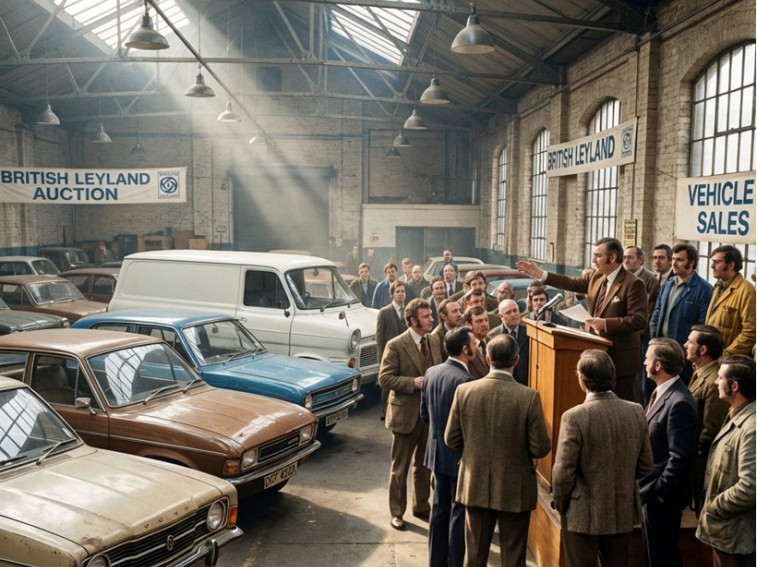
Picture the scene: a large shed or warehouse, rows upon rows of vehicles, maybe a Ford Cortina here, an Austin Allegro there, perhaps even a few early Transit vans waiting for a new life. The air crackles with anticipation. The auctioneer, often a real character, rattles off descriptions and prices at dizzying speed. Buyers, mostly trade professionals back then, would give the cars a quick once-over – kicking the tyres wasn't just a saying! – before raising a hand or giving a subtle nod to place their bid. It was raw, exciting, and fiercely competitive. This period truly cemented the auction's place in the UK's automotive ecosystem, a vital cog in the wheel of vehicle sales through established vehicle remarketing channels, whether you were in the bustling West Midlands looking for commercial vehicles through van auctions or further afield in Scotland.
Polishing the Chrome: Building Trust and Professional Standards
Let's be honest, the early days of car auctions sometimes had a slightly… colourful reputation. The phrase "buyer beware" was paramount. You bought the car as it stood, warts and all. While this offered the chance of a real bargain, it also carried risks. A shiny exterior could hide a multitude of mechanical sins.
As the industry matured through the latter part of the 20th century, there was a clear need for greater transparency and professionalism. Nobody wants to feel like they've been taken for a ride (pun intended!). Leading auction houses started introducing basic checks and condition reports. While not the comprehensive inspections we often see today, they provided a bit more information about the vehicle's state.
Trade associations also emerged, setting codes of conduct and promoting best practices. This helped to standardise procedures and build confidence among both buyers and sellers. The aim was to shift the perception of auctions from potentially murky marketplaces to legitimate, reliable vehicle remarketing channels. It was about ensuring that whether you were a large dealership shifting dozens of cars or a small business looking for a single van at auction, you could participate with a greater degree of confidence. This drive towards transparency laid crucial groundwork for the next big leap.
Bringing it Home: Enduring UK Auction Houses and the Dawn of Car Auctions
While the broader auction landscape continued evolving, the concept proved adaptable, eventually paving the way for specialists in entirely new categories – most notably for our interests, vehicles. Interestingly, dedicated car auctions are a much more recent phenomenon compared to centuries-old art and book auctions.
The Spark: British Car Auctions (BCA)
One of the most significant players in the UK vehicle auction market has its origins just after World War II. In 1946, a Royal Navy officer named David Wickins decided to sell his Riley Lynx tourer. He advertised it for £200, expecting one buyer. Instead, a crowd turned up at his mother's house in Farnham, Surrey. Sensing an opportunity, he auctioned it off on the spot for £420!
This impromptu success sparked an idea. Wickins rented a field and held his first proper public car auction, selling 14 cars for £8,250. He promptly founded Southern Counties Car Auctions. Initially, a major part of the business involved selling surplus ex-military vehicles for the Ministry of Defence – a vital service in post-war Britain.
This company eventually became British Car Auctions (BCA). From selling just 14 cars at that first event, BCA grew into Europe's largest vehicle remarketing company, selling over a million vehicles annually by the 21st century, representing one of the most important vehicle remarketing channels in the industry.
Niche Experts: Classic and Performance Specialists
Beyond the large-scale operations like BCA, the UK also boasts enduring auction houses that cater to specific automotive passions.
Barons Classic Car Auctioneers: Established in 1998, Barons Classic Car Auctioneers bills itself as one of the UK's oldest classic car auction houses. Based near Southampton, this family-run business highlights the enduring appeal of auctions for enthusiasts seeking specific vintage or classic models. The longevity of Barons Classic Car Auctioneers in this niche speaks volumes about the auction model's ability to serve dedicated communities.
Hampson Auctions: Another family-run business with auctioneering roots claimed back to 1987, Hampson specialises in classic cars, supercars, and performance vehicles. Operating primarily in Cheshire, they emphasise creating an 'event' atmosphere at their sales, attracting enthusiasts from across the UK and beyond.
These examples show how the auction format thrives not just at a massive scale but also within specialised sectors, driven by passion and expertise.
The Digital Revolution: From Auction Halls to Online Hubs
Then came the internet. Like almost every other industry, the world wide web was set to completely revolutionise the UK car auction history. Initially, in the late 1990s and early 2000s, websites were primarily used as catalogues. Auction houses would list the vehicles coming up for sale, allowing potential buyers to browse inventory remotely before attending the physical auction. It saved time and allowed buyers from further afield, say someone in the North East considering a vehicle down in the South East, to pre-qualify their interest.
But the real game-changer was the move to online bidding. First, it supplemented the physical auction – you could bid via your computer against people actually in the hall. Then came the purely online auctions, where the entire process, from listing to final bid, happened digitally through sophisticated online bidding platforms.
This presented new challenges. How do you build trust when buyers can't physically kick the tyres or listen to the engine? High-quality photographs became essential, along with detailed descriptions and transparent condition reports. Logistics also became more complex – arranging vehicle collection or delivery across the country required robust systems.
This is precisely where platforms like Raw2k came into their own. Born out of this digital evolution, we embraced the potential of online auctions to offer unparalleled convenience, choice, and reach. We understood that businesses and individuals needed a reliable, easy-to-use platform to access a vast range of vehicles, including cars, vans, and motorcycles, without the geographical constraints of traditional auctions. The ability to browse hundreds of vehicle auctions from your office or home, complete with detailed information and imagery, marked a seismic shift from the old ways. These advanced online bidding platforms transformed how the entire industry operated.
Auctions in the Modern Era: Choice, Convenience, and Nationwide Reach
So, where does that leave us today? The UK car auction history has led us to a dynamic and diverse marketplace. We have a blend of traditional physical auctions (often specialising in classic or high-value cars) and sophisticated online platforms dominating the landscape.
The key benefits of modern auctions, especially online ones like Raw2k, are clear:
Unmatched Choice: Forget being limited to what's available locally. Online auctions bring together vehicles from all over the country. Whether you need a specific type of commercial van for your business through van auctions, a fuel-efficient runaround, or even salvage vehicles for repair or parts, the selection is vast.
Ultimate Convenience: Bid from your desk, your workshop, or even your sofa! No need to travel miles and spend a whole day hanging around an auction hall. Registering, bidding, and paying can all be done online, saving valuable time and resources.
Accessibility for Everyone: Auctions aren't just for seasoned motor traders anymore. Small businesses, start-ups, sole traders, and private individuals are all actively participating, finding great value and vehicles that meet their specific needs. It's levelled the playing field.
Nationwide Coverage: Physical location is no longer a barrier. Raw2k, for instance, facilitates auctions that cover the length and breadth of the UK, meaning that fantastic deal could be waiting whether you're based in Northern Ireland or down south. Our network ensures broad access to stock.
Transparency: Reputable online auctions provide detailed vehicle information, multiple images, and clear condition reports. While inspection is always recommended where possible, the level of detail available through modern vehicle auctions online is lightyears ahead of the early "as seen" days.
Think about it – a plumbing business in Bristol needing a new van can browse options originating from Scotland or the Midlands just as easily as those down the road. A fledgling courier service in Newcastle can source cost-effective motorbikes through motorcycle auctions without leaving their office. That's the power the digital evolution of auctions has delivered.
From Past Tracks to Future Roads
Looking back at the UK car auction history, it's remarkable how far things have come. From those early, informal gatherings selling off post-war surplus vehicles to the sophisticated, secure online platforms of today, the journey mirrors the broader changes in our society and technology. The core principle, however, remains the same: connecting sellers with buyers in an open market to determine a fair price.
The enduring appeal lies in the potential for discovering value, the sheer variety of vehicles available (from nearly new to salvage projects), and yes, still that little thrill of the chase – placing your bid and hoping you win!
What does the future hold? Perhaps we'll see more integration of AI for vehicle appraisals, virtual reality 'walkarounds' becoming standard, or even more streamlined logistics using autonomous delivery (though maybe that last one is a bit further down the road!).
Whatever comes next, you can be sure that auctions will continue to adapt and play a vital role in the UK's automotive market. Here at Raw2k, we're proud to be part of this ongoing story, offering a modern, efficient, and trustworthy platform built on the foundations of this rich history.
Fancy seeing what bargains you could unearth today? Why not browse our current vehicle auctions? Whether you're a business needing workhorses or an individual seeking your next set of wheels, the auction floor (even a virtual one!) is waiting. Ready to start bidding? Register today to access our full range of vehicles. Got questions about how it all works? Don't hesitate to get in touch – we're always happy to help you navigate the exciting world of online vehicle auctions.