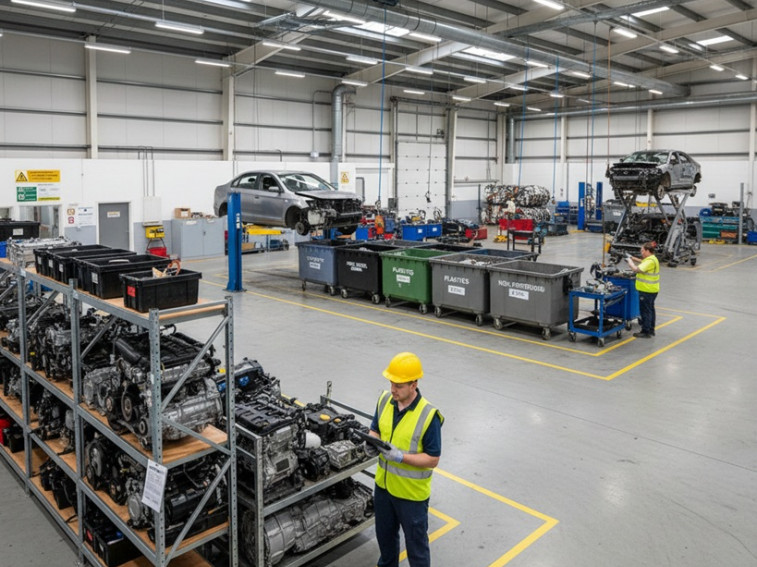
The landscape of the UK motor industry is rapidly shifting towards sustainability and circularity, making automotive recycling UK a key economic driver. Regulatory pressures and growing market demand for used parts mean auctions are increasingly the primary source of raw materials for dismantlers and processors through RAW2K Vehicle Auctions. This guide explores the regulatory environment and outlines practical strategies for maximising these opportunities, confirming the promising UK auto recycling future. Focused on component recovery and material reuse, this sector rewards trade expertise with significant financial potential.
The Regulatory Framework Driving Automotive Recycling
The growth of the automotive recycling UK sector isn't purely market-driven; it is rigorously enforced by legislation designed to minimise waste and resource consumption. Understanding these rules is crucial for trade buyers who need a reliable and compliant supply chain. This regulatory oversight ensures standards are met, but also guarantees a predictable flow of suitable stock into the auction system.
The End-of-Life Vehicle (ELV) Directive and Its Impact
The European Union's End-of-Life Vehicle Directive remains the foundational regulation governing how vehicles are disposed of within the UK. This directive mandates that by weight, 95% of a vehicle must be recovered and reused or recycled. Achieving this ambitious recovery target places high demands on recyclers, increasing the value of materials and component recovery from every auctioned vehicle. Consequently, vehicles sold for dismantling are viewed as valuable assets, not simply waste.
Certification for Dismantlers and Recyclers
To comply with environmental laws and ensure responsible processing, any business handling scrap cars must be an Authorised Treatment Facility (ATF). ATFs operate under strict permits, ensuring environmentally safe depollution processes before vehicles are crushed and recycled. Trade buyers should leverage the expertise of established auction houses that consistently supply vehicles with clear provenance documentation. This chain of custody is vital for ensuring ELV compliance requirements and maintaining high operational standards within the sustainable auto industry.
Strategic Sourcing and Value Extraction for Trade Buyers
Auctions provide the most reliable pipeline for vehicles that fit the dismantling and recycling model, giving trade buyers a competitive advantage in sourcing. The key to success is developing an eye for vehicles that yield the greatest return, whether through high-demand spare parts or valuable raw materials. This strategic sourcing approach directly translates into greater salvage and recycling gains. Trade buyers should not overlook smaller vehicles; the specialised components found in bikes and scooters can be effectively sourced through dedicated motorcycle salvage auctions.
Commercial Vehicles in the Circular Economy
The demand for used parts isn't limited to private cars; it extends significantly to the commercial sector. Businesses rely on keeping their fleets operational cost-effectively, leading to a constant need for replacement parts for vans and light commercial lorries. Trade buyers can focus on high-mileage or damaged commercial vehicles, knowing that every salvage part recovered contributes to the economic and environmental efficiency of the circular economy model that defines automotive recycling UK.
Capitalising on Regional Stock Accessibility
Sourcing costs, particularly transportation, heavily influence the profitability of recycling. This is why having access to regionally diverse auction stock through UK salvage auction locations is a significant advantage for trade buyers. For instance, a buyer operating near the M1 can substantially reduce logistics overheads by securing stock specifically from local regions. Similarly, buyers across the country can find targeted supply by reviewing regional listings. Minimising transport mileage enhances margins and supports local UK auto recycling future goals.
Maximising Profitability in Competitive Bidding Scenarios
Success in the auction environment requires meticulous preparation and calculated bidding, treating each vehicle as a collection of reusable and recyclable commodities. You shouldn't be bidding on the car's aesthetic value, but purely on the expected residual value of its materials and parts inventory. This measured approach ensures salvage and recycling gains are achieved consistently across multiple transactions through damaged vehicle auctions.
Calculating the True Residual Value
Before the live bidding starts, trade buyers must complete a detailed valuation of the target vehicle. This calculation involves estimating the market value of the top 10 most likely saleable parts, subtracting the dismantling time and associated labour costs, and then adding the base scrap value of the remaining materials such as metal, plastics, and other recyclables. The final figure must then factor in all auction fees, premiums, and eventual collection expenses. Setting a maximum bid based on this residual value calculation ensures every purchase is profitable.
A first-time trade buyer, for example, might be eyeing a high-end Category N van with significant body damage. Instead of getting carried away by the low starting price, they first check the price of a replacement engine and gearbox for that model. If those two parts alone exceed the total calculated costs, including bid, fees, and dismantling, the purchase is strategically sound. This calculation is the true foundation of professional purchasing in automotive recycling UK.
Efficient Inventory Management and Parts Identification
Effective post-auction inventory management is paramount for profitability. Trade buyers should utilise specialised systems to catalogue and identify all recovered salvage vehicle parts immediately upon arrival at the ATF. Quick identification, accurate grading, and correct pricing of used components ensure fast turnover and efficient warehousing. Digital listings should provide clear images and mileage data to build consumer trust in the quality of the recycled parts.
Partnership for a Sustainable Future
The convergence of regulatory demand, market need, and auction supply creates a powerful environment for trade buyers focused on vehicle recycling. By focusing on compliant operations and strategic sourcing of appropriate stock, you are securing profitability whilst playing a critical role in the circular economy. You can view the full range of stock, including commercial, salvage, and end-of-life vehicles, by checking the write-off vehicles for sale.
Ready to secure the stock you need to meet the growing demand for salvage vehicle parts and contribute to the UK auto recycling future? Register to start bidding on salvage stock today to maximise your sourcing efficiency and access comprehensive vehicle condition reports.