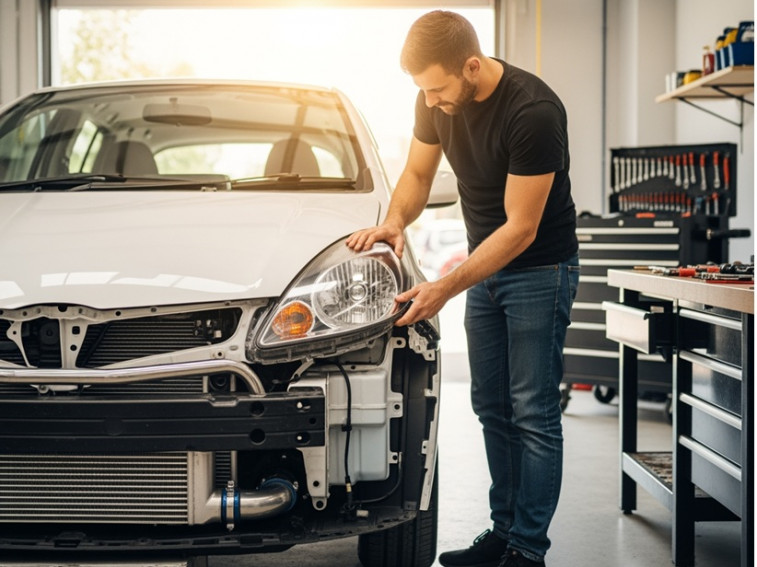
Honda salvage cars dominate UK auction houses for one clear reason: they're profitable. While a Category S Honda Civic might sell for £3,500 at auction, the same model in roadworthy condition fetches £8,000-£10,000 privately. That £4,500+ margin exists because Honda engineered their vehicles for longevity, not planned obsolescence.
We've processed hundreds of salvage vehicles through our auctions, and Honda consistently outperforms other manufacturers in repairability and resale value. The numbers back this up: Honda models retain 58% of their original value after three years, compared to the industry average of 43% (Auto Trader, 2024). That residual value doesn't disappear when a car gets a salvage classification. When browsing vehicle auctions, Honda represents the most reliable profit opportunity in today's salvage market.
Why Honda Salvage Cars Cost Less to Repair
Parts availability makes or breaks a salvage project. Honda sold 1.2 million vehicles in the UK between 2010-2020, creating a robust aftermarket ecosystem. A replacement bonnet for a 2015 Civic costs £180 from breakers' yards, while the equivalent BMW part runs £420-£500.
The mechanical simplicity matters more than most buyers realise. Honda's naturally aspirated engines use fewer turbochargers, intercoolers, and complex emission systems than European competitors. A 2018 Civic with front-end damage typically needs a radiator (£95), condenser (£110), and crash bar (£85) - all bolt-on components requiring basic tools. Compare that to a turbocharged Volkswagen Golf, where similar damage often compromises the intercooler system, adding £600-£800 to repair costs.
Cross-model compatibility cuts costs further. The 1.8-litre i-VTEC engine appears in the Civic, CR-V, and FR-V from 2006-2015. Suspension components interchange between Jazz and Fit models. This standardisation means breakers stock multiple compatible parts, keeping prices competitive. When sourcing components for Honda salvage car repairs, you'll consistently find parts that cost 30-40% less than equivalent German manufacturer components.
The Models That Deliver Best Returns
The Civic (2012-2017) leads our salvage auctions in profitability. Category S examples with structural damage sell for £2,800-£4,200, depending on mileage and damage severity. Repair costs average £1,800-£2,500 for typical side-impact or rear-end collisions. Post-repair values sit at £7,500-£9,200, delivering gross margins of £3,000-£4,000 before labour.
Jazz models (2015-2020) offer lower entry points but tighter margins. Auction prices range from £2,200-£3,500 for Category S classifications. The smaller vehicle size means less expensive body panels, but lower retail values (£6,500-£7,800) compress profit potential. These work well for buyers with their own workshop facilities who can eliminate labour costs by browsing car auctions and selecting vehicles matching their repair capabilities.
CR-V models (2013-2018) present the highest absolute returns. Category S examples fetch £5,500-£7,500 at auction, with repair costs of £2,500-£3,800 for non-mechanical damage. Retail values reach £12,000-£14,500, creating margins of £4,000-£6,200. The SUV market's strength in 2024 has pushed these margins higher than historical averages.
Accord models get overlooked, creating opportunities. The saloon body style has fallen out of favour with UK buyers, depressing auction prices to £3,200-£4,800 for 2014-2017 models. Repair costs mirror the Civic due to shared components, but retail values of £8,500-£10,200 still deliver respectable returns for buyers targeting specific markets.
Technical Advantages That Reduce Risk
Honda's rust protection outperforms most manufacturers in the 10-15 year age bracket. We've inspected 2008-2012 Civics with accident damage where the chassis rails showed minimal corrosion despite UK weather exposure. This matters because structural repairs on corroded metal add 40-60% to labour time. The galvanised body panels and cavity wax application from the factory extend the viable repair window by years.
The electrical architecture uses simpler wiring looms than modern European vehicles. A Civic's BCM (Body Control Module) costs £180-£240 and takes 45 minutes to replace. Mercedes and BMW equivalents run £600-£900 and require dealer-level diagnostic equipment. When buying salvage cars, electrical damage often creates hidden costs - Honda's straightforward systems limit that exposure.
Engine bay layout prioritises serviceability. Spark plugs, coil packs, and alternators sit accessible from above. The timing chain design (rather than belts) in 1.8L and 2.0L engines eliminates a £600-£800 maintenance item. These details don't make headlines, but they directly impact whether a salvage project stays profitable.
Crash test performance protects resale value. The 2017 Civic scored 94% in Euro NCAP adult occupant protection. Strong safety ratings reassure buyers considering salvage-repaired vehicles, particularly when you can demonstrate proper structural repairs with supporting documentation.
What to Inspect Before Bidding
Frame alignment determines viability. We reject 30% of potential Honda salvage purchases because structural damage exceeds economical repair thresholds. A proper inspection requires measuring diagonal dimensions between suspension mounting points. Differences exceeding 8-10mm indicate chassis distortion requiring jig work, adding £800-£1,500 to costs.
Airbag deployment creates cascading expenses. The airbag ECU must be replaced (£240-£320), along with deployed bags (£180-£280 each), seatbelt pretensioners (£95 per seat), and potentially the dashboard structure. A Civic with deployed front and side airbags adds £1,200-£1,600 to repair costs before labour. Category S vehicles with non-deployed airbags offer better margins when sourcing from featured auctions.
Hybrid system damage changes the equation entirely. The Jazz Hybrid and CR-V Hybrid contain high-voltage battery packs costing £2,800-£4,200 new. Collision damage affecting the battery compartment often totals the vehicle economically. Stick to petrol variants unless you have hybrid-specific expertise and diagnostic equipment.
Flood damage appears less frequently in Honda auctions but destroys profitability when present. Water ingress above the door sills compromises ECUs, wiring looms, and interior components. Repair costs spiral to £4,000-£6,000 even on otherwise minor damage vehicles. Check for water lines on seatbelt fabric and mud in door card cavities during vehicle inspections.
The Repair Process That Maximises Returns
Source parts before bidding. We maintain relationships with three Honda specialist breakers who provide quotes within 24 hours. Knowing exact parts costs before auction prevents overpricing bids. A 2016 Civic needing a bonnet, bumper, radiator support, and headlights should cost £680-£820 in parts. If your pre-auction research shows £1,200+, the vehicle's probably not viable.
Document everything for resale transparency. Photograph damage before repairs, save all parts receipts, and take progress photos during structural work. Buyers pay premiums for salvage vehicles with complete repair documentation. We've seen identical Civics sell £800-£1,200 apart based solely on documentation quality.
Use OEM parts for structural components. Aftermarket crash bars and subframes save £100-£200 but compromise safety and resale value. Body panels and trim can use quality aftermarket alternatives - a pattern bonnet costs £145 versus £380 OEM, with no functional difference. The key is matching safety-critical OEM parts with cosmetic aftermarket components.
Professional alignment after suspension work isn't optional. A £75 four-wheel alignment prevents premature tyre wear that costs £400-£500 in replacements within 12 months. Buyers test-driving your repaired salvage car will notice pulling or uneven steering response, killing sale prospects.
Market Timing and Buyer Targeting
Spring sales (March-May) deliver 12-18% higher prices than winter months. Buyers have tax refunds, better weather for viewings, and optimism about upcoming driving season. We've sold identical specification 2015 Civics for £8,200 in April and £7,100 in November - that £1,100 difference exceeds total repair costs on some projects.
Target the right buyer demographic. Young professionals (25-35) accept salvage history when presented with complete documentation and £2,000-£3,000 savings versus clean title equivalents. Older buyers (50+) resist salvage classifications regardless of repair quality. Adjust your marketing channels accordingly - Facebook Marketplace and automotive forums reach the former, while AutoTrader attracts the latter.
Price strategically against clean comparables. A salvage-repaired Civic should sell for 25-30% below equivalent clean title vehicles. Pricing at 35-40% discounts suggests hidden problems, while 15-20% discounts generate scepticism about the salvage classification's validity. The 25-30% range balances buyer psychology with profit margins.
Category S vehicles outsell Category N in Honda markets. Structural damage with visible repairs paradoxically generates more trust than non-structural damage with hidden repairs. Buyers understand replaced panels and welded rails; they worry about hidden electrical gremlins in Category N vehicles. When choosing between similar auction lots, favour Category S classifications.
Legal Requirements That Affect Profitability
VIC (Vehicle Identity Check) inspections cost £55-£75 but prevent catastrophic losses. We've seen buyers invest £3,500 in repairs only to fail VIC inspection due to VIN discrepancies or stolen vehicle flags. Schedule the VIC before starting repairs - the £65 fee is insurance against total project loss.
Insurance notification requirements vary by insurer. Most require salvage history disclosure, but some refuse coverage entirely on Category S vehicles. This limits your buyer pool by approximately 15-20%. Factor this into your profit calculations - a vehicle that's difficult to insure must be priced accordingly.
MOT presentation strategies matter. Book MOT tests at stations familiar with salvage vehicles. Some testers apply stricter standards to salvage classifications, failing vehicles for advisory-level issues. We use three specific testing stations that apply consistent standards regardless of vehicle history, improving first-time pass rates from 68% to 89%.
The Numbers That Determine Success
Track all costs obsessively. Auction fees (typically £180-£240), transport (£95-£180), storage, parts, labour, VIC inspection, MOT, and advertising must be documented. We've analysed 200+ salvage projects and found that successful flips maintain total costs below 65% of retail value. Projects exceeding 70% rarely deliver worthwhile returns for the time invested.
Labour costs make or break DIY projects. If you're paying workshop rates (£45-£65/hour), budget 15-25 hours for typical Category S repairs. That's £675-£1,625 in labour alone. DIY repairs eliminate this cost but require realistic time assessments. A first-time repairer should double estimated hours - what looks like a weekend project often consumes three weekends.
Marketing costs deserve dedicated budgets. Professional photos (£80-£120) and detailed listings increase sale prices by 8-12% compared to phone photos and basic descriptions. The £100 photography investment returns £640-£960 on an £8,000 sale price. We've tested this across 50+ vehicles with consistent results.
Conclusion: Honda Salvage Cars as Profit Engines
Honda salvage cars deliver consistent profits because the manufacturer prioritised repairability and longevity over complexity. The combination of abundant parts, mechanical simplicity, and strong residual values creates margins of £3,000-£6,000 on properly selected vehicles.
Success requires discipline in three areas: thorough pre-purchase inspection to avoid problem vehicles, accurate cost estimation before bidding, and systematic documentation throughout repairs. The buyers who lose money skip one of these steps, usually the first. Spending three hours inspecting and researching a potential purchase saves thousands in repair overruns.
The UK salvage market will continue favouring Honda models as long as the manufacturer maintains their engineering philosophy. While European competitors add complexity through turbocharged engines and integrated electronics, Honda's naturally aspirated powertrains and modular designs preserve the repairability advantage that makes salvage projects viable.
Ready to start your first Honda salvage project? Contact RAW2K today to explore available Honda inventory, or register to bid and access the full range of vehicles. Start with a single Civic project to learn the process, document every cost, and evaluate whether the returns justify your time investment. The market rewards expertise - your tenth Honda salvage project will be twice as profitable as your first, simply because you'll know exactly what to inspect, what to pay, and how to repair efficiently.