Winning fifteen vehicles across three entirely different regional auction sites within a single afternoon is a notable digital success for any professional trader. However, physically collecting those specific assets before compounding daily storage fees accumulate is the real operational challenge. This exact transition from digital acquisition to physical possession is precisely where many high-volume buyers hit a massive logistical wall. Securing the winning bids is often the easiest part of the business model. Getting a dozen passenger cars from Manchester, eight commercial vans from Birmingham, and five specialist motorcycles from Southampton back to your central yard within a single working week separates highly profitable operations from those hemorrhaging money on transport inefficiencies.
Independent dealers and large-scale dismantlers frequently secure exceptional stock at brilliant prices, only to completely lose their hard-earned financial margin on chaotic, poorly structured collection runs. Disorganized transport planning can easily cost a business significantly more in outsourced recovery trucks, wasted diesel fuel, and unoptimized driver wages than the baseline cost of the vehicles themselves. However, multi-depot salvage collection absolutely does not have to be an operational nightmare. With proper mapping, stringent systems, and a solid understanding of heavy transport regulations, it rapidly becomes a massive competitive advantage. Buyers who master this specific logistical puzzle can confidently scale their businesses much faster than local competitors. For those handling high volumes of damaged stock, rigorous logistics planning is just as critical as the initial digital bidding strategy itself.
Why Multi-Depot Buying Makes Financial Sense
Strictly limiting your daily buying strategy to a single, localized auction location inevitably leaves massive amounts of money on the table. The absolute best financial deals rarely sit conveniently in one single compound just ten miles from your workshop. A highly desirable, lightly damaged commercial Transit might be listed in a Glasgow facility, while the specific Category N executive saloon you need for a waiting retail customer is concurrently sitting in Bristol. Restricting your active collection radius means you are fiercely competing with every single local buyer for a highly limited pool of local stock, which inherently drives up the final hammer prices for everyone involved.
Expanding your geographical collection radius opens up significant, lucrative opportunities for geographical arbitrage. If ten distinct vehicles can be systematically collected from three different northern depots utilizing a single, consolidated heavy transport run, the specific per-unit transport cost drops dramatically compared to booking ten individual single-car recoveries. This aggressive approach allows dealers to access diverse, lower-competition inventory that may not be available locally. By confidently casting a much wider digital net, you can secure specific stock that offers vastly superior profit margins, easily absorbing the slightly higher, optimized transport costs through sheer volume efficiency.
The Real Cost of Poor Collection Planning
Imagine winning five repairable cars on a Monday morning, entirely scattered across the length of the country. Sending a single flatbed transporter to collect each one individually and reactively means generating five entirely separate round trips. That equates to five massive fuel bills, five consecutive days of driver wages, and thousands of miles of "dead mileage" where the truck is driving back completely empty. Planning those exact same collections as one strategic, overnight multi-car run can instantly halve the total transport overhead. This distinct logistical choice is the definitive difference between turning a healthy profit and recording a net loss on lower-margin, budget vehicles.
Poor operational planning also leads directly to aggressive storage fees, which are undeniably the silent killer of salvage auction profits. Most major auction compounds offer a very strict, highly limited grace period before heavy daily holding charges kick in. Missing that specific collection window on eight different vehicles simultaneously stacks up fees incredibly quickly, instantly turning a highly successful bidding week into a financial disaster. Furthermore, disorganized buyers spend their valuable daily hours firefighting logistical chaos on the phone with angry drivers instead of researching and buying fresh stock. These completely hidden operational costs violently erode the very margin that made the asset attractive in the first place.
Building Your Collection Strategy
Successful multi-depot recovery starts days before the very first digital proxy bid is even placed. You must actively define a highly realistic, strictly bounded operational area based entirely on your current transport resources. For volume buyers, this is often a carefully mapped regional zone or a full national footprint if running heavy articulated lorries. If your business is actively moving twenty or more vehicles monthly, nationwide buying becomes financially viable by filling massive multi-car transporters using a hub-and-spoke collection model.
You should create and rigorously maintain a master digital list of every single targeted depot location, their exact opening hours, and their specific access requirements. Knowing that a specific rural depot strictly closes its gates to commercial transporters at 3:00 PM on a Friday can completely save a wasted three-hundred-mile journey. Furthermore, you must aggressively batch your bidding strategy by aligning auction end dates with your planned physical routes. Focus entirely on securing northern stock early in the week and southern stock later in the week. This calculated method creates natural, sequential collection windows, making your heavy transport planning highly predictable and entirely manageable.
Transport Options for Volume Collections
Owning your own 3.5-tonne single flatbed or a 7.5-tonne twin-deck transporter makes complete sense for regular, localized regional buying. It offers absolute internal control, immediate dispatch capability, and branding opportunities. However, running internal trucks comes with massive capital expenditure, stringent Operator's Licence (O-Licence) legal requirements, mandatory six-week vehicle inspections, and heavily regulated driver tachograph hours. For many rapidly scaling businesses, utilizing professional trade transport companies is the safest, most efficient answer. They handle everything from route logistics to massive Goods in Transit (GIT) insurance liabilities.
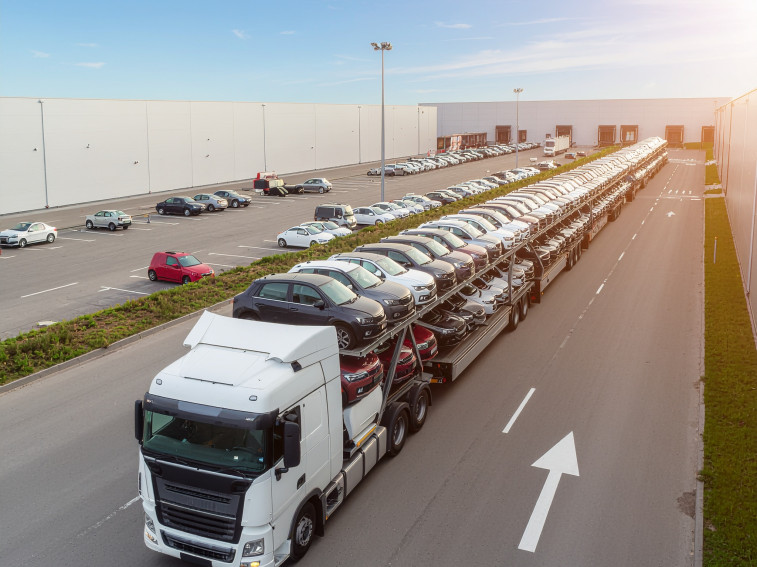
Hiring an external, full 6-car or 8-car articulated transporter for a dedicated day rate can be the absolute most cost-effective option for massive bulk runs. The entire key to this method is planning the driver's route flawlessly to avoid them aimlessly crisscrossing the country empty. Most highly successful, enterprise-level buyers use a smart hybrid approach: they use their own 3.5-tonne flatbed for urgent local single collections, utilize trade plates for road-legal stock, and hire heavy third-party articulated transporters for massive, multi-depot bulk runs. Flexibility in your transport methods is the absolute key to keeping your baseline acquisition costs down.
Planning the Perfect Collection Run
To execute a flawless collection run, you must start by actively grouping your winning bids by exact geographical location. List all your secured assets by their holding depot to visually map the regional clusters. You must then ruthlessly prioritize the physical route based on strict deadlines, ensuring you collect the specific vehicles with the shortest remaining grace periods first to entirely avoid unnecessary financial penalties.
Map the absolute most efficient driving route, but you must legally factor in heavy traffic zones, complex yard loading times, and mandatory DVSA driver rest breaks. A driver cannot legally pilot a heavy truck for twelve straight hours. You must proactively confirm specific loading slots with the individual depots and book your external transport well in advance. Always have a robust, immediate backup plan ready. You must know exactly what to do if a vehicle's battery is completely dead, if it has a locked electronic handbrake, or if a third-party transport provider suffers a sudden breakdown on the motorway.
Common Multi-Depot Collection Mistakes
Underestimating the required physical time is the absolute most common logistical error in the motor trade. Standard consumer mapping software does not account for the thirty minutes required to safely winch a severely damaged chassis onto a top deck, secure heavy-duty wheel straps, and maneuver a massive articulated lorry out of a congested industrial estate. You must always add a generous operational buffer time to every single journey leg to safely account for these inevitable commercial delays.
Forgetting vital documentation is another major, incredibly costly issue. Leaving the specific digital release PINs, the required photographic ID, or the official collection invoice at the office simply means the depot security team will refuse the collection entirely. Keep a secure digital folder synchronized to every driver's smartphone containing all necessary paperwork. Finally, failing to monitor severe weather warnings drastically impacts timelines. Planning a heavy multi-depot run through the Scottish Highlands during a forecasted winter storm guarantees missed slots, dangerous driving conditions, and frozen loading equipment.
Tools and Systems That Actually Help
Overly complex software is not always required; simple, ruthlessly maintained tools often work best for managing logistics. Use a shared, cloud-based spreadsheet to meticulously track depot locations, specific lot numbers, required release codes, and hard collection deadlines. The entire transport team must have live access to this document. Use dedicated commercial mapping tools designed for HGV (Heavy Goods Vehicle) route planning, as these specifically avoid low bridges and weight-restricted roads that standard car navigation apps ignore.
When tracking your purchased salvage cars through the transport cycle, maintain a highly accurate directory of official regional depot numbers and central support lines to resolve loading issues instantly and safely. Furthermore, aggressively track your sub-contractor reliability. If a specific transport provider consistently lets you down or damages stock during loading, you must immediately know exactly who to call next from your vetted backup list. Systematizing this physical process removes the immense stress of relying purely on human memory.
Making Multi-Depot Collection a Competitive Advantage
Dealers who truly master regional logistics buy much more consistently and at significantly better baseline prices. They are absolutely not limited by their immediate local geography or forced to overpay during intense local pricing bubbles. Because their multi-depot salvage collection strategies are highly refined, their per-vehicle transport costs are perfectly managed and highly predictable, rather than suddenly spiraling out of control due to last-minute, panicked transport bookings.
If you are genuinely serious about volume buying, treating your collection strategy with the exact same respect as your bidding strategy is mandatory. Relying on massive, nationwide salvage vehicle auctions allows aggressive businesses to completely bypass local supply bottlenecks. You can confidently place proxy bids on heavily discounted vehicles located three hundred miles away, knowing with absolute certainty that your robust backend logistics system can handle the complex recovery volume efficiently and profitably.
The Storage Fee Trap
Auction compound storage fees are fiercely strict and entirely non-negotiable across the industry. They effectively function as a massive financial tax on operational disorganization. Understanding exactly when these fees trigger at each distinct regional hub is crucial. Prioritizing your heavy truck routing based purely on avoiding these compounding daily fees saves significant profit margin over a fiscal year.
Sometimes, paying a slight premium for an urgent, same-day recovery service is mathematically vastly cheaper than allowing heavy, daily storage fees to accumulate on multiple vehicles trapped across different sites. Savvy buyers constantly cross-reference current scrap car prices against the potential cost of late collection; if the accumulated storage fees and the emergency transport costs combined exceed the final baseline value of the metal, the entire acquisition becomes an immediate loss.
Utilizing a reliable platform like RAW2K provides clear, upfront visibility regarding strict collection windows and specific terms and conditions. However, tracking those deadlines internally and deploying the correct trucks on time remains the sole responsibility of the professional buyer.
Managing Non-Runners and Specialist Loads
Vehicles categorized as heavy non-runners require massive electrical winches and specialist loading skates to drag them safely onto a transporter deck. Large commercial panel vans require significantly longer physical deck space and higher weight capacities than standard passenger hatchbacks. Ensuring the exact right equipment is dispatched prevents entirely wasted trips and humiliating refused collections at the gate.
If you are coordinating a massive collection run of assets purchased from uk van auctions, sending a standard, lightweight 3.5-tonne car transporter is an operational disaster; the truck will be immediately flagged as dangerously overweight. You must communicate the exact, specific condition of every single vehicle to your transport providers.
Similarly, coordinating pickups for specialist assets requires care. When securing multiple units from damaged motorcycles, you must ensure your contracted driver arrives equipped with specific two-wheeled front chocks, soft-loop handlebar straps, and a solid loading ramp. Attempting to balance five motorcycles loosely on a flatbed designed strictly for wide car chassis almost always results in severe, secondary transit damage that obliterates your profit margin before the stock ever reaches your workshop.
Conclusion
Coordinating multi-depot collections effectively requires intense organization, deep logistical understanding, and rigorous daily discipline, but the financial payoff is immense. You must actively define your viable collection radius, deeply understand the legalities of your transport options, and plan your heavy routing meticulously to avoid empty miles. Getting the physical collection strategy right instantly opens up massive digital opportunities that your unorganized competitors simply cannot afford to access.
Mastering this logistical framework allows you to buy significantly better stock, pay far less for the underlying transport, and spend vastly less time fighting operational fires. The digital market provides the inventory, but your physical logistics secure the profit.
If you are ready to expand your buying horizons and start building a highly profitable, national volume strategy, complete your auction registration today to begin actively sourcing inventory from depots across the entire country.
Should you need to quickly verify specific regional depot opening hours, confirm localized access rules for articulated lorries, or understand specific release documentation requirements, please feel free to contact our team for professional, immediate assistance before you finalize your transport routes.